Embarking on an international adventure with your pet can create unforgettable memories. However, travelling with a pet requires careful planning to make sure the journey is suitable for them and that all destination, airline and documentation requirements are met.
While the process may seem overwhelming at first, starting early can help you prepare your pet for a safer and more comfortable travel experience.
Before packing your bags and your pet’s favourite toys, research the requirements for bringing your pet into another country. International pet travel regulations vary significantly by destination and may change over time.
Start investigating your destination’s import requirements as early as possible, ideally several months before your planned departure. Depending on the country, your pet may need:
The order of these steps may also matter. Some destinations, for example, require a pet to be microchipped before receiving the rabies vaccination used for travel.
For pets leaving Canada, health certificates are generally completed by a licensed veterinarian. Depending on the destination, the documents may also need to be endorsed by the Canadian Food Inspection Agency within a specific period before departure.
Always review the current government requirements for your pet’s destination and country of origin before making travel arrangements.
Some destinations require pets to complete post-entry quarantine even when all import conditions have been met.
Australia and New Zealand, for example, generally require pets arriving from Canada to stay at an approved quarantine facility. In comparison, pets that meet all applicable entry requirements can generally enter Great Britain without quarantine.
Quarantine rules depend on the destination, country of origin and completeness of the pet’s documentation. Review these requirements early, as reservations and preparation may need to begin months before travel.
For complicated journeys, professional pet travel support can help you navigate documentation, airline restrictions, routing, crate requirements and other details.
IPATA member pet shippers are professional pet travel specialists who follow the association’s standards and Code of Ethics. Depending on the provider, services may include documentation assistance, airline booking, airport transportation, destination coordination and complete door-to-door relocation.
Paws en route can assist with one part of your pet’s journey or coordinate the complete international travel process.
Preparing your pet for international travel begins well before you reach the airport. Gradual acclimation can help reduce stress and make unfamiliar parts of the journey feel more manageable.
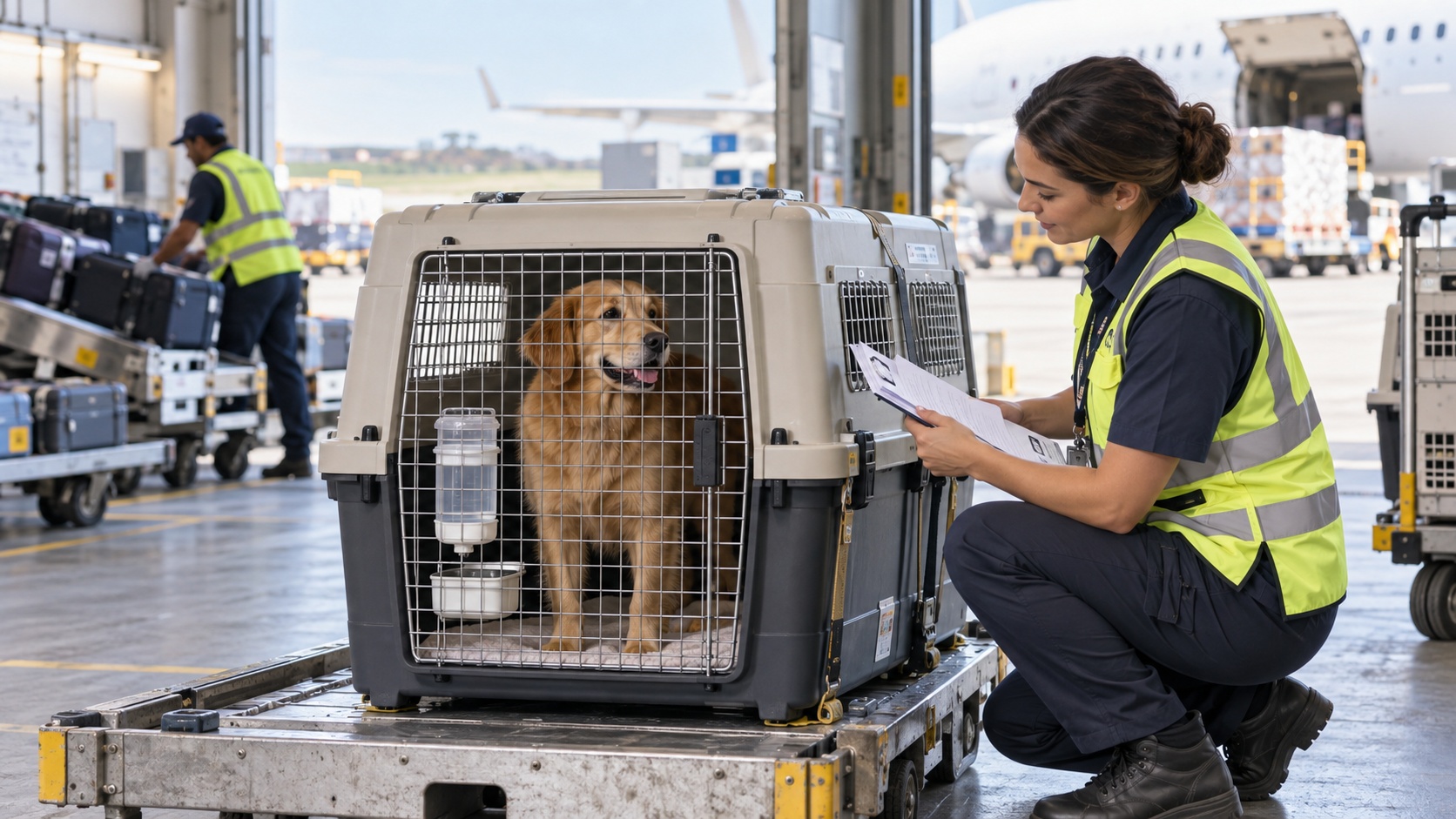
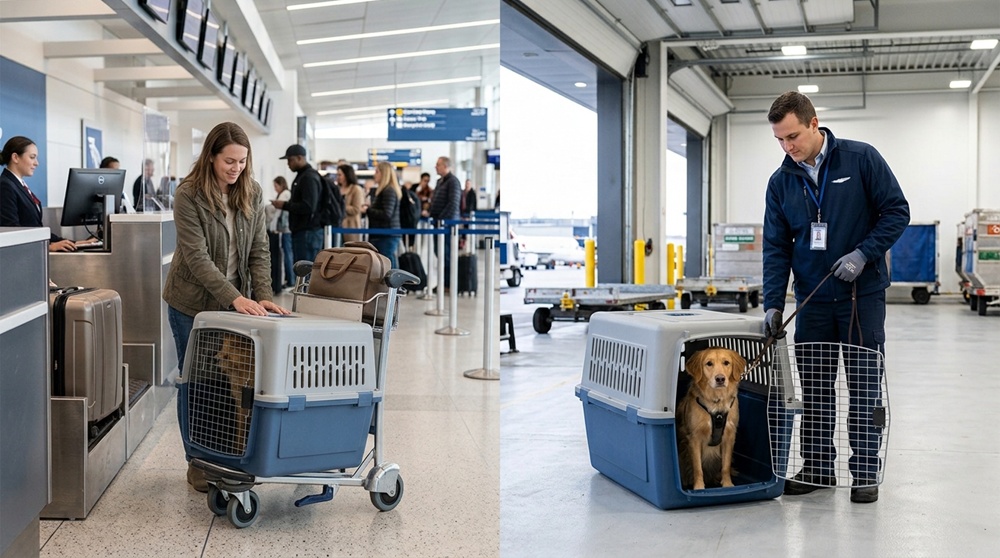
For pets travelling in the aircraft hold, the travel crate becomes their secure space during the journey. Choose a crate that meets the applicable IATA Live Animals Regulations and the specific requirements of the airline o perating your pet’s flight. It must also be properly sized for your individual pet.
Begin crate training several weeks or months before travel. Leave the crate open in a familiar part of your home and encourage your pet to explore it at their own pace. Treats, meals and praise can help create a positive association.
Gradually introduce short periods with the door closed and slowly increase the amount of time your pet spends inside. Once your pet is comfortable, practise short car journeys in the crate.
During training, familiar bedding and toys may help your pet feel comfortable. Before travel day, check the airline’s rules for bedding and loose items, as certain objects may not be permitted inside the crate during a flight.
Familiarize your pet with some of the experiences they may encounter during their journey. For pets that are uncomfortable in the car, begin with short rides and gradually increase the duration. You can also help your pet become accustomed to unfamiliar environments, different surfaces, background noise and brief handling by trusted people.
Keep each experience short and positive. Introducing too many unfamiliar situations at once may overwhelm an anxious or cautious pet.
For pets prone to motion sickness or anxiety, speak with your veterinarian about appropriate strategies. Do not give your pet sedatives, calming medication or supplements for air travel unless specifically advised by a veterinarian who understands the journey.
Basic training can make unfamiliar travel situations easier to manage. Focus on useful commands such as “sit,” “stay,” “come” and “leave it.” Practise these behaviours in different environments so your pet learns to respond even when there are distractions.
For anxious pets, a “settle” or “place” command can help them relax on a familiar mat or bed while staying in a hotel or temporary accommodation.
Gradually expose your pet to different people, environments and sounds before travelling. Pet-friendly stores, parks and outdoor spaces can help your pet become more comfortable with new surroundings. Reward calm behaviour and avoid forcing interactions when your pet appears uncomfortable.
You can also practise having trusted people briefly handle your pet. This may help prepare them for veterinary appointments and necessary interactions with pet travel professionals.
Read our guide to Preparing Your Pet for Air Travel: 5 Tips for a Smoother Journey for more advice specific to flying.
Proper documentation is essential for international pet travel. Keep the required originals in an organized, easily accessible folder and save digital copies as a backup. Depending on the destination, documents may include:
Pack any prescribed medications in their original packaging, along with clear instructions. Carry your veterinarian’s contact information and research emergency veterinary services at your destination.
Pack enough of your pet’s regular food for the journey and your stay, with some extra in case of delays. Collapsible bowls, a secure leash, waste bags and cleaning supplies may also be useful.
Before packing food, treats, medications or animal products, check whether your destination restricts what travellers can bring across the border.
Familiar items may help your pet settle after arrival. However, confirm what the airline allows inside a travel crate before placing bedding, clothing or toys inside it.
Use a secure, comfortable harness rather than relying only on a collar. This is especially important in busy airports or unfamiliar environments.
Make sure your pet’s identification tag and microchip registration include current contact information. You may also want to carry a recent photograph of your pet and add a temporary tag with your contact details at the destination.
Weather-appropriate items, such as a light sweater or cooling gear, may be useful depending on the destination and your pet’s needs.

Before choosing where your first adventure will take you, review the country’s official pet import requirements, permitted arrival routes and airline policies. Some destinations require significantly more preparation than others and may not be practical for a pet’s first international trip. Click here for more details on specific country travel requirements for your pet.
A country can be welcoming to pets after arrival while still having complicated import or transportation requirements. When comparing destinations, consider:
Active, confident dogs may enjoy destinations with trails and outdoor activities, while more cautious pets may be better suited to a quieter location with a simple route and fewer transfers.
The best destination is not simply one that allows pets. It should also be appropriate for your individual pet and the type of journey they can comfortably manage.
When booking accommodations, look beyond the phrase “pet-friendly.” Contact the property directly to confirm its specific policies. Ask about:
Vacation rentals may provide additional space or outdoor access, but individual policies should still be confirmed before booking.
Before departure, research veterinary clinics near your accommodations, including emergency services. Save their contact information and addresses in your phone.
You should also review local regulations and cultural expectations relating to pets. Depending on the destination, there may be leash laws, muzzle requirements, breed restrictions or rules governing pets on public transportation, beaches and in parks.
International pet travel involves much more than choosing a flight. Paws en route can help you understand the requirements and coordinate the support your pet needs.
Depending on your journey, our team can assist with:
You can choose help with a specific part of the journey or ask Paws en route to manage the complete process.
International pet travel requires preparation, but starting early can make the process easier to manage.
Begin by reviewing your destination’s requirements, speaking with your veterinarian and considering whether the proposed journey is suitable for your pet. When the route or requirements become complicated, experienced pet travel support can help reduce uncertainty and prevent avoidable problems.
Your adventure awaits. Let Paws en route help you plan a safe and comfortable journey for your pet.
Our IPATA member pet travel specialists can help manage the details, from airline booking to health certificates and import permits, for a smoother travel experience.
Get a custom quote.
Ready to travel?
Our IPATA-certified pet travel specialists help manage the details, from airline booking to health certificates and import permits, for a smoother travel experience.
Get a custom quotePaws en route provides trusted support for every step of pet travel, from complex international relocations to domestic travel within Canada.