International pet travel is far more complex than simply booking a flight. When pets travel across borders, there are strict regulations, detailed documentation requirements, and multiple agencies involved. If international pet travel is not planned properly, it can lead to higher costs, denied boarding, rejected entry at the destination, and unnecessary stress for both pets and pet parents.
At Paws en route, we have safely managed international pet travel and pet relocation for thousands of animals worldwide. Whether you're looking for end-to-end relocation support or simply need help with a specific part of your pet's journey, understanding these four stages can help you determine where professional guidance may be most valuable.Through this experience, we have developed a proven four-stage approach that helps ensure pets travel safely, compliantly, and with minimal risk.
Below, we explain how international pet air travel really works and what every pet parent should understand before relocating or traveling abroad with a pet.
Every country has its own import rules for pets. Airlines have separate requirements, and regulatory agencies impose strict timelines. Missing one step in the international pet travel process can result in pets being denied travel or refused entry upon arrival.
International pet air travel involves much more than logistics. It requires coordination across government authorities, veterinarians, airlines, customs officials, and ground transport providers. Understanding the full process is essential for protecting your pet’s safety and wellbeing.
Stage 1: International Pet Travel Documentation and Planning
The first and most critical stage of international pet travel is documentation and planning.
Government regulations vary widely by destination and may include vaccination records, health certificates, microchip verification, import permits and mandatory waiting periods. Airlines alsohave their own requirements related to crate specifications, breed restrictions, seasonal limitations, and routing rules.
This stage requires careful timeline management. Many documents must be completed within precise date ranges before departure. Proper planning ensures that all paperwork aligns correctly with airline and destination country rules. If you've already arranged your own flights, Paws en Route can still help navigate destination-specific documentation requirements, health certificates, import permits and government endorsements through our International Pet Travel Documentation Services.
Stage 2: Certification, Travel Readiness and International Pet Air Travel Logistics
Once documentation is underway, the second stage focuses on certification and logistics.
Veterinary documents must be completed accurately and submitted for official government endorsement. When done properly, these documents are certified by the appropriate authorities and approved for international travel.
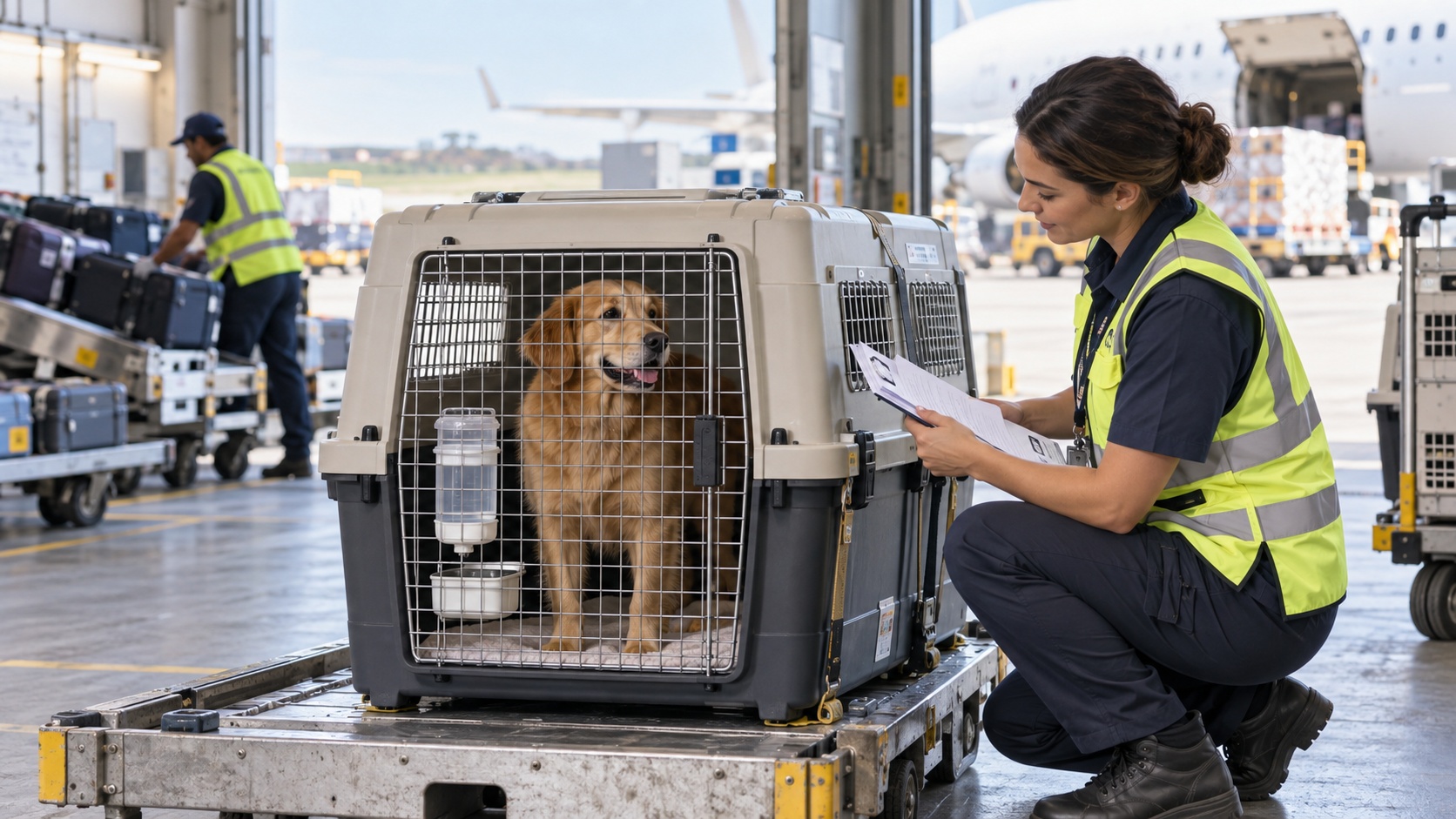
Travel readiness also includes crate compliance and acclimatization. Pets should be comfortable in their travel crate well before departure, and the crate must meet airline labeling and regulatory standards.
This phase also involves coordinating flight logistics, airline requirements, security clearances and ground transportation to the airport.
For pets travelling as manifest cargo, airline bookings often need to be coordinated through an IPATA-certified pet shipper. Paws en route can assist with both International Air Travel Booking Services and International Pet Travel Documentation Services to help ensure every part of the journey is properly aligned before departure.
Stage 3: Customs Clearance, Fees, Quarantine and Arrival Logistics
International pet travel does not end when the plane lands.
Upon arrival, pets must go through customs clearance and may be subject to terminal fees, warehouse handling charges, inspection costs, and other destination-specific expenses. Required documents and import permits must be presented at this time.
Certain countries also require quarantine, which must be arranged in advance. Approved ground transportation from the airport to the final residence or quarantine facility must also be coordinated. Depending on your destination, Paws en route can also coordinate travel support services, including airport transfers and other arrival logistics, to help make the transition as smooth as possible.
Without proper preparation, families may face unexpected delays, additional costs, or unnecessary stress for their pet after a long journey.
Stage 4: Settling In After International Pet Relocation
The final stage of international pet travel focuses on helping pets settle into their new environment.
Pet parents should know where the nearest veterinarian is located, how to access pet food, and what pet services are available locally. Finding dog parks, pet care providers, and trusted support services can make a significant difference in helping pets adjust comfortably after international relocation.
This stage is especially important for long-term pet relocation, as it supports both physical health and emotional wellbeing. For families relocating internationally, planning ahead for these post-arrival needs can make the transition easier for both pets and their owners.
One of the most common risks in international pet travel is incomplete or incorrect documentation. Pets may be denied boarding on the day of departure or refused entry by the destination country and sent back.
Crate compliance, airline rules, and certification timelines are also critical. Even when a pet is otherwise healthy and prepared, small errors can result in significant complications.
Working with professionals experienced in international pet air travel helps reduce these risks and provides peace of mind for pet parents. Even if you're managing much of the journey yourself, having expert guidance during the documentation and planning stages can help reduce uncertainty and avoid common mistakes before travel day.
Every pet's journey is different, but successful international pet travel always starts with the right preparation. Whether you need help with documentation, airline bookings, travel support or a fully managed relocation, Paws en Route provides expert guidance to help your pet travel safely and confidently from departure to arrival.
Ready to travel?
Our IPATA-certified pet travel specialists help manage the details, from airline booking to health certificates and import permits, for a smoother travel experience.
Get a custom quotePaws en route provides trusted support for every step of pet travel, from complex international relocations to domestic travel within Canada.