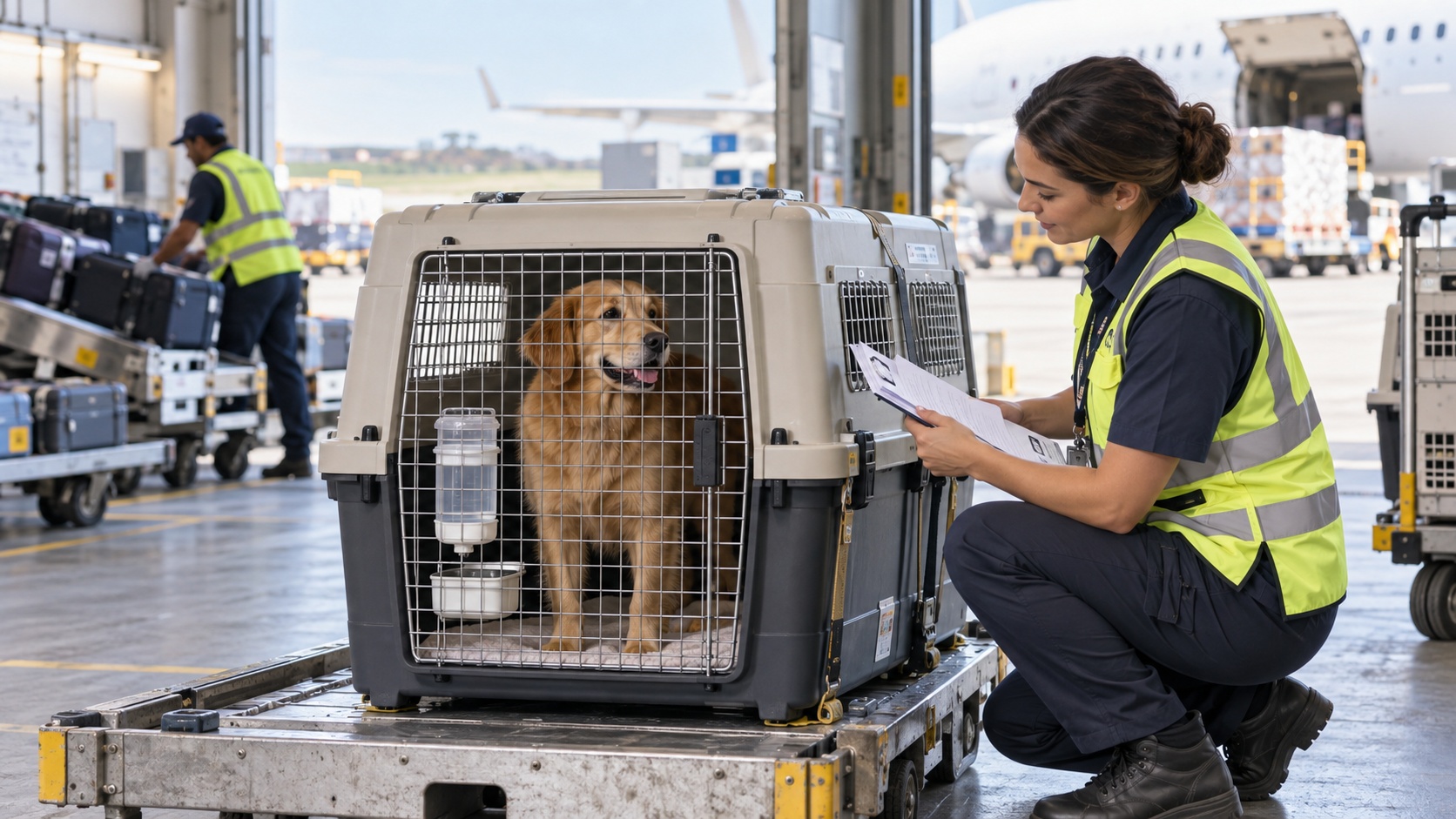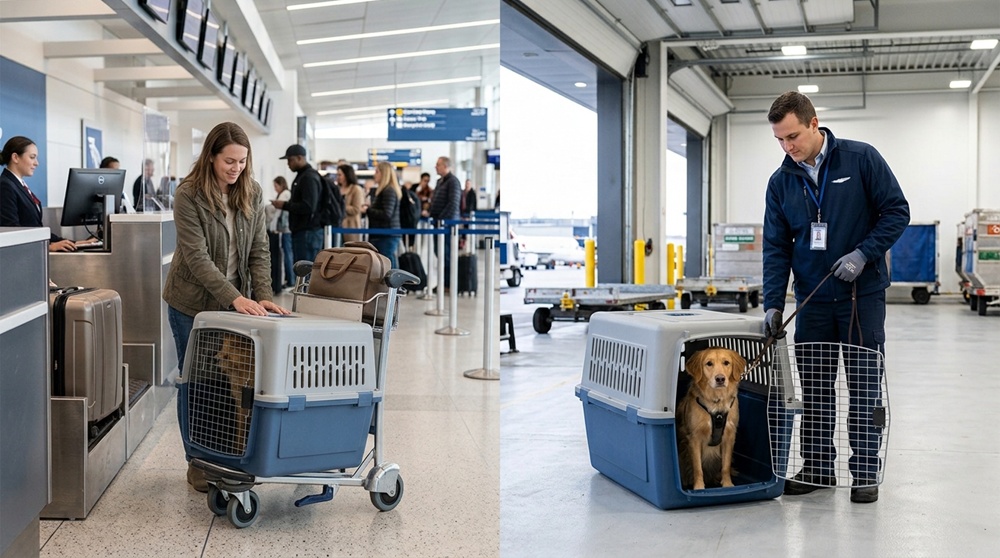

Choosing the right travel kennel is one of the most important, and most misunderstood, parts of pet travel. For air travel in particular, your pet’s crate is not just a container. It is their personal space, safety system, and comfort zone for the entire journey.
One of the most common reasons pets experience travel delays or are denied boarding is incorrect crate sizing. Even when a kennel looks “big enough,” it may not meet airline or international requirements once your pet is assessed at the airport.
That’s why accurate measurements and the right IATA compliant kennel are essential for safe, successful pet travel.
Airlines and international regulators have clear requirements for how pets must travel by air. These standards exist to ensure pets can:
A kennel that is too small can restrict movement and breathing. While IATA does not specify this, a kennel that is too large can also pose risks, allowing pets to shift excessively during turbulence or handling.
This is why crate sizing for pet travel isn’t about approximation — it’s about precision.
You’ll often see the term IATA-compliant kennel, which refers to travel crates that meet the Live Animals Regulations established by the International Air Transport Association.
While the regulations themselves use formal language, the purpose is simple: to protect pets during air travel.
An IATA compliant kennel must meet requirements related to:
Even if a kennel is marketed as “airline ready”, it must be correctly sized for your specific pet to be considered compliant. Airline ready does not mean IATA compliant. It is important the kennel is clearly marked IATA compliant to avoid the risk of the kennel being rejected by the airline at the time of check in.
Accurate crate measurements are the foundation of safe pet travel. Small inaccuracies, sometimes just an inch, can result in a kennel being rejected at check-in.
For air travel, kennel sizing is based on four specific dimensions of the pet:
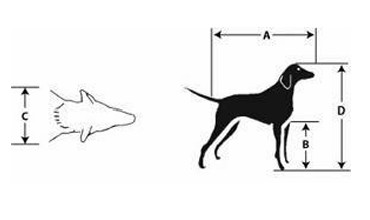
The goal is to ensure the pet can stand naturally, turn comfortably, and lie down without restriction. Because sizing is calculated using these specific dimensions, estimates based on breed or visual assessment are often inaccurate. Measurements should always be taken with your pet standing, not sitting or lying down.
This is why professional pet travel services rely on detailed measurement forms rather than visual estimates or breed assumptions. We do understand that it is difficult for a pet to standstill but it is very important that the pet must stand as still as possible to enable a correct measurement.
Even experienced pet parents are often surprised by how closely kennels are assessed. Common oversights include:
If a kennel appears even slightly undersized, pets may be denied boarding — often with no opportunity to correct the issue at the airport.
It is important to note that a brachycephalic breed must have a kennel size which is one size larger than the measured dimension. This is due to the fact that brachycephalic breeds have short snouts and may experience breathing issues when flying
Even when a kennel is IATA compliant, airline- and route-specific factors still matter, including:
This means the correct kennel for your pet must be selected in context of the specific travel itinerary, not just general guidelines.
The safest approach is to treat kennel selection as a core part of your pet’s travel plan, not an afterthought or a last minute purchase
When measurements are taken correctly and matched with the right IATA compliant kennel:
At Paws en route, kennel sizing is approached with the same level of care as documentation, routing, and airline coordination — because every detail matters when your pet is traveling. Our team will request that you fill out our pet measurement form before travel to helping reduce delays, rebookings, and last-minute surprises.
Ready to travel?
Our IPATA-certified pet travel specialists help manage the details, from airline booking to health certificates and import permits, for a smoother travel experience.
Get a custom quotePaws en route provides trusted support for every step of pet travel, from complex international relocations to domestic travel within Canada.