Travelling or relocating from Canada to Colombia with a dog or cat requires coordination between Colombian entry requirements, Canadian export documentation and the airline carrying your pet.
The process generally includes confirming the required vaccinations, completing internal and external parasite treatment, preparing a CFIA-endorsed veterinary health certificate, registering with Colombia’s animal-health authority and arranging a flight that can safely accommodate your pet.
Airline acceptance is not guaranteed simply because a passenger route is available. Each carrier has its own restrictions based on the pet’s size, breed, carrier or crate, aircraft type, temperature and how the pet will travel.
Paws en route helps pet owners understand these requirements, coordinate the documentation process and identify the most direct and least complicated suitable route for the individual pet.
Dogs and cats entering Colombia must meet the requirements of the Instituto Colombiano Agropecuario, commonly called ICA. For an ordinary pet dog or cat travelling from Canada, the process generally includes:
A separate advance import permit is not generally required for ordinary pet dogs and cats. However, the CIS application and arrival inspection are part of the entry process and should not be treated as optional.
Dogs and cats must be at least 15 weeks old to enter Colombia under the standard pet process. This reflects the rabies timing requirement. A pet receiving its first rabies vaccination must wait at least 21 days before shipment, and rabies vaccines are generally administered no earlier than 12 weeks of age.
ICA does not currently list a microchip as a universal entry requirement for ordinary dogs and cats arriving in Colombia. Microchipping is still strongly recommended because it provides permanent identification and may be required by the operating airline, a transit country, a future destination. It will also be required for returning to Canada or travelling elsewhere later.
When the pet is microchipped, the same number should appear consistently across vaccination records, health certificates and airline documentation.
Dogs must have a valid rabies vaccination administered by a licensed veterinarian. For a first rabies vaccination, at least 21 days must pass before shipment. The vaccination must remain valid when the dog enters Colombia. ICA’s current list also includes vaccination against:
The vaccination certificate should show the vaccine name, batch or lot number, administration date and validity or expiry date.
Cats must also have a current rabies vaccination. When it is the cat’s first rabies vaccination, the required 21-day waiting period applies before shipment. ICA’s current list also includes vaccination against:
All vaccinations should remain valid through the date of entry and be documented with the vaccine name, lot number, date administered and validity period.
Preventive treatment against both internal and external parasites must be administered within 60 days before travel. The health certificate should identify the treatment date, the product name, the active ingredient and confirmation that both internal and external parasites were addressed.
Keep the veterinary treatment record and invoice available so the certifying veterinarian can accurately include the required details on the final health certificate.
The pet must travel with an original veterinary health certificate issued or officially endorsed no more than 10 calendar days before the pet enters Colombia. For pets departing Canada, a licensed veterinarian normally examines the animal and completes the appropriate export certificate. The certificate must then be endorsed by an official veterinarian with the Canadian Food Inspection Agency before the pet leaves Canada. The certificate should confirm:
CFIA endorsement cannot be completed after departure. Book the endorsement appointment in advance and ensure the health-certificate date will still fall within Colombia’s 10-day window on arrival.
Vaccination certificates should travel with the original health certificate and contain the veterinarian’s details, vaccine names, lot numbers, administration dates and validity dates.
Before travel, the owner or responsible person should register as an ICA user through SISPAP and request the Certificado de Inspección Sanitaria, commonly called the CIS. The process generally involves:
One application can generally include up to 10 animals of the same species. Dogs and cats require separate applications when both species are travelling.
ICA indicates that the request may be handled at the point-of-entry office when the online process cannot be completed. Pre-registration is still preferable because it reduces uncertainty after the flight.
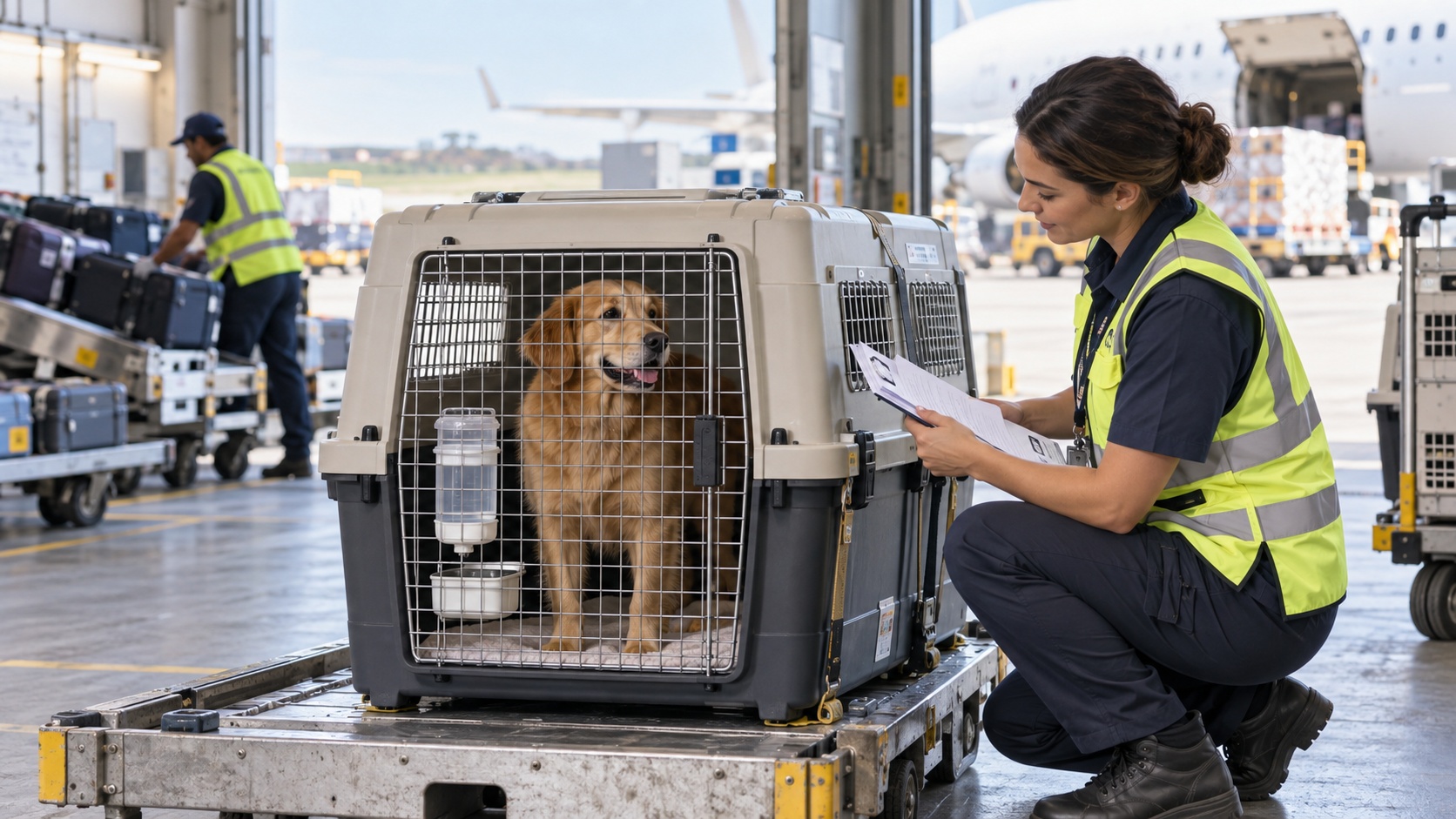
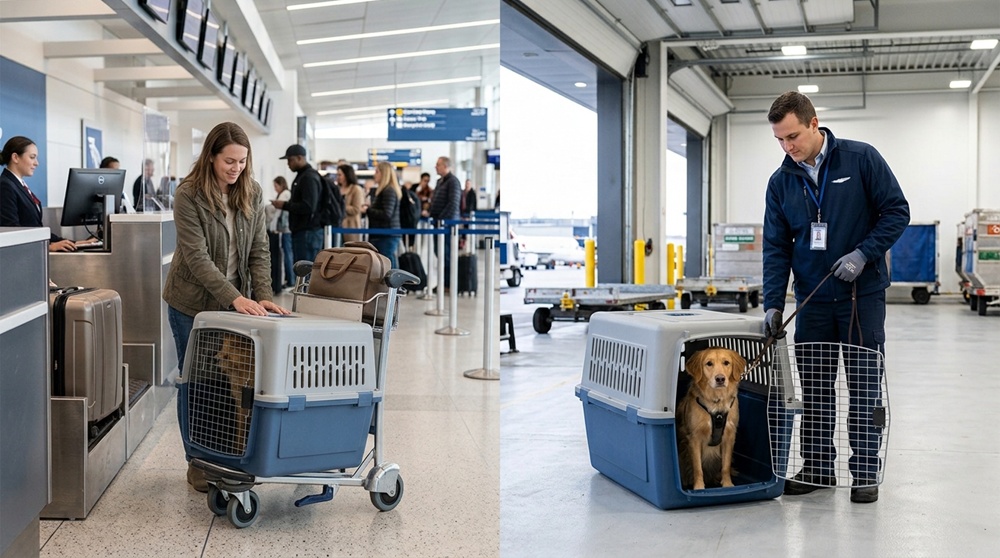
Travelling with a pet to Colombia can involve flying in the cabin, as checked baggage or in manifest cargo, depending on your pet's size, breed, the airline and your route. Not every airline offers all three options, and a passenger reservation does not automatically include a pet reservation.
The best option depends on both your pet and your itinerary. Paws en route generally recommends the most direct and least complicated suitable route rather than choosing flights based only on passenger schedules or price.
Air Canada accepts eligible small cats and dogs in the cabin and eligible pets in the baggage compartment on certain Air Canada-operated flights. Larger pets and crates may need to travel through Air Canada Cargo’s AC Animals service.
Cabin pets must travel in a flexible, soft-sided carrier that fits beneath the seat. Codeshare restrictions are important because a flight sold by Air Canada but operated by another airline may not accept the pet under the same booking. Baggage-compartment and cargo acceptance can also vary by aircraft, season, destination and crate size.
Avianca offers pet transport on eligible flights, subject to advance approval, documentation, aircraft restrictions and space. Current Avianca guidance states that eligible dogs and cats older than four months may be accepted:
The owner must also carry Avianca’s required pet-transport form and all destination documentation at check-in.
Some itineraries may connect through the United States or another Latin American hub. These routes require additional scrutiny because transit and airline requirements may apply even when Colombia itself does not require a rabies titre test.
A route that appears simple for a passenger may be unsuitable for a pet if it involves a codeshare, self-transfer, terminal change, unprotected connection or an airline that will not accept the pet on one of the sectors.
Snub-nosed or brachycephalic dogs and cats face increased respiratory risks during air travel. Airlines may refuse them, restrict them to certain seasons or require specialized arrangements. Colombia also prohibits the import of dogs identified as:
Pet owners should disclose the complete breed, including possible mixed ancestry, before purchasing passenger tickets or beginning the pet booking.

Pets travelling in the aircraft hold or as cargo need a secure crate that meets the operating airline’s requirements and applicable IATA Live Animals Regulations.
The crate must generally allow the pet to stand without touching the roof, sit upright, turn around normally and lie down in a natural position. It should also have suitable ventilation, secure fasteners, fixed food and water dishes, absorbent bedding and the required exterior identification. Read our guide to pet travel crate measurements.
When a pet travels through another country, that country may impose transit documentation, permit, health or handling requirements. This is especially relevant for itineraries connecting through the United States. Dogs transiting the U.S. may be affected by current U.S. dog-entry rules and airline procedures even when the passenger does not formally enter the country.
CFIA advises travellers to check every transit country as well as the final destination. This is one reason Paws en route generally favours routes with fewer connections and fewer airline changes, provided the route is suitable for the pet.

At the airport, port or land-border point of entry, the owner, consignee or representative must present the pet and original documents to the ICA office. The arrival process generally includes:
Keep the original documents readily accessible rather than placing them in checked luggage or attaching the only copies to the crate. Routine quarantine is not generally required when the pet and documents comply. When there is a health concern or documentation problem, ICA may impose measures such as temporary retention, home quarantine, re-export or another sanitary action.
The ICA clearance covers entry into Colombia, but a pet continuing beyond the international arrival city may face separate airline or ground-transport requirements. Owners should confirm:
Paws en route can help plan the journey through to the final destination, including airport transfers and destination support where available.
Exact timing should be based on the travel date, vaccination history, CFIA appointment availability and airline booking.
Carrier or crate familiarization should begin well before departure. The carrier should become a normal resting space rather than something introduced on travel day. Before the flight:
Sedation is generally discouraged unless specifically directed by a veterinarian who understands the risks and the airline’s rules. Read Preparing Your Pet for Air Travel: 5 Tips for a Smoother Journey.
International pet travel involves several organizations, each with its own requirements and deadlines. Paws en route can provide support with one part of the journey or coordinate a more complete travel plan.
Depending on the pet and itinerary, support may include:
Because airline and government requirements can change, every journey is reviewed based on the pet, route and intended travel date.
A separate advance import permit is not generally required for an ordinary dog or cat. However, the owner must apply for the ICA Certificado de Inspección Sanitaria and complete the arrival inspection.
The original health certificate must be issued or officially endorsed no more than 10 calendar days before the pet enters Colombia.
Yes. For pets departing Canada, the appropriate export certificate should be completed by a licensed veterinarian and endorsed by CFIA before departure.
ICA does not currently list a microchip as a general requirement for ordinary pet dogs and cats. It may still be required by the airline, a transit country or a later destination.
Dogs and cats must be at least 15 weeks old.
At least 21 days must pass after the first rabies vaccination before shipment.
ICA’s standard requirements for dogs and cats from Canada do not list a rabies titre test.
Possibly, when the pet fits the operating airline’s cabin-carrier and weight requirements and every sector permits cabin pets.
Routine quarantine is not generally required when the pet is healthy and the documents pass ICA inspection.
The best route depends on the Canadian departure city, the pet’s size and breed, how the pet will travel and the final destination in Colombia. Paws en route generally recommends the most direct and least complicated suitable route.
Possibly, but options may be limited. Airlines can impose breed, temperature and route-specific restrictions.
The owner or representative presents the pet and original documents to ICA. ICA reviews the records, examines the pet and issues the CIS when the inspection is satisfactory.
Moving a pet from Canada to Colombia requires more than booking a passenger flight. Vaccination timing, parasite treatment, veterinary documentation, CFIA endorsement, ICA registration, airline acceptance, carrier preparation and arrival arrangements must work together.
Paws en route helps coordinate these details around your pet and intended journey. Whether you need documentation support, air-travel coordination, airport transportation or a more fully managed relocation, our team can help develop a suitable travel plan.
Ready to begin planning? Request a custom pet-travel quote from Paws en route.
Pet import and airline requirements can change. Always verify the current rules for your specific pet, airline, route and travel date before departure.
Ready to travel?
Our IPATA-certified pet travel specialists help manage the details, from airline booking to health certificates and import permits, for a smoother travel experience.
Get a custom quotePaws en route provides trusted support for every step of pet travel, from complex international relocations to domestic travel within Canada.