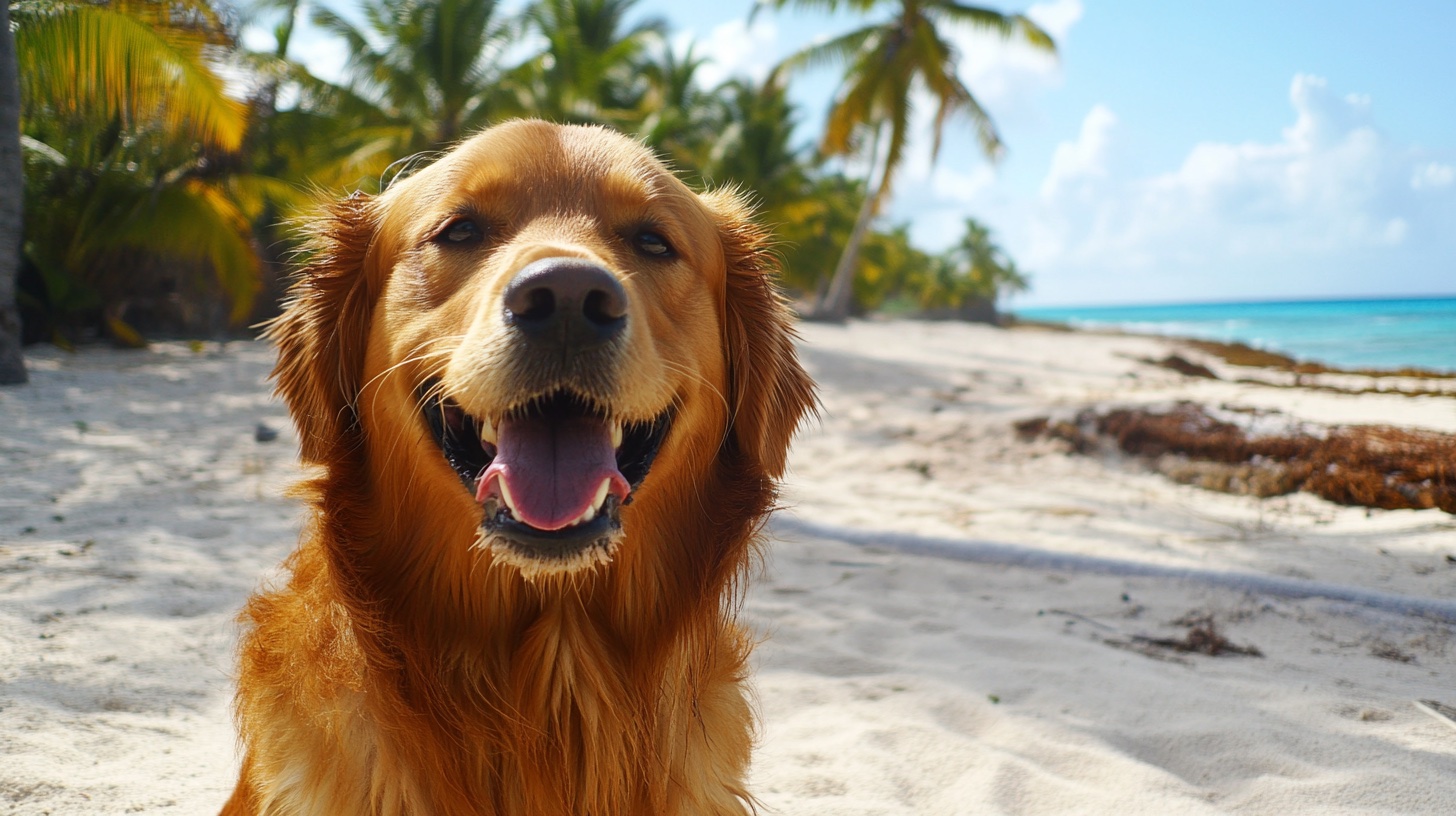


Travelling or relocating a pet from Canada to Costa Rica is relatively straightforward compared with many international destinations, but dogs and cats still need to meet specific veterinary and documentation requirements before departure. Costa Rica requires an official health certificate, appropriate vaccinations and recent treatment against internal and external parasites. For pets travelling from Canada, the country has a specific health certificate that must be completed by a licensed veterinarian and endorsed by the Canadian Food Inspection Agency (CFIA).
An important difference is how your pet travels. A pet accompanying its owner in the cabin has a simpler entry process, while a pet travelling as manifest cargo or unaccompanied requires additional arrangements with Costa Rica’s Animal Quarantine Service and customs before travel.
This guide focuses on dogs and cats travelling from Canada. Paws en route works with many types of animals, but birds, rabbits, reptiles and other species can have different Costa Rican import requirements.
Table of Contents
Costa Rica’s National Animal Health Service, SENASA, requires dogs and cats to undergo a clinical veterinary examination in their country of origin within the two weeks before travel. The animal must be clinically healthy, free of signs of infectious disease and fit to travel. Dogs and cats must also be treated against internal and external parasites within 15 days before export. Pets older than three months require a current rabies vaccination, and Costa Rica specifies additional core vaccinations for dogs and cats. For pets travelling from Canada, these requirements are documented on the Canada-specific International Health Certificate for Dogs and Cats (HA2809).
A veterinarian licensed to practise in Canada must examine the pet within 14 days before departure and complete the CFIA health certificate for Costa Rica. The veterinarian certifies that the pet is clinically healthy, shows no signs of infectious disease and is fit to travel, while also recording the animal’s identification, vaccinations and parasite treatments. The certificate is valid for 14 days from the veterinary examination, so the private veterinary appointment, CFIA endorsement and flight should be coordinated carefully.
Dogs and cats over three months of age must have a current rabies vaccination that remains valid on the day they enter Costa Rica. The health certificate records the vaccination date, validity, vaccine name, manufacturer and batch number. A rabies antibody titre test is not listed as a standard requirement on the current Canada-to-Costa Rica certificate. Dogs must also have current vaccinations against distemper, hepatitis, parvovirus and leptospirosis, while cats require feline viral rhinotracheitis, calicivirus and panleukopenia vaccination.
Dogs and cats must receive treatment against both internal and external parasites within 15 days before export. The products must be approved for use in Canada, and the CFIA certificate records the treatment date, product and manufacturer, active ingredient and lot number. Because the parasite-treatment and veterinary-examination windows are similar, these steps can often be coordinated as part of the pet’s final veterinary preparations.
A microchip is not stated as a universal mandatory requirement on the current Canada-to-Costa Rica health certificate; the certificate provides a field for a microchip and/or tattoo number if applicable. Paws en route nevertheless recommends microchipping pets travelling internationally because permanent identification can help reunite a lost pet with its family and link veterinary and travel records to the individual animal. A microchip may also be required by an airline, transit country or subsequent destination.
After the licensed veterinarian completes the Costa Rica health certificate, it must be endorsed by an official CFIA veterinarian before the pet leaves Canada. CFIA cannot retrospectively endorse export certification after departure, so the appointment should be arranged in advance. Since the certificate is valid for only 14 days from the private veterinarian’s examination, the examination, CFIA appointment and flight date need to be planned together.
The arrival process depends on how the pet travels. For an accompanied pet travelling in the cabin, the current CFIA certificate states that the endorsed export health certificate is presented at the Costa Rican border inspection post. Pets travelling as cargo or unaccompanied require additional advance procedures, including coordination with Costa Rica’s Animal Quarantine Office and customs. SENASA states that pets declared as cargo require an advance import permit processed through a customs agency. This distinction is particularly important for larger dogs and pets relocating without their owners.
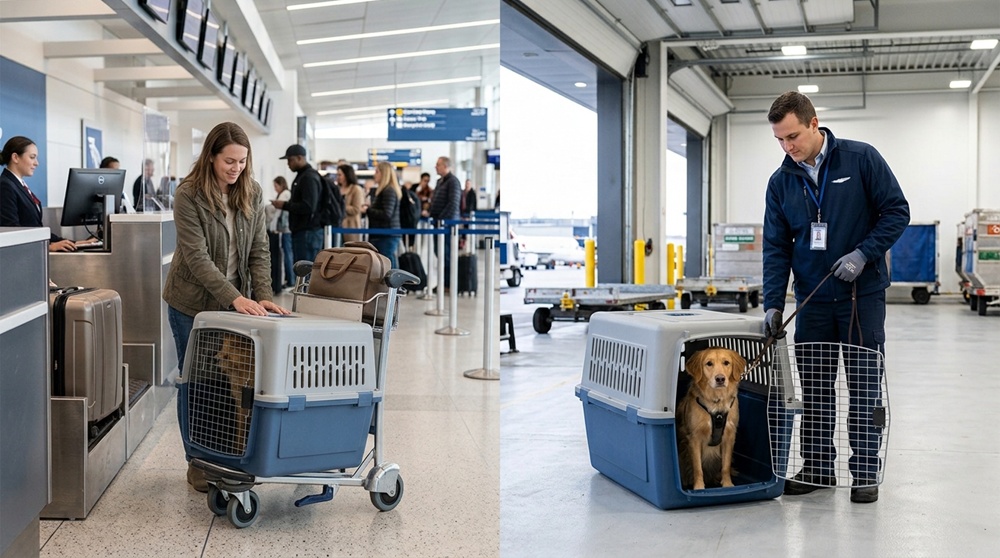
Depending on the airline, pet size and route, a dog or cat may travel in the passenger cabin, as accompanied baggage or as manifest cargo. Small pets may qualify for cabin travel when they can remain comfortably in an approved carrier under the seat. Larger dogs generally require transportation in the aircraft hold or as manifest cargo, subject to airline policy.
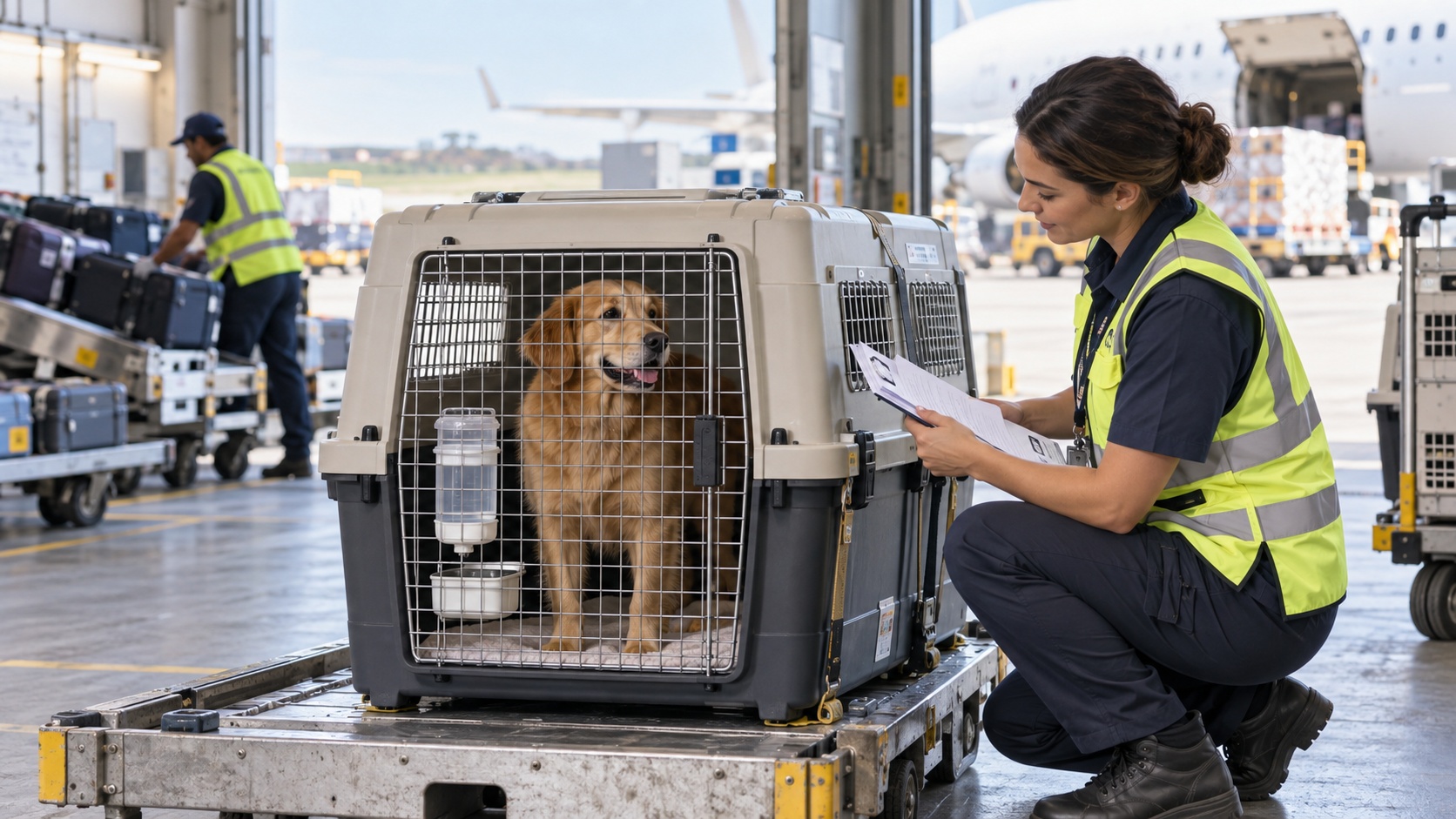
Manifest cargo is a specialized live-animal shipment with its own air waybill, handling process and destination clearance, and for Costa Rica it also triggers additional SENASA and customs procedures. Paws en route generally recommends the most direct and least complicated suitable route for the individual pet, taking into account size, breed, aircraft, weather, airline restrictions, handling facilities and destination.
There are nonstop passenger flights between Canada and Costa Rica’s principal international gateways, San José (SJO) and Liberia (LIR), although routes and frequencies vary seasonally. San José is generally the logical gateway for families relocating to the Central Valley and central Costa Rica, while Liberia can be more convenient for Guanacaste and the northwestern Pacific coast.
A passenger flight being available does not mean the airline will accept a pet on that particular service, so the operating carrier, aircraft, pet method, crate size, breed restrictions and seasonal temperature limits should be confirmed before booking. A direct flight followed by suitable ground transportation can sometimes be preferable to adding another flight simply to arrive closer to the final destination.
Pets travelling in the aircraft hold or as manifest cargo need a crate that meets the operating airline’s requirements and applicable IATA Live Animals Regulations. The crate must be appropriately sized so the pet can stand naturally, turn around and lie down comfortably, with suitable ventilation, door construction, fasteners and water containers.
Costa Rica’s tropical climate also makes temperature planning important, as airlines may restrict animal transportation during hot conditions at the departure, transit or arrival airport.
On arrival, the pet’s documents are presented to Costa Rica’s animal-health authorities for inspection. For an accompanied cabin pet, the endorsed CFIA health certificate is presented at the border inspection post. A manifest-cargo arrival involves a more extensive process because the shipment must also complete the applicable animal-quarantine and customs procedures, making advance coordination with a customs agency or destination partner especially important. If the pet does not meet Costa Rica’s sanitary requirements, SENASA can deny entry and require the animal to be returned to its country of origin.
If the trip to Costa Rica is temporary, plan the return before leaving Canada. Canada applies its current import requirements when a Canadian pet returns from another country, and those requirements can depend on the animal’s age, rabies status and circumstances. Costa Rica also has an export process in which a private veterinarian prepares the applicable export certificate for official SENASA validation. Keep vaccination, microchip and travel records throughout the trip, and confirm both SENASA export requirements and CFIA re-entry requirements before the return journey.
Four to eight weeks before travel, review the pet’s age, vaccinations, health, breed and likely travel method, and confirm whether the pet can travel in the cabin, as accompanied baggage or as manifest cargo. Several weeks before travel, confirm the airline, pet reservation and crate; if cargo is required, begin coordinating SENASA, customs and destination handling.
Within 15 days before export, complete the required internal and external parasite treatment. Within 14 days before departure, complete the veterinary examination and Costa Rica-specific CFIA health certificate. Before departure, obtain CFIA endorsement and ensure any additional cargo import and customs requirements have been completed.
The requirements in this guide apply specifically to dogs and cats. Birds, rabbits, reptiles, rodents and other animals may have separate Costa Rican import requirements, including permits, veterinary certification or wildlife documentation. Paws en route works with many types of animals and can research the requirements based on the species, proposed route and reason for travel.
Yes. Dogs and cats travelling from Canada require the Costa Rica-specific CFIA health certificate, completed by a licensed Canadian veterinarian and endorsed by an official CFIA veterinarian before departure.
The current certificate is valid for 14 days from the date the licensed veterinarian examines the pet.
Dogs and cats over three months old must have a current rabies vaccination. A rabies antibody titre test is not listed as a standard requirement on the current Canada-to-Costa Rica certificate.
The current Canada-specific certificate lists a microchip and/or tattoo number if applicable rather than making microchipping a universal entry requirement. Paws nevertheless recommends permanent identification for international travel.
Yes. Dogs and cats must be treated against internal and external parasites within 15 days before export.
It depends on how the pet travels. An accompanied cabin pet has a simpler border process, while a pet travelling as cargo or unaccompanied requires additional advance SENASA and customs procedures, including an import permit for cargo movements.
Yes. Nonstop passenger routes operate from Canada to San José and Liberia, although schedules vary seasonally. Pet acceptance must be confirmed separately with the operating airline.
Routine quarantine is not described as part of the normal process for a healthy dog or cat arriving with compliant documents. SENASA can refuse entry or take other action when sanitary requirements are not met.
In addition to meeting the health requirements, a cargo or unaccompanied pet requires advance coordination with Costa Rica’s Animal Quarantine Office and customs. Paws en route can help coordinate these additional steps before the pet leaves Canada.
Costa Rica may have a relatively straightforward veterinary process for an accompanied dog or cat, but the logistics become more complicated when a pet is large, travels as cargo or is relocating without its owner. Paws en route can help review the current Costa Rican requirements, coordinate the veterinary and CFIA timeline, determine whether advance SENASA and customs arrangements are required, and select the most direct and least complicated suitable route.
For pets travelling as manifest cargo, Paws can also help arrange the air booking, travel crate, Canadian ground transportation, cargo check-in and destination coordination. Support can be provided for one part of the journey or as part of a more fully managed pet relocation.
Pet travel from Canada to Costa Rica is manageable when the veterinary requirements, CFIA certification, airline arrangements and Costa Rican arrival process are planned together. For an accompanied small pet travelling in the cabin, the process can be relatively simple. For a larger pet travelling as cargo, there are additional import, customs and handling requirements that should be arranged well before departure.
Paws en route can help determine the appropriate travel method and coordinate the details based on your pet, departure city, final destination and travel dates.
Ready to travel?
Our IPATA-certified pet travel specialists help manage the details, from airline booking to health certificates and import permits, for a smoother travel experience.
Get a custom quotePaws en route provides trusted support for every step of pet travel, from complex international relocations to domestic travel within Canada.