Planning to move or travel from Canada to Germany with your dog or cat? Germany is one of the more common European destinations for Canadian pet owners because of strong flight connectivity through major hubs such as Frankfurt and Munich. But while the process is very manageable, it is not something to leave until the last minute.
Pets travelling from Canada to Germany must meet European Union entry requirements, Canadian export documentation requirements, and the rules of the airline operating the flight. The details matter: microchip timing, rabies vaccination dates, CFIA endorsement, the correct EU animal health certificate, crate sizing, route selection, and whether your pet can travel in cabin, as checked baggage, or as cargo.
This guide explains the main steps for bringing a pet from Canada to Germany and where professional pet travel support can help make the journey safer, smoother, and less stressful.
In most cases, yes. Dogs, cats, and ferrets can travel from Canada to Germany without quarantine when they meet EU pet entry rules. For most non-commercial moves from Canada to Germany, your pet will generally need:
These rules apply to dogs, cats, and ferrets. Other animals, pets being sold or transferred to a new owner, pets travelling more than five days apart from the owner, and larger multi-pet moves may fall under different requirements.
One of the most common mistakes pet owners make is booking a flight first and checking the pet rules later. For Germany, the better approach is to start with your pet's timeline. Before choosing a flight, confirm:
Once those pieces are confirmed, it becomes easier to choose the best route, travel date, and airline for your pet.
Your pet must be identified by a microchip before entering Germany.
The microchip number must match your pet's veterinary records, rabies vaccination record, and travel documents. Before beginning the paperwork, ask your veterinarian to scan the microchip and confirm that the number is readable and recorded correctly.
The order matters. Your pet's rabies vaccination must be administered after the microchip is implanted or after the microchip has been read and recorded. If the rabies vaccine was given before the microchip was documented, that vaccine may not count for EU entry and your pet may need to be vaccinated again.
Dogs, cats, and ferrets travelling from Canada to Germany need a valid rabies vaccination. For a primary rabies vaccination, the EU generally requires a waiting period before travel. This means your pet may not be eligible to enter Germany until at least 21 days have passed after the primary rabies vaccination protocol is complete.
Your pet's rabies record should clearly show:
A rabies antibody titre test is not usually required for pets travelling directly from Canada to Germany under standard EU rules. However, it may be required if your pet has recently been in an unlisted country or if your itinerary includes certain types of transit. This is one reason to review your pet's full travel history before confirming the route.
For travel from Canada to Germany, your pet will generally need the correct EU animal health certificate for dogs, cats, and ferrets.
This is not simply a general vet letter. The certificate must be completed accurately, include the correct microchip and rabies information, and be endorsed by the Canadian Food Inspection Agency before your pet leaves Canada.
Build in time for:
Small errors can cause major stress. A single incorrect microchip digit, missing vaccine detail, or certificate timing issue can create delays at departure or arrival.

Canadian pets travelling to Germany for the first time usually do not travel on an EU pet passport. Instead, they need the correct EU animal health certificate, completed in Canada and endorsed by the Canadian Food Inspection Agency before departure.
An EU pet passport is generally issued by an authorized veterinarian within the European Union for dogs, cats, and ferrets. It can be useful for future travel within the EU or for return trips to the EU, as long as the pet's identification and rabies vaccination details remain valid.
For most Canadian pet owners, the important takeaway is this: do not wait to "get a pet passport" before leaving Canada. Start with the EU animal health certificate and CFIA endorsement process.
Germany follows EU rules for non-commercial pet movement.
For most family relocations or personal travel, your pet's movement must be linked to your own movement. Your pet must travel with you or with an authorized person within five days before or after your travel. You may also need to provide a declaration confirming that your pet is not being sold or transferred to another owner.
This distinction matters because your pet may need to follow commercial movement rules if:
If any of these apply, get advice before booking flights or veterinary appointments.
Germany does not generally require tapeworm treatment for dogs under the standard EU pet travel rules.
This is an important difference from some other European destinations. Tapeworm treatment is required for dogs entering Finland, Ireland, Malta, Northern Ireland, and Norway, but Germany is not typically one of those destinations.
That said, routing can matter. If your itinerary changes, your pet transits another country, or your final destination is outside Germany, confirm whether any additional requirements apply.
For many Canada-to-Germany pet moves, the most practical arrival points are Frankfurt and Munich.
Frankfurt is often the strongest option for pets because it is one of Europe's largest air cargo and passenger hubs. It can be especially useful for larger dogs, pets travelling as cargo, and moves that require professional coordination. Munich can also work well for families relocating to Bavaria or southern Germany, depending on airline acceptance and routing.
Berlin may be convenient for some owners, but direct pet-friendly options from Canada can be more limited or seasonal depending on the airline. If your final destination is Berlin, Hamburg, Düsseldorf, Stuttgart, Cologne, or another German city, it may still be better for your pet to arrive through Frankfurt or Munich and continue by ground transportation.
When choosing the arrival city, consider:
The best route for the owner is not always the best route for the pet.
Airline rules change, and pet acceptance can vary by aircraft, season, destination, and operating carrier. Always confirm the exact flight before booking. A codeshare flight sold by one airline may be operated by another airline, and the operating carrier's pet policy is usually the one that matters.
For Canada-to-Germany travel, pet owners often compare options such as:
Air Canada can be relevant for Canada-to-Germany travel, especially where direct or well-connected routes are available. Small cats and dogs may be accepted in cabin if they fit in a soft-sided carrier under the seat and meet Air Canada's requirements. Larger pets may need to travel in the baggage compartment or through Air Canada Cargo, depending on the pet, route, aircraft, season, and availability.
Air Canada requires pets to be registered in advance. Pets that have not been registered ahead of travel may not be accepted at the airport.
Lufthansa is often a practical airline to review for Germany because Frankfurt and Munich are major Lufthansa hubs. Lufthansa allows small dogs and cats in cabin when the animal and carrier meet its size and weight limits. Larger pets may travel in the cargo hold or as air freight, depending on the route and circumstances.
Lufthansa also notes special rules for certain breeds and snub-nosed animals, and a minimum age of 15 weeks for carriage from, to, or via Germany. This age rule is important for puppies and kittens.
Condor may be relevant for some Canada-to-Germany routes, especially Frankfurt-focused travel. Condor allows dogs and cats with confirmed reservations, subject to capacity and route rules. Pets may be transported in cabin or cargo hold depending on the pet's size, the carrier, the aircraft, and the airline's requirements.
Condor also has rules for connecting flights with other airlines, so it is important to avoid assuming that a mixed-airline itinerary will work for pet travel.
Some pet owners may look at European connections through airlines such as Air France. These routes can work in some cases, but layovers add complexity. If your pet is travelling through another EU country before Germany, the first EU point of entry may affect the language version of the certificate, inspection process, and routing plan.
For pets, the simplest route is often the safest route. Direct flights or carefully planned single-connection routes are usually preferable to lower-cost itineraries with multiple handoffs.
Sometimes, yes. Germany does not generally require pets arriving by air from Canada to travel only as manifest cargo. This means some small dogs and cats may be able to travel in cabin if the airline allows it and the pet fits comfortably in the approved carrier.
However, in-cabin travel is not guaranteed. Airlines limit the number of pets per flight and apply strict rules for carrier size, pet size, weight, seat location, breed, age, and route.
Larger pets will usually need to travel as checked baggage or cargo, depending on the airline and the route. For large dogs, Germany is often a destination where cargo planning should be reviewed carefully and early.
Not sure whether your pet should travel in cabin, as checked baggage, or as cargo? Read our guide to the 3 types of international pet air travel to understand the main options before choosing a route.
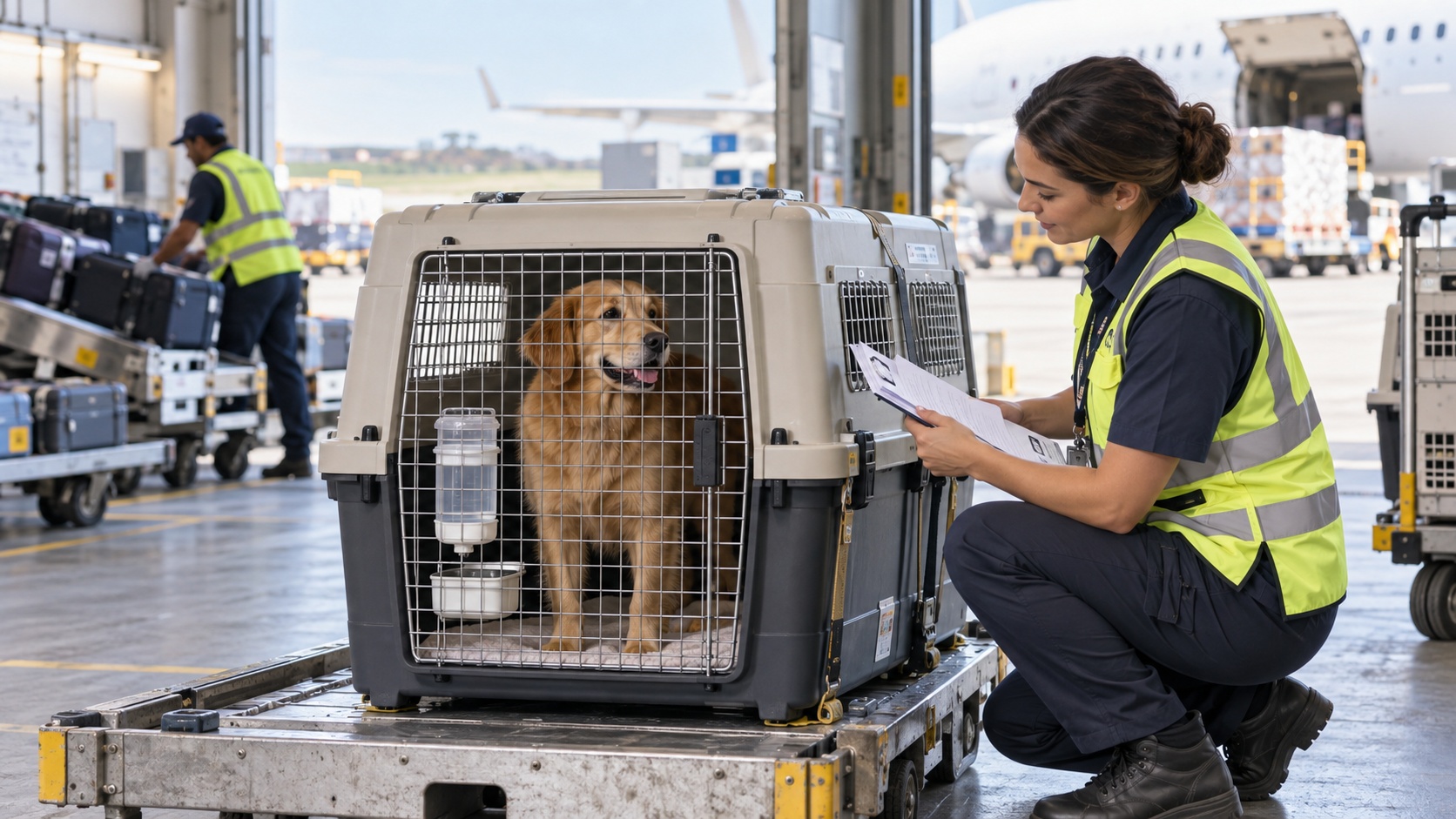
The right carrier or crate is one of the most important parts of safe pet travel.
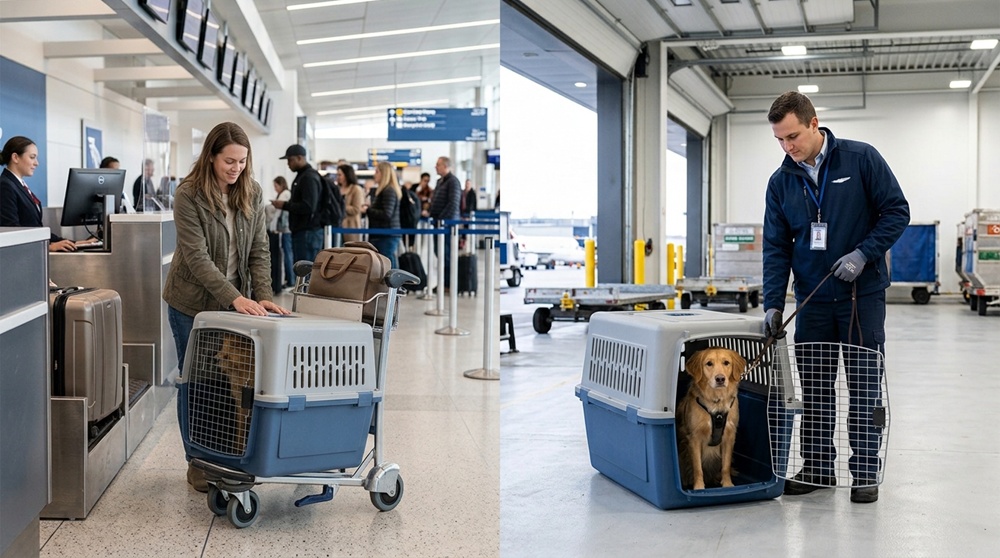
Small pets travelling in cabin usually need a soft-sided carrier that fits under the seat. Pets travelling in the baggage compartment or as cargo usually need a rigid airline-approved crate that meets live animal transport standards.
A properly sized crate should allow your pet to:
The crate should also have secure fasteners, appropriate ventilation, absorbent bedding if permitted, water containers, identification, and emergency contact information.
Do not wait until the final week to buy a crate. Some pets need time to adjust, and larger dogs may require a special-size or custom crate. Crate sizing is one of the most common reasons pets are denied travel.
The documents matter, but so does your pet's comfort. In the weeks before travel, help your pet become familiar with the carrier or crate. Leave it open at home, place familiar bedding inside if allowed, and use treats or meals to build a positive association. Gradually increase the amount of time your pet spends inside so the crate feels familiar before travel day. Before departure, speak with your veterinarian about:
Do not assume sedation is the answer. Many veterinarians and airlines discourage sedating pets for air travel because it can create safety concerns. For more practical tips before travel day, read our guide on preparing your pet for air travel, including crate familiarization, routine, and comfort planning.
Germany's strong rail and road network can make ground transport after arrival easier than in some destinations. For some families, the best plan is to fly the pet into Frankfurt or Munich and then arrange safe ground transportation to the final destination. This can be especially helpful if:
When planning the ground portion, consider rest stops, crate safety, weather, pickup timing, and whether the person collecting the pet has the correct documents.
When your pet arrives in Germany, officials may check your pet's identity and travel documents at the travellers' point of entry. They may review:
If everything is in order, your pet can usually continue with you, be released for pickup, or proceed with onward ground transportation. Processing times can vary based on airport, arrival time, staffing, paperwork, airline handling, and whether your pet travelled in cabin, checked baggage, or cargo.
The cost of pet travel from Canada to Germany depends on your pet, route, crate, airline, documents, and level of support needed. Common cost factors include:
Simple in-cabin travel for a small pet may cost much less than a large dog travelling as cargo. Moves involving multiple pets, large crates, complex routing, short timelines, or destination handling will generally require more planning and budget.
Pet travel from Canada to Germany is manageable, but these mistakes can cause delays:
Start as early as possible, especially if your dates are fixed. Several weeks of planning is recommended for many straightforward moves. More time may be needed if your pet needs a new microchip, rabies vaccination, custom crate, cargo booking, commercial documentation, or special routing.
Early planning gives you more options and more time to correct paperwork before the travel window becomes tight.
Paws en route helps Canadian families plan safe, compliant pet travel to destinations around the world, including Germany.
For Canada-to-Germany pet travel, our team can help with:
Paws en route is an IPATA member, giving our team access to a global network of professional pet shippers and trusted partners who understand international live animal transportation.
Whether you are relocating to Frankfurt, Munich, Berlin, Hamburg, Düsseldorf, Stuttgart, Cologne, or another German city, it is best to plan your pet's journey before booking your own flight.
Tell us where your pet is travelling from, where they are going, their breed, size, and ideal timeline. We can help you understand the next steps and provide a customized quote for your pet's move to Germany.
Request a Germany pet travel quote and let Paws en route help make the journey safer, smoother, and less stressful.
Ready to travel?
Our IPATA-certified pet travel specialists help manage the details, from airline booking to health certificates and import permits, for a smoother travel experience.
Get a custom quotePaws en route provides trusted support for every step of pet travel, from complex international relocations to domestic travel within Canada.