Travelling or relocating a pet from Canada to Mexico can be less document-heavy than travel to many other countries. For dogs and cats arriving directly from Canada, Mexico does not normally require a veterinary health certificate, rabies vaccination certificate or CFIA endorsement.
That does not mean there is no entry process. Your dog or cat must be presented to Mexico’s animal-health authority, the Servicio Nacional de Sanidad, Inocuidad y Calidad Agroalimentaria, commonly called SENASICA, for an inspection at the airport, port or land border. The condition of your pet, carrier and any food or accessories travelling with them can affect how smoothly that inspection goes.
This guide focuses on dogs and cats travelling from Canada. Other animals, including birds, reptiles, rabbits and exotic species, are subject to separate Mexican import requirements. Paws en route can help determine the correct process for the species you are travelling with.
Mexico applies a simplified process to dogs and cats arriving from Canada or the United States. For an ordinary personal pet arriving from Canada, you do not normally need to present:
Instead, your pet must be taken to the Agricultural Health Inspection Office, known as the Oficina de Inspección de Sanidad Agropecuaria or OISA, at the point of entry. A SENASICA official will inspect the animal and complete the entry process.
Although Mexico does not require these records for dogs and cats arriving from Canada, your airline may still request veterinary or vaccination documentation. The requirements of the airline and the destination country are separate and both must be checked before travel.
For entry into Mexico itself, dogs and cats originating in Canada do not normally need a health certificate or vaccination record. However, it is still sensible to carry your pet’s rabies vaccination record, other vaccination records, microchip information when applicable, a recent veterinary record, any airline-required health documentation, and a letter from your veterinarian if your pet has a visible skin condition, wound or ongoing treatment.
These records can help explain a medical condition and may also be required for the flight, a transit country or the pet’s eventual return to Canada.
Dogs and cats entering Mexico must receive a Certificado Zoosanitario para Importación, commonly abbreviated as CZI. You request the CZI from SENASICA upon arrival. SENASICA offices are located at Mexico’s international airports, ports and land-border entry points. Travellers may obtain the application form from SENASICA staff or complete the available form in advance.
For pets originating in Canada, no supporting health or vaccination documents are normally required to obtain the CZI. SENASICA instead relies primarily on the physical inspection of the animal.

A SENASICA official will examine your dog or cat to confirm that the pet:
The inspector will also look at the condition of the carrier and any bedding, food, toys or accessories inside it. When the pet passes inspection, SENASICA can issue the CZI and allow the pet to enter Mexico.
Because Mexico’s process is based heavily on physical inspection, the pet’s condition on arrival matters. Before travelling:
If your pet is being treated for a skin condition, carry a letter from a licensed veterinarian that explains the diagnosis and treatment. The letter should be on the clinic’s letterhead and include the veterinarian’s licence or professional identification details.
If an inspector finds an open wound, rash, parasite or possible infectious condition, veterinary assessment or treatment may be required at the owner’s expense.
If a tick is detected, SENASICA may collect it for laboratory identification. The pet can be held at the inspection office while officials determine whether the parasite is a species already present in Mexico. Testing, veterinary services and treatment may be charged to the owner.
Mexico requires the carrier used for entry to be clean. SENASICA advises that it arrive without loose bedding, toys, treats or other accessories. Items that may be removed during inspection include:
If the carrier is dirty or contains prohibited items, it may need to be disinfected and the contents may be removed and destroyed.
This creates a practical challenge because airlines may require absorbent material for animals travelling in the hold. The solution should be planned around both sets of rules. Speak with the airline or pet-travel coordinator about a compliant setup and whether bedding must be removed before SENASICA inspection.
Mexico generally permits only the amount of balanced pet food needed for the day of arrival. Bringing additional food can trigger separate packaging, origin and animal-product requirements. Homemade or artisanal pet food is not permitted under the standard traveller allowance.

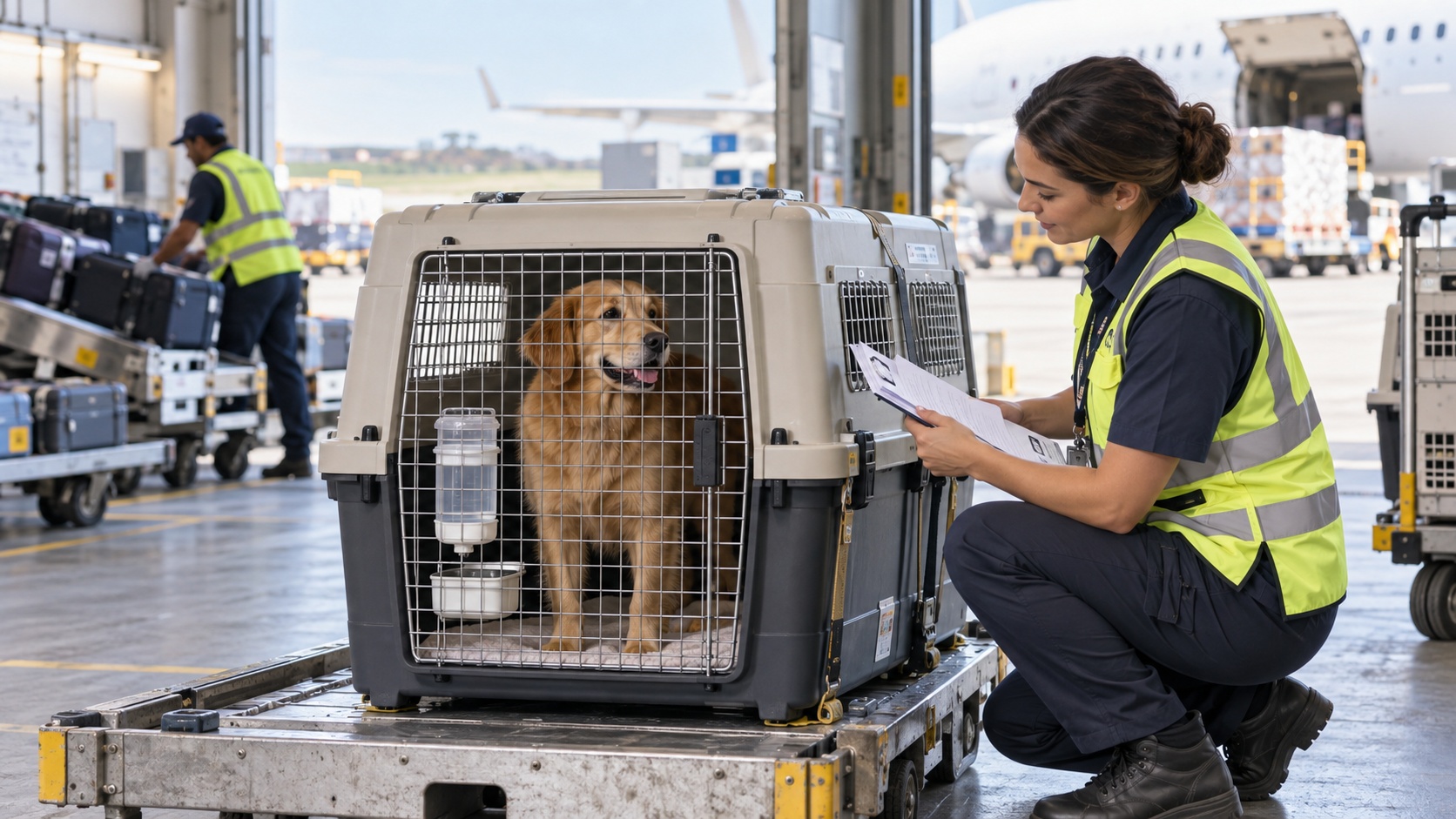
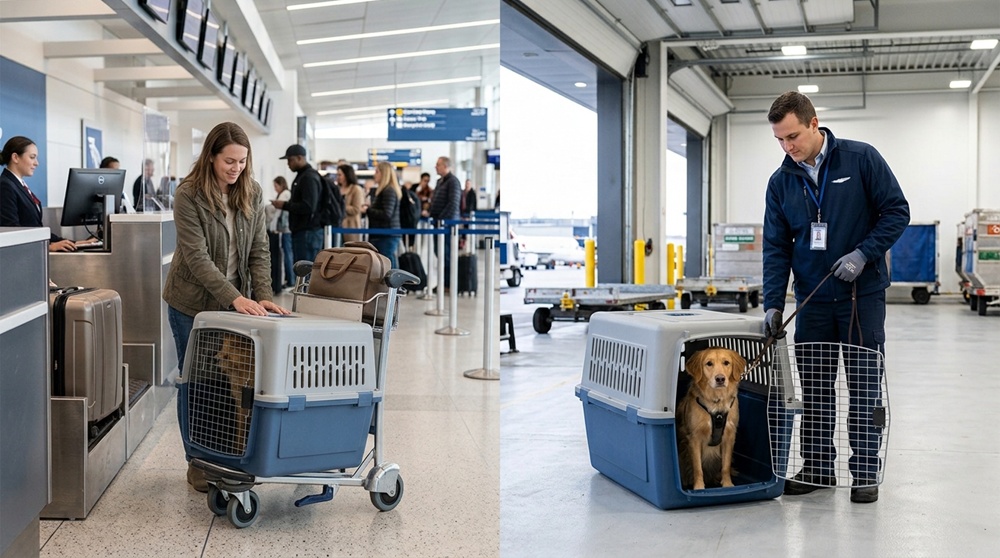
Depending on the pet and route, a dog or cat may travel in the passenger cabin, as accompanied baggage in the aircraft hold or as manifest cargo. The appropriate option depends on the animal’s species, size, breed, age and health, as well as the carrier or crate dimensions, aircraft and airline.
Mexico’s simplified entry requirements do not guarantee that the airline will accept the pet. Airlines may require:
Air Canada accepts eligible small dogs and cats in the cabin when they fit comfortably in a soft-sided carrier under the seat. Eligible pets may also travel in the baggage compartment on certain flights. Larger animals, unaccompanied animals or pets requiring arrangements that cannot be handled as passenger baggage may need to travel through Air Canada Cargo.
Acceptance depends on the operating aircraft, route, season, temperature, crate size and available space. A flight marketed by Air Canada but operated by another carrier follows the operating airline’s pet policy.
WestJet and other airlines may provide cabin or hold options on selected Mexico routes, but availability can vary significantly by flight and aircraft.
Rather than relying on fixed fees and dimensions, confirm:
A connection through the United States adds another country’s entry rules to the journey. Mexico’s requirements remain the same whether the pet arrives directly from Canada or travels through the United States. However, the owner must separately comply with any U.S. requirements that apply during transit.
For dogs, this can include current U.S. entry procedures administered by the CDC and, depending on the route and animal-health situation, other federal or state requirements.
For this reason, a direct Canada-to-Mexico flight may be simpler than an itinerary involving a U.S. connection, even when the connecting passenger fare is lower.
Mexico’s standard dog-and-cat entry pathway does not create a general prohibition on common domestic breeds, but airlines can impose their own restrictions.
Brachycephalic dogs and cats may be refused in the baggage compartment or cargo hold because they face increased respiratory risks during air travel. These restrictions may apply to breeds such as:
Strong or powerful breeds may also require reinforced crates or additional handling arrangements. Breed acceptance should be confirmed before purchasing passenger tickets.
The simplified Canadian-origin process described in this article applies specifically to dogs and cats. Other companion animals can require:
Owners travelling with birds, rabbits, rodents, reptiles, amphibians or exotic animals should not rely on the dog-and-cat requirements.
Canadian animals returning home are still treated as animals entering Canada and must meet applicable CFIA import requirements. The rules depend on:
Pet owners should use the CFIA import-requirements tool before departing Canada so that the documents needed for the return trip can be arranged in advance.
This is particularly important because requirements for returning to Canada may be more document-heavy than Mexico’s requirements for entry.
Mexico’s entry rules may be relatively simple for dogs and cats from Canada, but the overall journey can still become complicated when airline, breed, crate, transit and return-travel requirements are added.
Paws en route can help with:
Support can be provided for one part of the journey or as part of a more fully managed pet relocation.
No. Mexico does not normally require a health certificate for a dog or cat arriving from Canada. The airline may still require one.
SENASICA does not normally require a rabies certificate for dogs and cats originating in Canada. Carrying the record is still recommended because the airline, a transit country or Canada may require it.
Mexico’s standard entry process for dogs and cats from Canada does not generally list a microchip as a requirement. Microchipping remains strongly recommended for identification and may be required by an airline, transit country or future destination.
Not for an ordinary personal dog or cat using this pathway. You request the CZI from SENASICA at the point of entry.
A healthy dog or cat that passes inspection is not normally placed in routine quarantine. SENASICA may hold the animal or require testing or treatment if inspectors find parasites, wounds or signs of disease.
SENASICA advises that the carrier be clean and free of bedding, toys, treats and loose accessories at inspection. Items may be removed and destroyed.
Mexico generally allows enough balanced pet food for the day of arrival. Additional food is subject to separate packaging, origin and animal-health requirements.
Bring a veterinary letter describing the diagnosis and treatment. SENASICA may require examination or treatment if the condition appears infectious or creates an animal-health concern.
No. Animals other than dogs and cats use separate species-specific import procedures.
Mexico’s simplified entry process removes much of the veterinary paperwork commonly associated with international pet travel. The practical challenge is making sure the pet is healthy and parasite-free, the carrier is ready for inspection, the airline accepts the animal and the return journey has also been planned.
Paws en route can help coordinate the documentation, flight, crate, airport transportation and destination logistics appropriate for your pet and itinerary.
Ready to begin planning? Request a custom pet-travel quote from Paws en route.
Government and airline requirements can change. Always confirm the current rules for the specific pet, route and travel date before departure.
Ready to travel?
Our IPATA-certified pet travel specialists help manage the details, from airline booking to health certificates and import permits, for a smoother travel experience.
Get a custom quotePaws en route provides trusted support for every step of pet travel, from complex international relocations to domestic travel within Canada.