
For many pet parents, hearing that their dog or cat may need to travel in the aircraft’s cargo hold brings an immediate reaction:
“My pet is not flying in cargo.”
That concern is understandable. Most owners would naturally prefer to keep their pet nearby, and the word “cargo” can make it sound as though an animal is being treated like ordinary luggage.
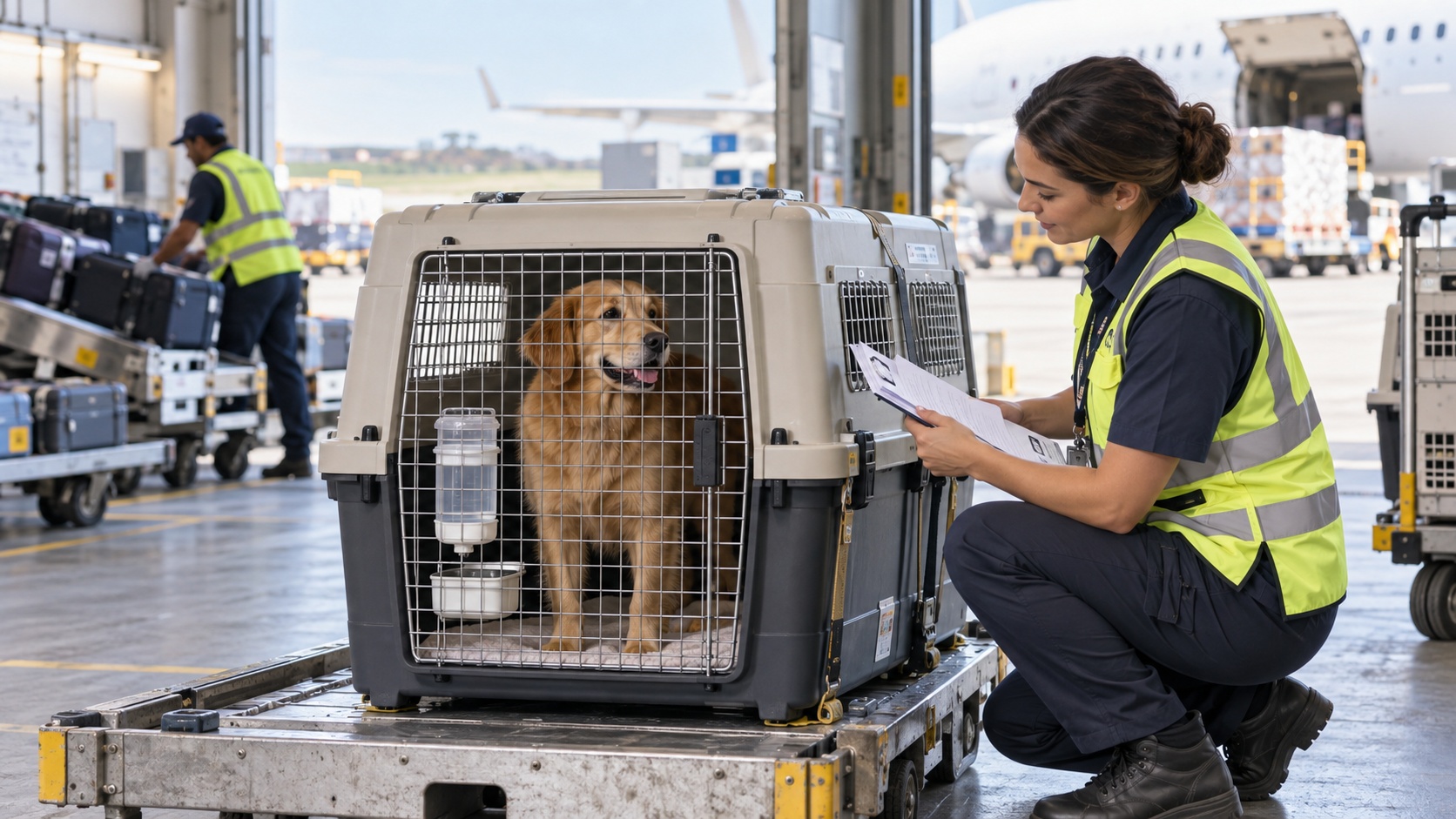
Professionally arranged pet cargo travel is more specialized than that image suggests. Pets travel under airline procedures for live animals, and the aircraft, route, kennel, weather and destination requirements must all be considered before a booking is accepted.
Cargo travel is not appropriate for every pet or every journey. A veterinarian may confirm that a pet meets the health requirements for travel, but a health certificate alone does not determine whether a specific flight and itinerary are suitable for that animal. The pet’s age, health, behaviour, kennel readiness, route and expected travel conditions must all be considered together.
Most owners would prefer their dog or cat to travel in the passenger cabin. However, that is not always an option.
Cabin travel is generally limited to small pets whose carriers fit completely beneath the passenger seat. Availability also depends on the airline, aircraft, route and destination country. Larger pets cannot meet in-cabin size restrictions, and some countries require pets to arrive through an approved cargo process regardless of their size.
As outlined in our guide to the three types of international pet air travel, pets may travel in the cabin, as accompanied baggage in the aircraft hold or as manifest cargo under a separate airline booking. For many international journeys, manifest cargo may be required because of the pet’s size, the airline’s policies, the owner’s travel arrangements or the destination’s import rules.
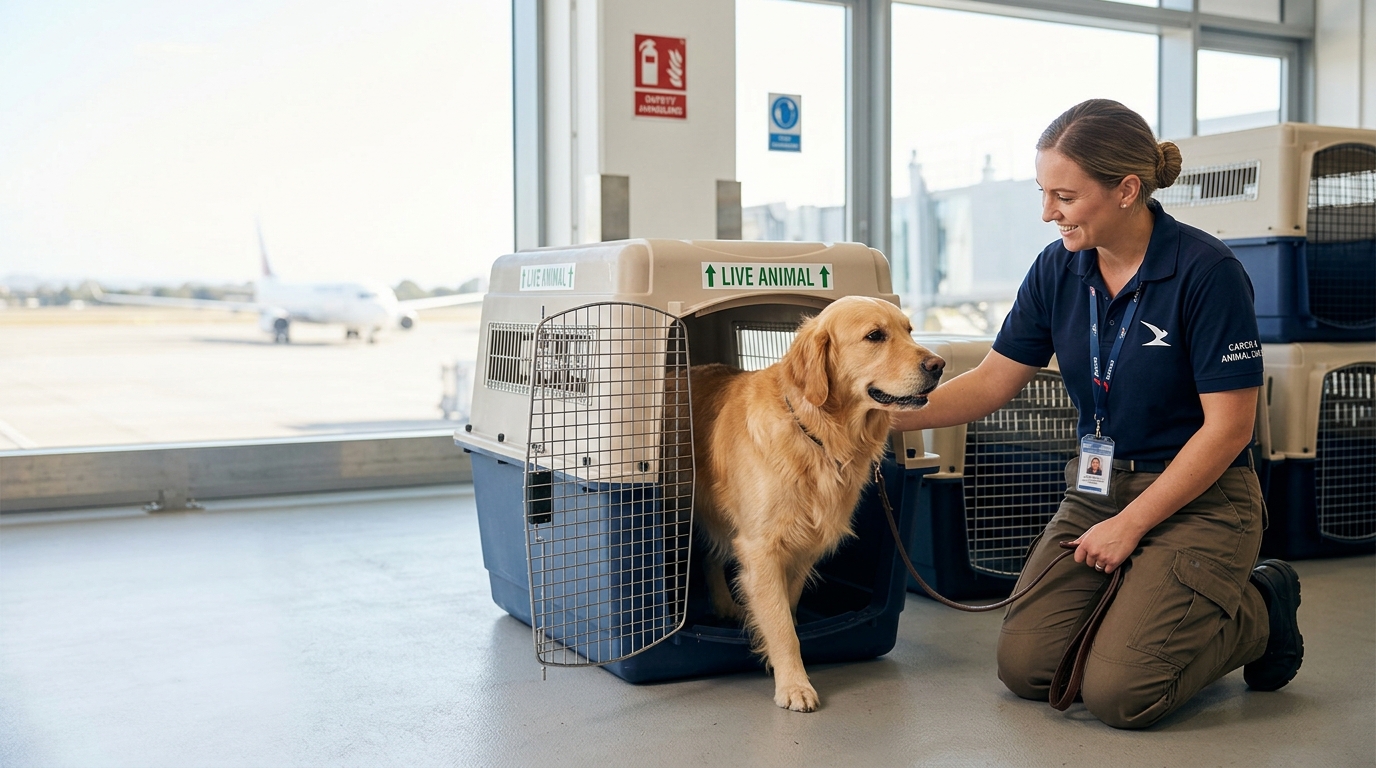
The important distinction is that a pet travelling as cargo is booked and identified as a live animal. It is not simply treated as ordinary luggage.
One of the biggest fears surrounding cargo travel is that pets are placed in a cold, unpressurized area alongside ordinary baggage. Pets accepted for air travel are transported in a designated aircraft compartment suitable for live animals. On an appropriate aircraft, that space is pressurized and temperature managed.
Not every aircraft or compartment can carry pets, however. An airline may sell passenger seats on a flight while being unable to accept a live animal because of the aircraft type, route or operating conditions.
The journey also includes more than the flight itself. A suitable plan must account for cargo acceptance, loading, unloading, transfers, customs procedures and collection at the destination. This is why a flight that looks convenient or inexpensive for the passenger may not be the best option for the pet.
As explained in International Pet Travel: Why It’s More Than Booking a Flight, the airline booking is only one part of a larger process involving documentation, regulations, animal welfare and logistics.
For many owners, the central concern is that placing a pet in the aircraft hold is inherently unsafe. Pet air travel is not risk-free, and cargo is not the right choice for every animal or every route. However, a properly planned cargo journey is very different from placing a pet in an ordinary baggage area without safeguards.
Safety depends on the complete journey, including the pet’s age and health, the airline, aircraft, kennel, weather, airport facilities, number of connections and overall travel time. Airlines may impose heat and cold restrictions, seasonal embargoes or route limitations when conditions are unsuitable. These requirements can be inconvenient, but they are intended to reduce avoidable risk.
Rather than asking whether cargo travel is always safe or unsafe, owners should ask whether the proposed journey is appropriate for their individual pet. A responsible plan evaluates the animal, airline, aircraft, kennel, weather and route together. Many pets travel successfully when the journey is carefully planned. In other situations, changing the date, route or method may be the more responsible decision.
Owners cannot accompany their pets into restricted cargo, baggage or airside areas. That separation can make it feel as though no one is watching over the animal.
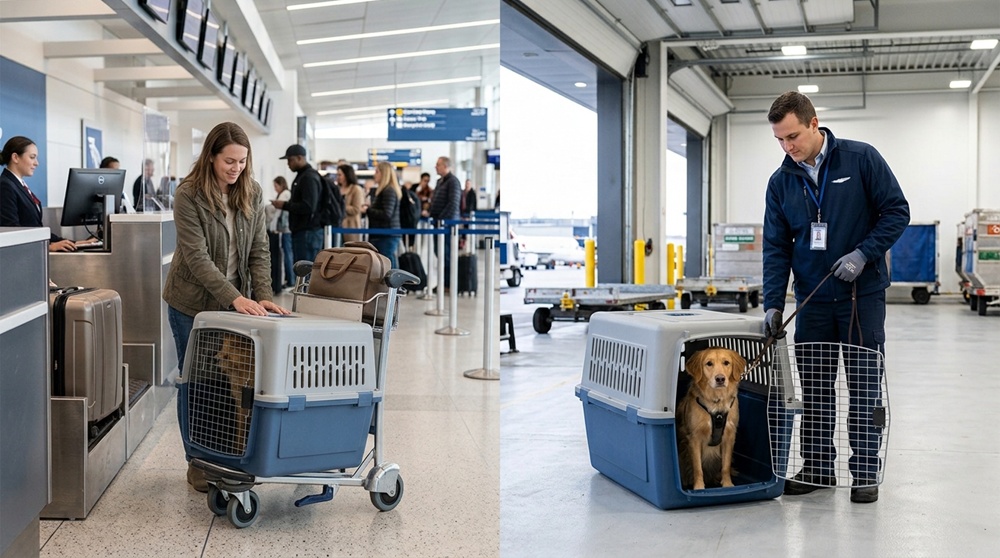
Pets travelling through cargo are identified as live animals and handled according to airline and airport procedures. Depending on the route and airport, personnel may oversee acceptance and kennel checks, movement through designated areas, loading and unloading, transfers and handover at the destination.
Some major airports have specialized animal facilities, while others have more limited live-animal capabilities. That can matter when comparing possible itineraries. A nonstop flight will often reduce the number of handoffs, but it is not automatically suitable. The airline must accept the pet, the aircraft must be properly equipped and the destination airport must meet the country’s import requirements.
The objective should be to identify the most direct and least complicated suitable route, not simply the shortest passenger itinerary. Paws en route’s international pet air travel services include route planning, airline coordination and support across the different stages of an international journey.
Some owners assume cargo travel is only used when a pet is flying without its owner or moving permanently to another country. In fact, a pet may need to travel as manifest cargo even when its owner is on the same flight and the trip is temporary.
The United Kingdom is a good example. When flying into Great Britain, which includes England, Scotland and Wales, pet dogs, cats and ferrets generally must travel as cargo, even if they are small enough to normally travel in the passenger cabin and even if their owner is travelling with them.
The permitted travel method can also depend on the pet’s size, the airline, the aircraft and the airport through which the pet must arrive. Our guide to pet travel from Canada to the United Kingdom explains the UK entry process in more detail.
Cargo travel is therefore not limited to relocations or pets travelling alone. Sometimes it is simply the method required by the destination or airline.
Because pets travelling as accompanied baggage and pets travelling as manifest cargo may both travel in the aircraft hold, it is easy to assume there is little difference between them. The major difference is not necessarily where the pet travels on the aircraft. It is how the journey is booked, handled and supported.
When a pet travels as accompanied baggage, its transportation is connected to the owner’s passenger reservation. This can work well for some straightforward journeys, but the owner generally remains responsible for more of the process, particularly if the flight is delayed, cancelled or changed.
Manifest cargo is a separate live-animal shipment. The pet travels under its own air waybill and is handled through the airline’s cargo or live-animal operation. Depending on the airline and airport, that may include specialized handling teams, animal holding facilities and additional support if the journey is disrupted.
That distinction can become especially important on long international journeys, flights with connections or routes where weather and aircraft changes can affect whether the pet is able to travel.
Neither option is automatically right for every pet. The best choice depends on the animal, route, airline, aircraft, destination requirements and level of support needed along the journey. For a deeper breakdown of how the two methods differ, see Pet Cargo vs. Checked Baggage: What's the Difference?
A suitable cargo route can be a responsible travel option, but that does not mean every pet should fly. A health certificate confirms specific veterinary information required for travel, but it should not be treated as a guarantee that the pet will cope well with every possible flight.
Owners and their veterinarians should consider the demands of the actual itinerary, including total travel time, periods of separation, environmental conditions and the pet’s previous response to confinement or unfamiliar situations. Age, general health, breed, respiratory conditions, anxiety, sensitivity to temperature and the complexity of the route may all affect whether a particular journey is appropriate.
Pets should never be sedated for air travel. Any medication decision should be made with the pet’s veterinarian and reviewed against the airline’s rules.
In some cases, postponing the trip, choosing another airline, using a different airport or arranging ground transportation for part of the route may be the more responsible option.
Successful pet travel begins well before departure. Preparation includes confirming that the pet is permitted to travel on the proposed route, selecting the right kennel and helping the animal become comfortable inside it before travel day.
Owners should also understand the airline’s check-in procedures, temperature restrictions, feeding guidance and hydration requirements. For practical steps covering kennel readiness, familiarization and departure-day routines, read our guide to preparing your pet for air travel.
It is reasonable to feel nervous about being separated from your pet during a flight. The goal is not to choose a travel method based only on which option sounds most reassuring. It is to determine what is permitted and identify the most direct, least complicated and most suitable journey for that individual pet.
Paws en route helps families understand their available travel options and coordinate the details involved in domestic and international pet air travel.
Depending on the journey, our team can help with:
Our international pet air travel services can support one part of the journey or provide fully managed relocation support, depending on your needs.
Planning a trip or move with your pet? Tell us your departure city, destination, pet’s breed and size, and preferred travel dates to receive a customized pet travel quote.
Ready to travel?
Our IPATA-certified pet travel specialists help manage the details, from airline booking to health certificates and import permits, for a smoother travel experience.
Get a custom quotePaws en route provides trusted support for every step of pet travel, from complex international relocations to domestic travel within Canada.