
When pet parents hear that their dog or cat may need to travel as "cargo," it can sound less reassuring than having the pet travel as checked baggage on the same flight. But the biggest difference between checked baggage and manifest cargo is not necessarily where the pet travels on the aircraft. In both cases, a pet may travel in a pressurized, temperature-managed compartment designed to carry live animals. The more important difference is how the pet's journey is booked, handled and supported before, during and after the flight.
As outlined in our guide to the three types of international pet air travel, pets may travel in the passenger cabin, as accompanied baggage or as manifest cargo. So what changes when a pet travels as cargo instead of checked baggage?
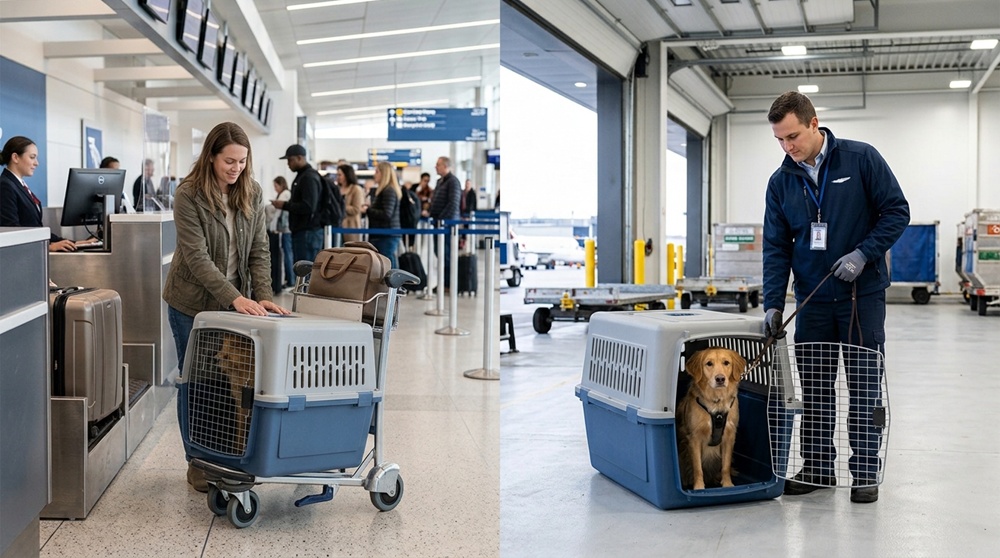
When a pet travels as accompanied or checked baggage, the pet's travel is attached to the pet parent's passenger reservation. The pet parent typically checks in with the pet through the passenger process and remains responsible for more of the journey.
For a straightforward trip, this can be a practical option. The pet parent and pet travel on the same flight, and the pet is returned to the pet parent after arrival according to the airline and airport's procedures. However, accompanied-baggage programs vary considerably by airline, route, aircraft and season. Some airlines do not offer the service on certain international routes, while others place limits on pet size, kennel weight or destination.
Manifest cargo works differently. The pet travels under its own air waybill and is booked through the airline's cargo or live-animal operation rather than simply being added to a passenger ticket. This creates a separate logistics process around the pet. Depending on the airline and airport, that may include:
The pet may travel on the same passenger aircraft as the pet parent, on a different passenger flight or, in some cases, on a cargo aircraft. Travelling as cargo does not necessarily mean the pet is physically travelling in a different part of the aircraft. The major distinction is the system responsible for managing the pet's journey.
This is one of the situations where the difference between baggage and cargo can become especially important. If a pet is travelling as accompanied baggage and the flight is significantly delayed, cancelled or changed to an aircraft that cannot accept the pet, responsibility may return to the pet parent. The pet parent may need to retrieve the pet, arrange accommodation, speak with the airline and reorganize both the passenger and pet travel plans.
With manifest cargo, the pet is part of a separate live-animal logistics operation. Depending on the airline, airport and circumstances, cargo personnel may be able to coordinate appropriate holding, communicate with the pet shipper and arrange a suitable new flight. Some major international hubs also have dedicated animal facilities where pets can be cared for during longer connections or disruptions.
This does not mean cargo eliminates the possibility of delays or changes. It means there may be a different support structure in place when something does not go according to plan.
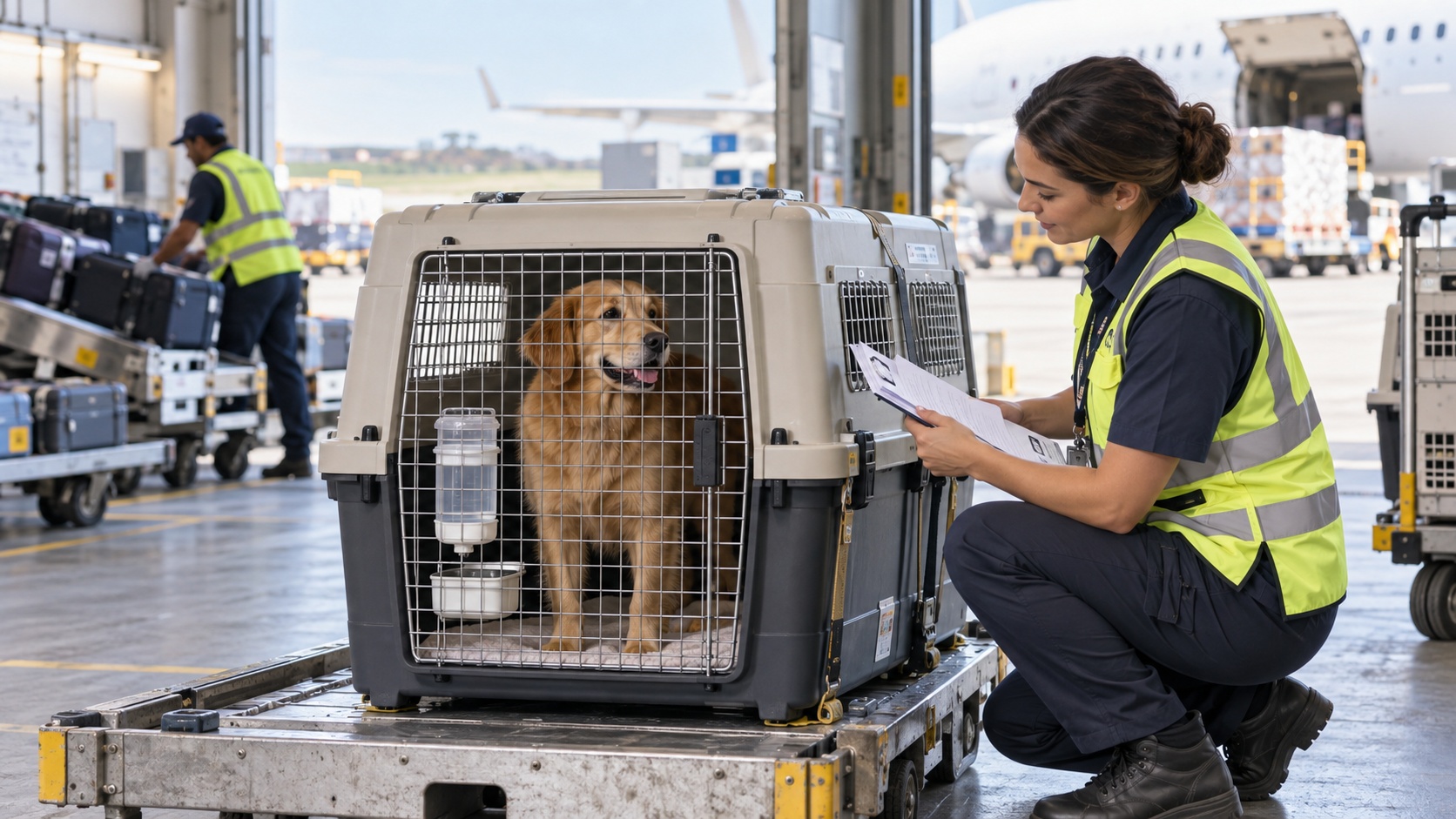
With accompanied baggage, much of the airport process is connected to the pet parent's passenger journey. With manifest cargo, the pet is handed over to the airline's cargo or live-animal handling operation.
From there, personnel coordinate the steps required to move the animal safely through the airport and to the aircraft. Exact procedures vary by airline and airport, but they may include:
Live-animal handling procedures are also designed to limit unnecessary exposure to unsuitable temperatures or excessive time on the airport ramp where possible. This is why the airports involved in a route can matter almost as much as the flight itself.
No.
There are straightforward journeys where accompanied baggage may be a reasonable option. A pet may be travelling on a direct flight with its pet parent, the airline may have a suitable checked-baggage program and the destination may permit that method of arrival.
Cargo can become more valuable when the journey is more complicated. That may include:
The right travel method depends on the individual pet and itinerary. As discussed in our guide to 5 common misconceptions about pet cargo travel, the word "cargo" alone does not tell you whether a journey is suitable for your pet.
At Paws en route, the goal is not simply to choose whichever pet travel option costs the least or keeps the pet on the same passenger booking. We look at the complete journey, including:
For some journeys, accompanied baggage may be appropriate. For others, the specialized handling and logistics surrounding manifest cargo can make it the more suitable option. For a closer look at what drives that cost difference, see Why Does Pet Cargo Cost More Than Checked Baggage?
Our international pet air travel services can help determine which travel options are available for your pet and coordinate the airline, documentation, kennel and destination requirements involved in the journey.
Planning a trip or relocation with your pet? Tell us your departure city, destination, pet's breed and size, and expected travel dates to get started. Get a quote.
Ready to travel?
Our IPATA-certified pet travel specialists help manage the details, from airline booking to health certificates and import permits, for a smoother travel experience.
Get a custom quotePaws en route provides trusted support for every step of pet travel, from complex international relocations to domestic travel within Canada.