
One of the most common questions pet parents have when comparing travel options is: "Why does it cost so much more for my pet to fly as cargo?"
The difference can be significant. Depending on the airline, route, destination, pet and kennel size, manifest cargo may cost considerably more than transporting a pet as accompanied baggage. But the two prices are not necessarily paying for the same type of service.
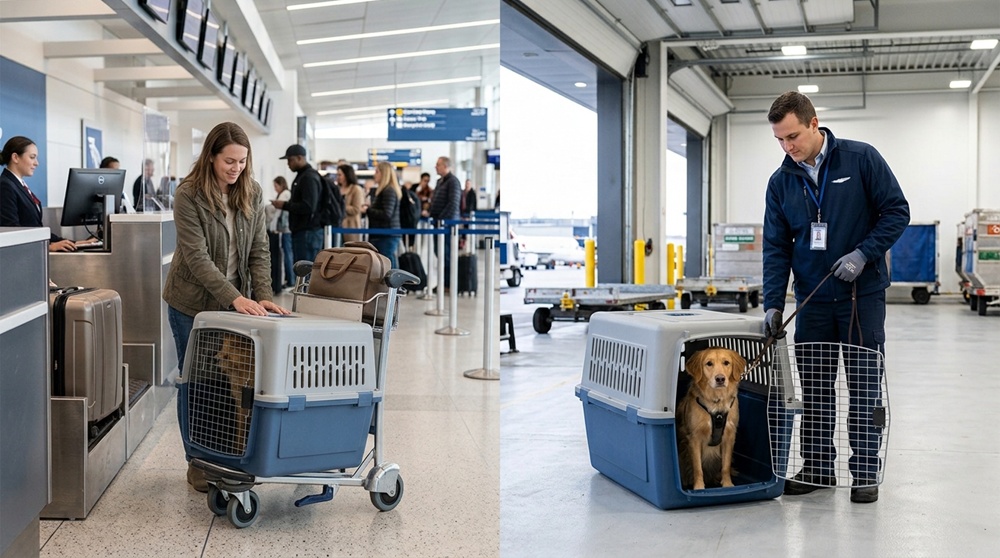
When a pet travels as accompanied baggage, their transportation is generally added to the pet parent's passenger booking. Manifest cargo is a separate live-animal shipment with its own logistics, handling, documentation and support requirements. That additional structure is a large part of what the higher cost reflects.
As explained in Pet Cargo vs. Checked Baggage: What's the Difference?, manifest cargo is booked and managed as its own live-animal shipment rather than an add-on to a passenger ticket. That separate structure, with its own air waybill, its own handling process and its own airline operation, is a large part of what the added cost is paying for.
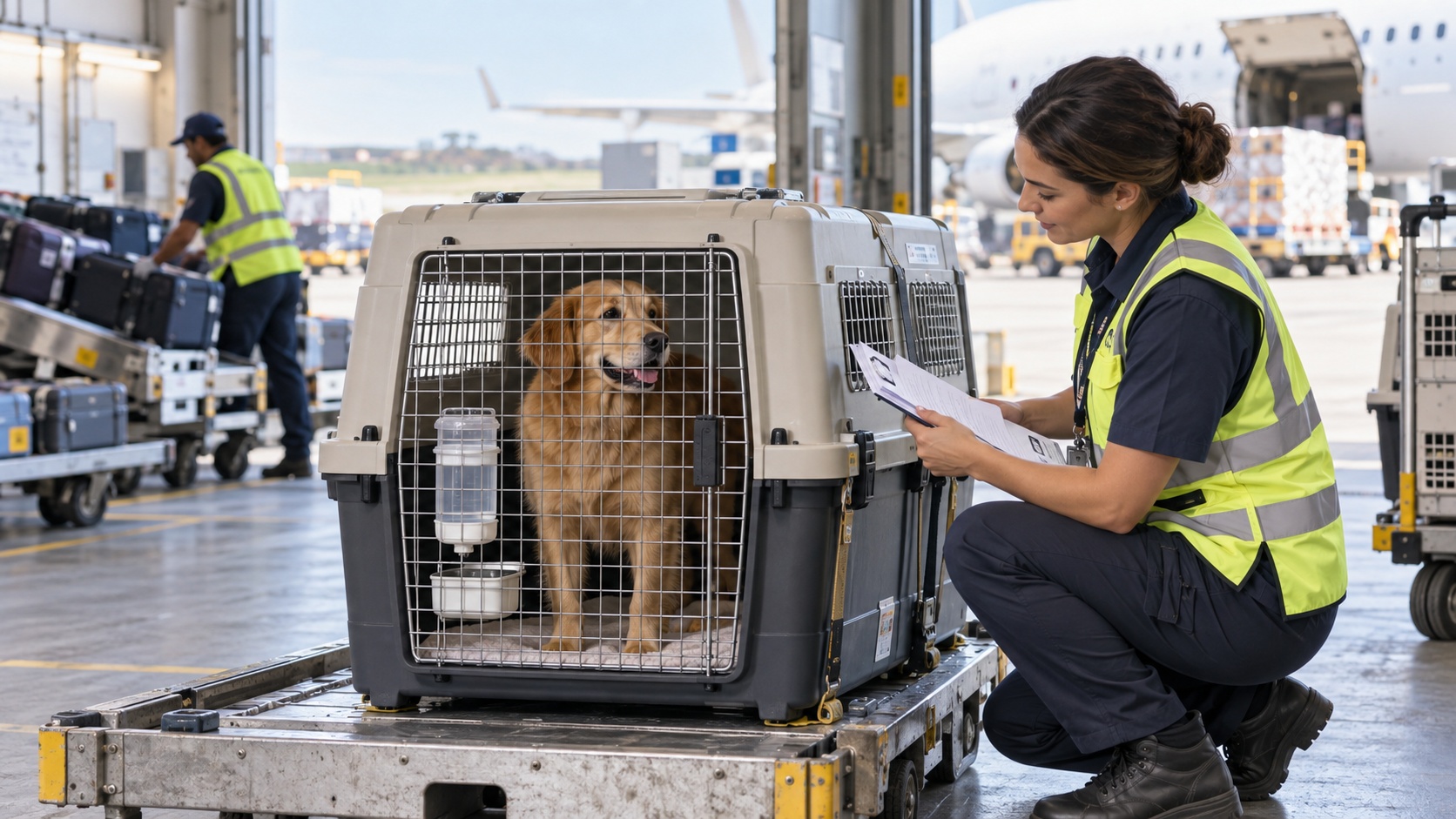
Cargo travel involves dedicated live-animal check-in, security processing and coordination between the cargo facility and the aircraft, steps that require trained staff and purpose-built facilities rather than a fee simply added to a passenger reservation. That specialized handling is part of what separates the cost of cargo from the cost of checked baggage.
Some airports and airline hubs have dedicated facilities for animals travelling through cargo. Depending on the location, these facilities may provide appropriate holding areas, temperature-managed spaces and support during longer connections or disruptions. Not every airport provides the same level of service, which is why route selection matters.
For longer or more complicated journeys, the facilities available at departure, transit and arrival can be an important part of the travel plan. Those facilities and services also contribute to the overall cost of transporting a pet through the cargo system.
International pet travel can involve much more than one flight. A cargo booking may require coordination between:
The pet may also need to travel through multiple airports or connect between flights while remaining within the airline's live-animal logistics network. Each of those steps requires planning and coordination. This becomes particularly valuable on long international journeys where multiple organizations may be involved before the pet is reunited with the pet parent.
Disruption support is one of the areas where the cost difference is easiest to see. As covered in Pet Cargo vs. Checked Baggage: What's the Difference?, a delayed or cancelled flight can leave a pet parent responsible for retrieving and re-booking a pet travelling as accompanied baggage, while a cargo booking is backed by the airline's live-animal team and the pet shipper working together to manage the shipment. That coordination is a real cost, and it's part of what a cargo booking includes.
Another reason pet cargo prices vary so widely is kennel size. Cargo charges are not always based only on the pet's body weight. The size of the travel kennel will affect how much aircraft cargo space the shipment occupies. A medium-sized dog in a standard kennel and a very large dog travelling in a custom crate can therefore have very different airfreight costs.
The airline, aircraft and route also influence which kennel sizes can be accepted. Our guide to pet travel crate measurements explains why correct sizing matters both for the pet's comfort and for airline acceptance.
For some destinations, the cargo booking is only one part of the total pet travel cost. Depending on the country, the journey may also require:
These costs are not necessarily airline cargo charges, but they are often part of the overall price of an international pet relocation. This is why comparing a simple airline baggage fee with the total cost of a professionally managed international cargo journey can be misleading. They may represent very different levels of service and very different travel requirements.
If you're still weighing whether cargo is the right choice for your pet, it's also worth reading our breakdown of 5 common misconceptions about pet cargo travel, which addresses common concerns pet parents have about this travel method.
When cargo costs more, the additional price may reflect much more than the pet's space on the aircraft. Depending on the journey, it can include:
For simple routes, some of that support may not be necessary. For a large dog, a complicated international journey or a pet travelling through multiple airports, it can become much more valuable.
At Paws en route, our goal is not simply to find the cheapest way to put a pet on an aircraft. We look at the pet, airline, aircraft, kennel, route, weather, destination requirements and handling available along the journey to identify the most direct, least complicated and most suitable option.
Sometimes accompanied baggage is appropriate. In other cases, manifest cargo is required or provides a level of support that makes more sense for the journey.
Our international pet air travel services can help pet parents understand the available options, coordinate the airline and documentation requirements, and plan the journey from departure through arrival.
Planning an international trip or relocation with your pet? Tell us your departure city, destination, pet's breed and size, and expected travel dates to get started.
Ready to travel?
Our IPATA-certified pet travel specialists help manage the details, from airline booking to health certificates and import permits, for a smoother travel experience.
Get a custom quotePaws en route provides trusted support for every step of pet travel, from complex international relocations to domestic travel within Canada.