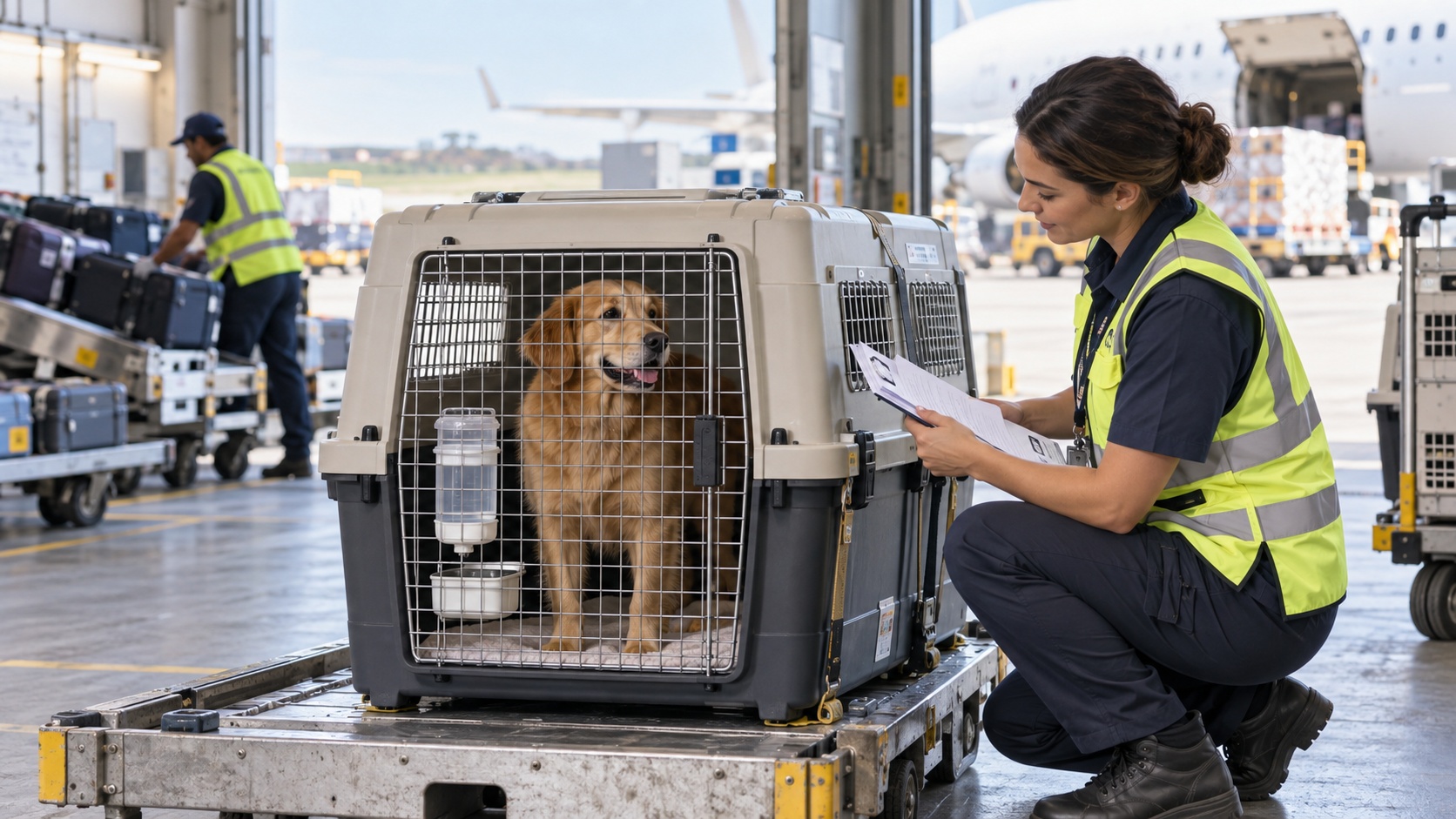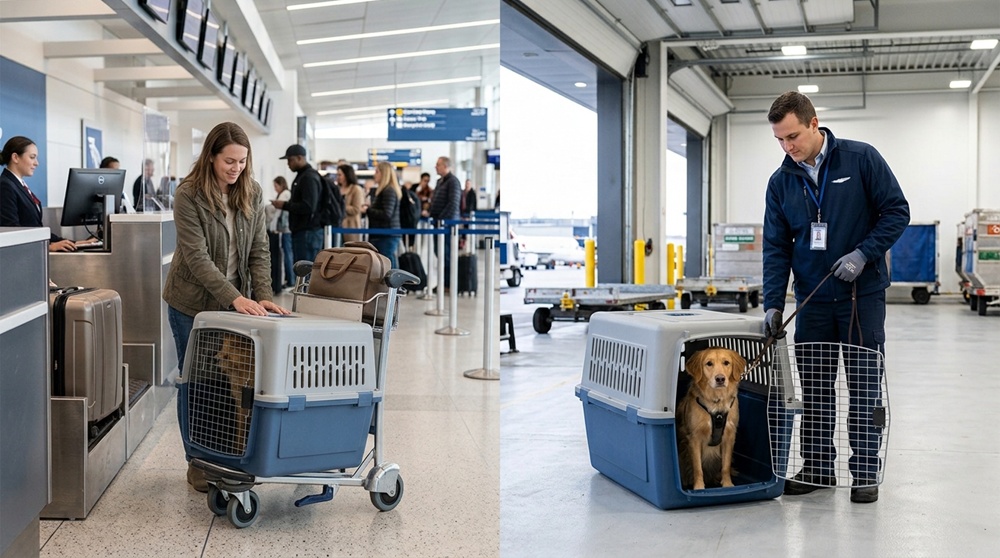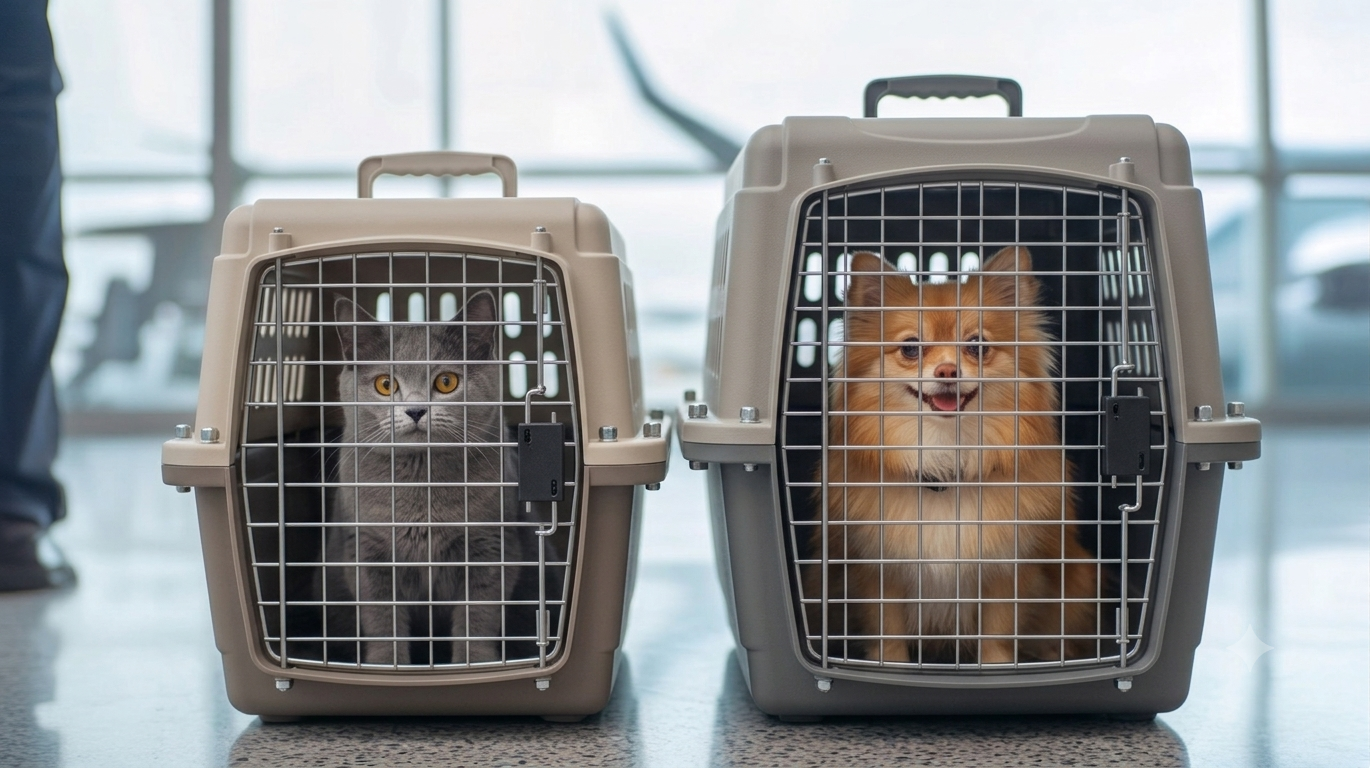

Choosing the right carrier is an important part of preparing your pet for air travel. However, the term “airline approved” can be misleading. There is no single carrier that is automatically approved for every airline, aircraft, pet or route. A carrier may be advertised as airline approved or designed to meet IATA guidelines, but the airline ultimately decides whether it will accept the carrier for your specific journey.
Before purchasing one, consider:
The type of carrier you need depends on whether your pet will travel in the cabin, as checked baggage or as manifest cargo. Read our guide to the three types of international pet air travel to better which travel arrangement may apply to your pet.
Small pets travelling in the cabin generally use a soft-sided carrier that fits beneath the seat. Pets travelling in the aircraft hold normally require a rigid travel kennel with specific construction, sizing and ventilation features. Proper sizing is especially important, as an undersized crate can result in a pet being denied boarding. Read more about why pets can be denied boarding due to crate size
Carrier requirements can vary by airline, route and type of travel, so always check the requirements of the airline your pet will be flying with before purchasing or preparing a carrier. If Paws en route is managing your pet’s travel, our team will provide guidance on the carrier requirements that apply to your itinerary.
An in-cabin carrier must fit completely beneath the seat in front of you while providing adequate room and ventilation for your pet. Airline limits vary and may depend on the aircraft, cabin and seat. For example, Air Canada requires pets travelling in the cabin on its operated flights to use a soft-sided carrier, but its permitted dimensions vary by aircraft.
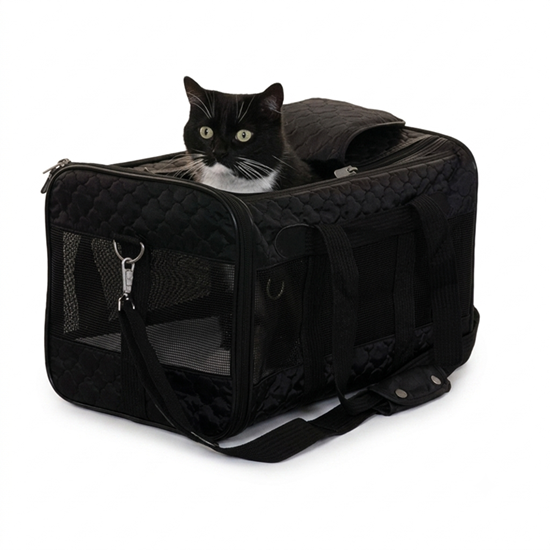
When evaluating an in-cabin carrier, look for:
Expandable carriers can provide additional room while waiting in the airport, but the expanded sections must be fully closed during the flight. The carrier must fit beneath the seat without being compressed in a way that restricts ventilation or your pet’s movement.
Examples of carriers designed for in-cabin travel include:
These links are provided as examples rather than guarantees of airline acceptance. Always compare the product’s exact dimensions with the airline’s current policy before purchasing.
Pets travelling as checked baggage or manifest cargo generally require a rigid, escape-resistant kennel that meets the applicable airline rules and IATA Live Animals Regulations. Depending on the pet and airline, a suitable kennel may require:
For two-piece plastic kennels, plastic clips or snap closures may not be sufficient on their own. Many airlines require the upper and lower sections to be secured using metal bolts and nuts. Examples of rigid travel kennel suppliers include:
A particular model may still be rejected if it is too small for the pet, incorrectly assembled, damaged or incompatible with the airline’s requirements.
Cargo kennel sizing is based on the pet, not simply its weight or the kennel size printed on the box. Your pet must generally be able to:
For dogs and cats travelling in the hold, measurements usually include the distance from the nose to the base of the tail, the height of the legs, the width of the body and the height to the top of the head or ears. Bedding also reduces the available internal height, so it must be considered when selecting the kennel. Learn more about pet travel crate measurements here.
A kennel that appears roomy from the outside may still be too small once the pet is standing inside it. Measuring errors are one of the reasons a kennel can be refused at check-in.
Very large dogs may require a reinforced or custom-built wooden kennel. However, not every airline accepts wooden kennels, and custom designs must meet the airline’s construction and aircraft-loading requirements.
Snub-nosed or brachycephalic dogs and cats require additional consideration. IATA guidance generally calls for a larger kennel for these pets, but many airlines also impose breed, route and temperature restrictions. Some may not accept certain snub-nosed breeds in the aircraft hold at all.
Confirm that your pet is eligible to travel before purchasing or building a kennel. For more information, read our guide to breed-specific considerations for pet travel.
Pet carriers and rigid kennels are available through manufacturers, pet stores and online retailers such Pet Valu. Product descriptions such as “airline approved” or “IATA compliant” should be treated as a starting point, not a guarantee. Before ordering, confirm:

Avoid relying only on customer reviews because a carrier accepted for one airline, aircraft or pet may not be accepted for another.
Selecting the correct carrier is only part of the process. Your pet should also become comfortable spending time inside it before the journey. Rather than repeating the full acclimation process here, here are some tips for a smoother journey which includes crate training and other travel-readiness advice.
Before travel day, confirm what bedding, toys and other objects the airline permits inside the carrier. Requirements may be different from what you use while training at home.
The right carrier depends on your pet, airline, aircraft, route and destination. Paws en route can help pet parents:
Carrier selection should happen early, especially for large pets, snub-nosed breeds and international journeys requiring manifest cargo.
Our IPATA-member pet travel specialists can help plan the journey, coordinate airline arrangements and support the documentation required for your destination.
Ready to travel?
Our IPATA-certified pet travel specialists help manage the details, from airline booking to health certificates and import permits, for a smoother travel experience.
Get a custom quotePaws en route provides trusted support for every step of pet travel, from complex international relocations to domestic travel within Canada.