Travelling or relocating a pet from Canada to Chile requires coordination between Chile's animal health requirements, Canadian export documentation and the airline carrying your pet. This guide explains the current entry requirements for dogs and cats travelling from Canada to Chile, including permanent identification, rabies vaccination, veterinary documentation, airline considerations and the arrival process. Pet ferrets can also enter Chile under the country's traditional companion animal pathway, but they require additional authorization from Chile's Servicio Agrícola y Ganadero (SAG). If you're travelling with another species, the import requirements may differ, and Paws en route can help determine the correct process for your pet.
Chile updated its entry requirements in 2026. Beginning July 27, 2026, dogs and cats entering the country must have permanent individual identification by an ISO-compliant microchip or a tattoo, and that identification number must appear on the official veterinary certificate. The process also includes a valid rabies vaccination, internal and external parasite treatment within a specific timeframe, a veterinary examination shortly before travel and an official health certificate endorsed by the Canadian Food Inspection Agency (CFIA).
Whether you're relocating permanently, returning home or travelling with your pet for an extended stay, planning ahead can help avoid delays at check-in or on arrival. Paws en route helps pet owners understand country-specific requirements, coordinate documentation and identify the most appropriate travel option based on their pet, destination and itinerary.
Dogs and cats entering Chile must meet the requirements of the Servicio Agrícola y Ganadero, commonly called SAG. For a pet travelling from Canada, the current process generally includes:
Chile does not generally require a separate advance import permit for an ordinary pet dog or cat. The official certificate and SAG inspection at the point of entry are the central entry requirements.
Beginning July 27, 2026, every dog or cat entering Chile must have an individual and permanent identification method. SAG accepts a microchip that complies with ISO 11784/11785 or a permanent tattoo.
The identification number must be recorded on the official veterinary certificate and must match the animal presented for inspection. For most international travel, an ISO-compliant microchip is the more practical option because airlines, transit countries and future destinations may also rely on microchip identification.
Have the microchip scanned before the veterinary examination and again when the certificate is completed. A transcription error can create problems at check-in or on arrival.
The pet must have a valid rabies vaccination recorded on the official veterinary certificate. A primary rabies vaccination must be administered at least 21 days before the pet enters Chile.
For a pet maintained on valid booster vaccinations, the certificate should document the two most recent doses. If the vaccination history is incomplete, SAG may treat the latest dose as a primary vaccination and apply the 21-day waiting period.
Chile’s current 2026 requirements focus on valid vaccination and documented continuity rather than the older fixed rule that every rabies vaccine had to be between one and 12 months old.
The pet must receive broad-spectrum treatment against both internal and external parasites between 5 and 30 days before entering Chile. The treatment should:
The official certificate should record the product, active ingredient, dose and date administered. Keep the veterinary invoice and treatment record available so the details can be entered accurately.
A licensed veterinarian must clinically examine the pet within 10 days before entry into Chile.
The examination must confirm that the pet shows no signs of infectious, contagious or parasitic disease and is fit to travel.
The pet must then travel with an official veterinary certificate, often referred to by SAG as the Certificado Zoosanitario de Importación or CZI. For a pet departing Canada, the certificate should be completed by a licensed veterinarian and endorsed by an official CFIA veterinarian before departure. The certificate should include:
SAG states that the certificate is valid for 10 days, with a possible extension of up to five additional days depending on the travel conditions. The safest approach is to schedule the examination and CFIA endorsement so the certificate is comfortably valid on arrival.
CFIA cannot endorse the certificate after the pet leaves Canada, so book the government appointment in advance.
A separate advance import permit is not generally required for an ordinary pet dog or cat entering Chile under the standard personal-pet process.
The pet must instead arrive with the compliant official veterinary certificate and be presented to SAG at the point of entry.
Different rules may apply to commercial movements, unusual species, rescue or adoption shipments, or animals travelling for purposes other than ordinary personal pet travel.
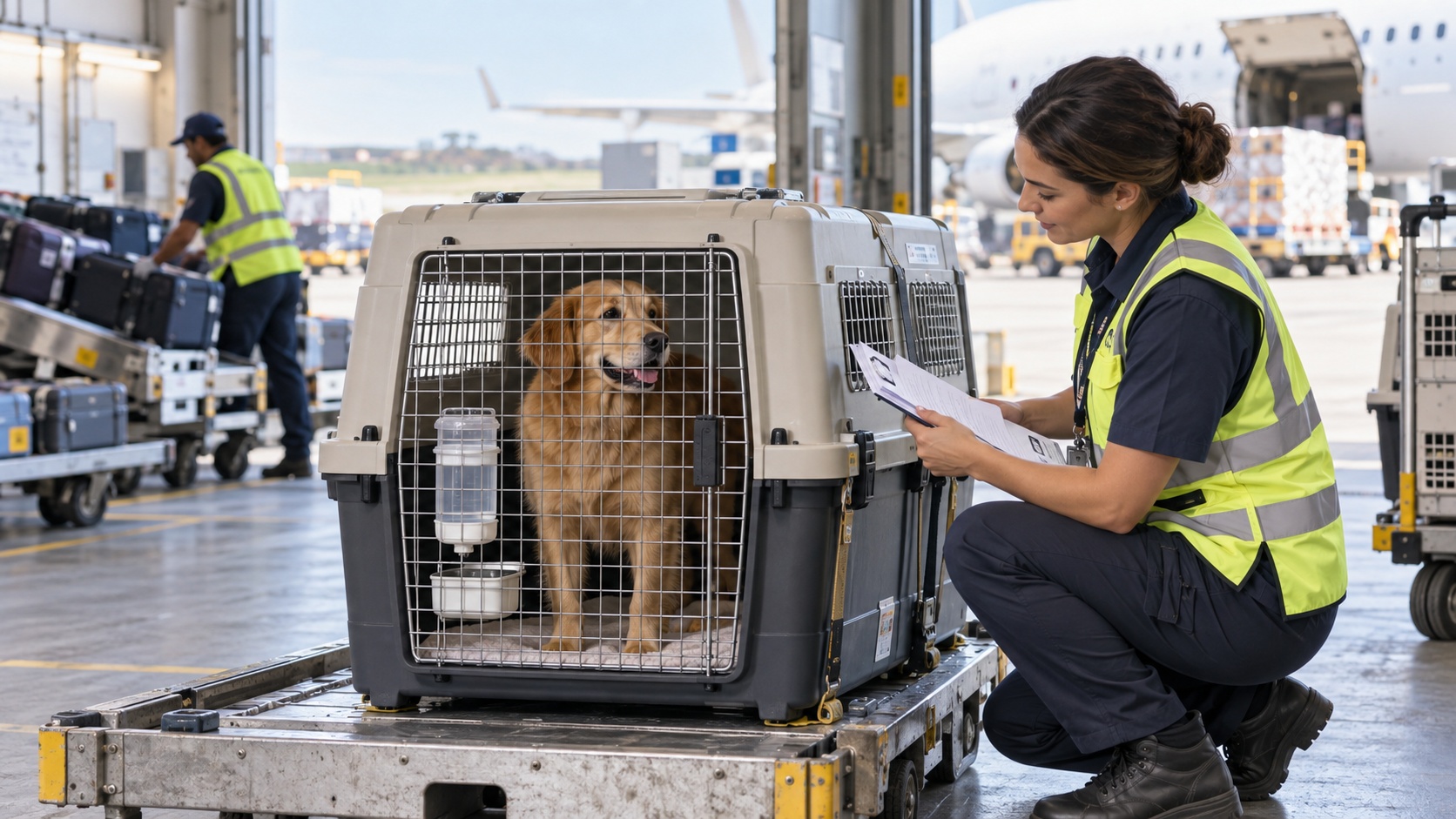
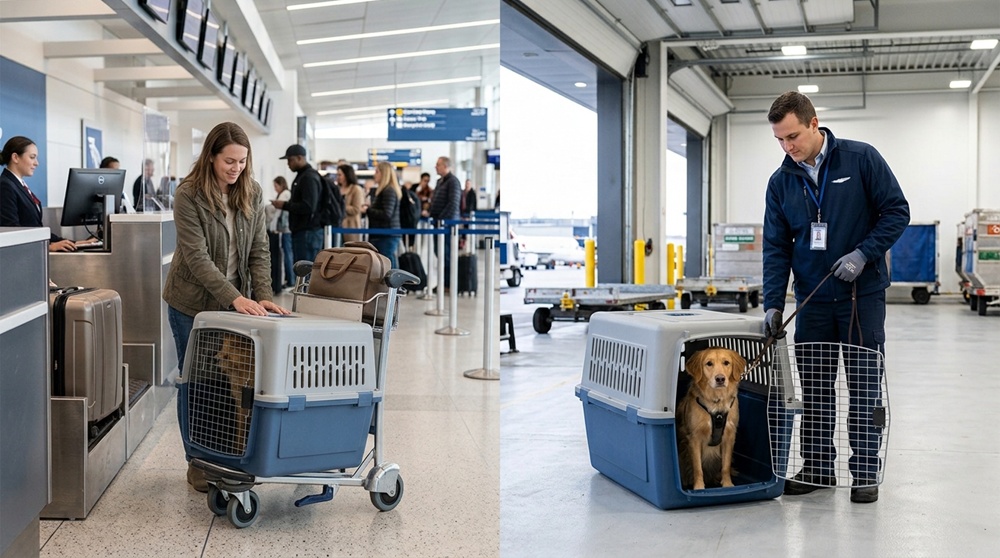
A pet may potentially travel in the cabin, as accompanied checked baggage in the aircraft hold or as manifest cargo, depending on the pet’s size, breed, route and the operating airline. Not every airline offers all three options on every flight, and a passenger booking does not automatically confirm a pet reservation.
Airline approval can depend on the pet and carrier or crate size, aircraft type, seasonal temperature restrictions, breed policies, airport handling capabilities, connection time and transit-country requirements. Paws en route generally recommends the most direct and least complicated suitable route rather than choosing flights based only on passenger price or schedule.
Air Canada accepts eligible small cats and dogs in the cabin on Air Canada-operated flights when they fit comfortably in a flexible, soft-sided carrier under the seat. Eligible pets may also travel in the baggage compartment on certain aircraft and routes. Larger animals, oversized crates and unaccompanied pets may need to travel through Air Canada Cargo’s AC Animals service.
Codeshares require particular attention. A flight sold by Air Canada but operated by another airline does not follow Air Canada’s pet policy, and the pet may not be accepted across the complete itinerary.
Baggage-compartment acceptance is also affected by aircraft, temperature, seasonal restrictions and crate dimensions.
LATAM accepts eligible dogs and cats in the cabin or aircraft hold on flights operated entirely by LATAM, subject to advance approval, aircraft restrictions and limited space. LATAM currently requires pets to be at least 16 weeks old for most routes. Flights to or from the United States have a higher minimum age.
The pet must be healthy, not sedated and able to stand, turn and lie down naturally in the carrier or kennel.
LATAM does not accept the pet service on itineraries involving other airlines or codeshare flights under the same pet arrangement. This makes the operating carrier on every sector especially important.
Many Canada-to-Chile itineraries involve a connection. Depending on the departure city, this may be within Canada, the United States or another Latin American country. Before booking, confirm:
A connection through the United States can trigger U.S. dog-entry or transit procedures even when Chile’s requirements are already satisfied. Separate tickets and unprotected airline changes are generally best avoided for pet travel.
Chile’s current pet-entry rules do not publish a general list of prohibited dog breeds. Airline restrictions are a separate issue. Brachycephalic or snub-nosed dogs and cats may face restrictions because of their increased respiratory risk during air travel. Airlines may prohibit them from the hold, limit them to certain seasons or routes, or require cargo handling.
Strong or powerful breeds may require a reinforced crate that meets the airline’s construction rules.
Breed eligibility should be confirmed before passenger tickets are purchased or veterinary documents are scheduled.
On arrival in Chile, present the pet and original veterinary documentation to SAG at the airport or other authorized point of entry. SAG will verify that:
When the pet and documents comply, the pet can normally complete the entry process without transfer to a government quarantine facility. If the documentation is incomplete or the animal does not meet the health requirements, SAG may require veterinary measures, temporary holding, treatment, return or another action at the owner’s expense.
After entry, owners must also follow any animal-health or public-health rules administered by Chile’s Ministry of Health. Because older SAG information pages have referred to home confinement, travellers should confirm the current arrival instructions for their date of entry.
A pet continuing beyond Santiago or another international point of entry may need a separate domestic flight or ground transfer. Confirm:
Paws en route can help coordinate the journey through to the final destination, including airport transfers and onward travel where available.
Carrier or crate familiarization should begin well before departure so the travel space becomes familiar rather than being introduced on flight day. Read Preparing Your Pet for Air Travel: 5 Tips for a Smoother Journey.
Sedation is generally discouraged for air travel unless specifically directed by a veterinarian and accepted by the airline. LATAM, for example, states that pets cannot travel sedated.
International pet travel involves government, veterinary and airline requirements that must align with the same travel date. Paws en route can support one part of the journey or coordinate a more complete travel plan, including:
Because Chile’s requirements changed in 2026 and airline policies can change independently, each journey should be reviewed for the pet, route and intended travel date.
A separate advance import permit is not generally required for an ordinary personal pet dog or cat. The pet needs a compliant official veterinary certificate and must pass SAG inspection on arrival.
Beginning July 27, 2026, dogs and cats must have permanent individual identification by an ISO-compliant microchip or a tattoo. The identification number must appear on the official certificate.
At least 21 days must pass after a primary rabies vaccination before entry.
The standard 2026 requirements for dogs and cats from Canada do not generally require a rabies titre test when the pet has compliant rabies vaccination records.
Internal and external parasite treatment must be administered between 5 and 30 days before entry.
The clinical examination must be completed within 10 days before the pet enters Chile.
Yes. The certificate for a pet departing Canada should be endorsed by an official CFIA veterinarian before departure.
SAG states that the certificate is valid for 10 days, with a possible extension of up to five days depending on travel conditions.
Possibly. The pet must meet the operating airline’s cabin-carrier, size, age, route and availability requirements.
Compliant pets are not generally transferred to a government quarantine facility. SAG may impose measures when documents or health requirements are not met, and travellers should confirm any current post-entry instructions.
Moving a pet from Canada to Chile involves more than purchasing a passenger ticket. Permanent identification, rabies timing, parasite treatment, veterinary documentation, CFIA endorsement, airline acceptance and arrival arrangements must work together.
Paws en route can help with documentation, air-travel coordination, crate planning, airport transportation or a more fully managed relocation.
Ready to begin planning? Request a custom pet-travel quote from Paws en route.
Government and airline requirements can change. Always confirm the current rules for the specific pet, route and travel date before departure.
Ready to travel?
Our IPATA-certified pet travel specialists help manage the details, from airline booking to health certificates and import permits, for a smoother travel experience.
Get a custom quotePaws en route provides trusted support for every step of pet travel, from complex international relocations to domestic travel within Canada.