

Table of Contents
Moving a dog or cat from Canada to New Zealand requires months of advance planning, tightly timed veterinary work, an import permit, cargo flight arrangements and mandatory quarantine. New Zealand protects its unique animal-health status through strict biosecurity rules, and even a small documentation or timing error can delay entry or extend quarantine.
Canada is classified as a Category 3 country, meaning rabies is considered absent or well controlled but pets must still complete New Zealand's rabies, identification, permit, veterinary certification and quarantine requirements.
New Zealand introduced a revised Import Health Standard on July 1, 2026. A transition period runs until March 31, 2027, during which eligible shipments may follow either the 2021 or 2026 process. The two pathways should not be mixed. From April 1, 2027, every cat and dog must follow the 2026 process, including an official identification check completed at least six months before export.
This guide explains the current framework, the decision owners need to make during the transition and the practical steps involved in travelling from Canada to New Zealand with a dog or cat.
| Requirement | Summary |
|---|---|
| Country classification | Canada is a Category 3 country |
| Current regulatory position | Transition between the 2021 and 2026 Import Health Standards |
| Recommended planning period | At least 6 months; often 7-9 months |
| Import permit | Required for pets arriving from Canada |
| Microchip | Required and must match all records |
| Official identification check | Required under the 2026 process at least 6 months before export |
| Rabies vaccination | Required |
| Rabies titre test | Required for Category 3 pets |
| CFIA endorsement | Required |
| How pets travel | Commercial air cargo under the standard pet-import pathway |
| Approved arrival airports | Auckland or Christchurch |
| Quarantine | Minimum 10 days in an MPI-approved facility |
| Crate seals | Not required for Category 3 arrivals from March 1, 2026 |
The exact tests, treatments, dates and certificate wording depend on whether the shipment follows the 2021 or 2026 standard. The active permit and current MPI certificate must be treated as the controlling instructions.
New Zealand's revised Cats and Dogs Import Health Standard came into force on July 1, 2026. The Ministry for Primary Industries (MPI) created a nine-month transition period so that some shipments already underway could continue under the older framework. The key dates are:
Under the 2026 process, an official veterinarian must complete a pre-export identification check at least six months before the pet enters New Zealand. This means pets travelling from April 1, 2027 onward need that identity step completed no later than six months before their planned arrival.
During the transition, owners should choose one complete pathway and use the matching permit application, support documents, veterinary certificate and timing schedule. Combining dates or forms from both standards can make the shipment non-compliant.
Most eligible domestic dogs and cats can travel from Canada to New Zealand when they meet the Category 3 requirements. The pet must generally:
Assistance dogs that MPI verifies as compliant assistance dogs may be cleared without quarantine, but they still require the applicable permit, veterinary preparation, documentation and arrival inspection.
Starting at least six months before travel is essential under the 2026 process because the official identification check must occur at least six months before export. Seven to nine months is usually safer. Additional time may be needed for:
Owners should not choose a fixed flight date until the regulatory pathway, quarantine availability and veterinary timeline have been mapped together.
The first step for travel during the transition period is determining whether the shipment will use the 2021 or 2026 framework. The 2021 process may remain available only when its permit and import deadlines can be met. The 2026 process is available now and becomes mandatory for all arrivals from April 1, 2027.
The two pathways use different identification and certificate structures. Select the standard before scheduling veterinary work so the vet, CFIA, quarantine facility and airline are all working from the same set of requirements.
New Zealand accepts domestic cats and dogs from approved countries, subject to species, breed, age, residency, pregnancy and health restrictions. Under the still-active 2021 Category 3 pathway, pets must be at least nine months old at travel and must have lived in an approved country for at least six months immediately before export or since birth. Cats and dogs more than 42 days pregnant are not eligible under that pathway.
The current 2026 support documents and permit conditions should be used to confirm the corresponding eligibility rules for a shipment using the new standard.
A dog's previous residence, travel, disease history and reproductive status are particularly important because they can affect testing for Babesia, Brucella and other diseases.
The microchip is the identity that links the pet to every vaccination, blood sample, treatment, permit and veterinary certificate. The chip should be scanned before vaccinations, blood collection, tests and treatments. The number must appear consistently on all laboratory reports and supporting documents.
The 2026 standard introduces a formal pre-export identification check by an official veterinarian. MPI requires this check at least six months before the pet is exported to New Zealand.
For pets leaving Canada, the official process should be coordinated with CFIA before later veterinary work is scheduled. A routine scan by a private veterinarian does not replace the government identity check required by the 2026 standard.
The identity timing cannot be completed retrospectively. Owners planning travel after April 1, 2027 should begin with this step before building the rest of the schedule.
Category 3 pets require a valid rabies vaccination and an approved rabies neutralising antibody titre test.
The vaccination must be administered after the pet is microchipped and must meet the requirements of the selected import standard. Rabies coverage should remain continuously valid throughout the preparation period.
The RNATT must be carried out by an approved laboratory and achieve a result of at least 0.5 IU/mL. Under the 2021 pathway, the blood sample must be collected no less than three months and no more than 24 months before departure, with continuous valid rabies vaccination maintained from sampling onward.
For the 2026 pathway, owners should use the current Category 3 support document, Rabies Certification Form and permit conditions to confirm the required sequence and validity period. The official identification check must already have been completed at least six months before export.
Do not rely on a titre result alone. MPI evaluates the relationship between microchip identity, vaccination records, laboratory result, official certification and the chosen standard.
Pets entering New Zealand from Canada must have a reservation at an MPI-approved quarantine facility before the import plan is finalized. Approved cat and dog quarantine facilities operate in the Auckland and Christchurch areas. Availability can affect both the arrival airport and travel date.
The facility should be selected before the import permit application and flight are completed because MPI and the airline may require confirmation of the booking.
Owners should ask the facility about intake days, airport transfer, medication, feeding, emergency veterinary care, visiting policies, release arrangements and fees.
An MPI import permit is required for cats and dogs travelling from Canada. Permit applications are submitted through New Zealand's online Animal and Plant Import Permit system. The application must match the selected 2021 or 2026 pathway and include the required supporting documents.
MPI recommends allowing at least 30 working days for processing. More time is prudent during busy travel periods or when documentation needs clarification.
Many airlines and quarantine facilities require the permit before the final booking is confirmed. The permit does not replace the later veterinary certificate, testing, treatments or CFIA endorsement.
The final veterinary phase differs for cats and dogs and must follow the active certificate for the selected standard.
Cats generally require timed external parasite treatment for fleas and ticks, internal parasite treatment covering nematodes and cestodes, and a final clinical examination shortly before shipment.
Under the 2021 pathway, external parasite treatments are given twice, with the second within two days before flying. Internal parasite treatments are also given twice, with the second within four days before flying. The final clinical examination is within two days before shipment.
Dogs require the core parasite treatments and final examination, together with disease-specific testing or treatment that can include:
Under the 2021 pathway, several dog tests fall within the final 16 or 30 days before shipment. Dogs previously diagnosed with Babesia gibsoni or Brucella canis are not eligible under that process.
The 2026 Category 3 certificate and support document must be used for any shipment following the new framework. Do not copy the 2021 treatment windows into a 2026 case without checking the current certificate.
The pet must travel with the veterinary certificate and original or officially endorsed supporting records required by the selected standard and import permit.
The final examination and certificate completion occur close to departure. For the 2021 Category 3 process, the final examination is within two days before shipment.
CFIA must review and endorse the export documentation before the pet leaves Canada. Endorsement cannot be completed after departure.
The document package may include the import permit, model veterinary certificate, rabies records, RNATT laboratory report, parasite and disease-testing records, official identification documentation and other permit-specific declarations.
Every microchip number, test date, treatment product, dose, signature and page should be reviewed before the shipment is tendered to the airline.
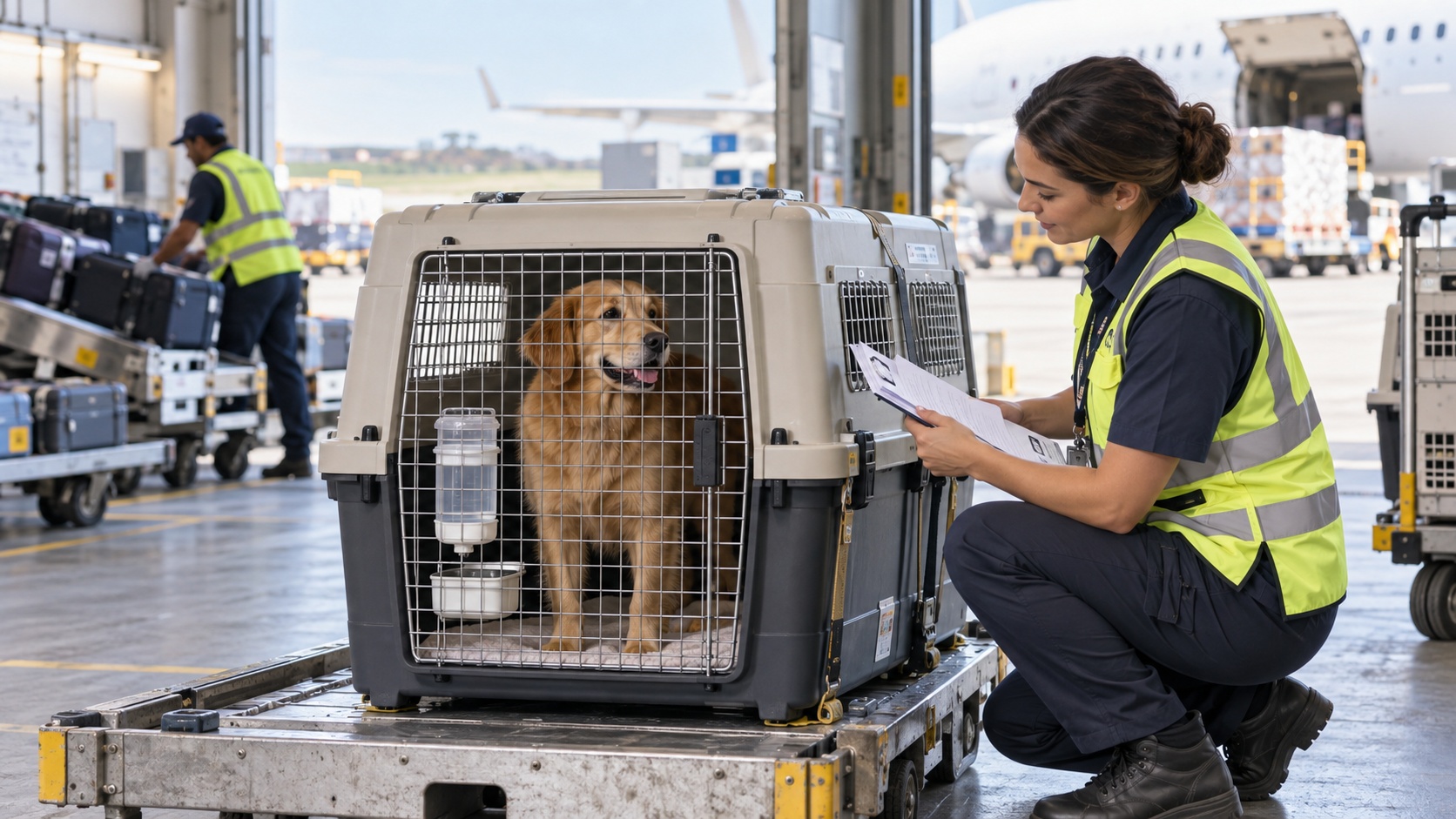
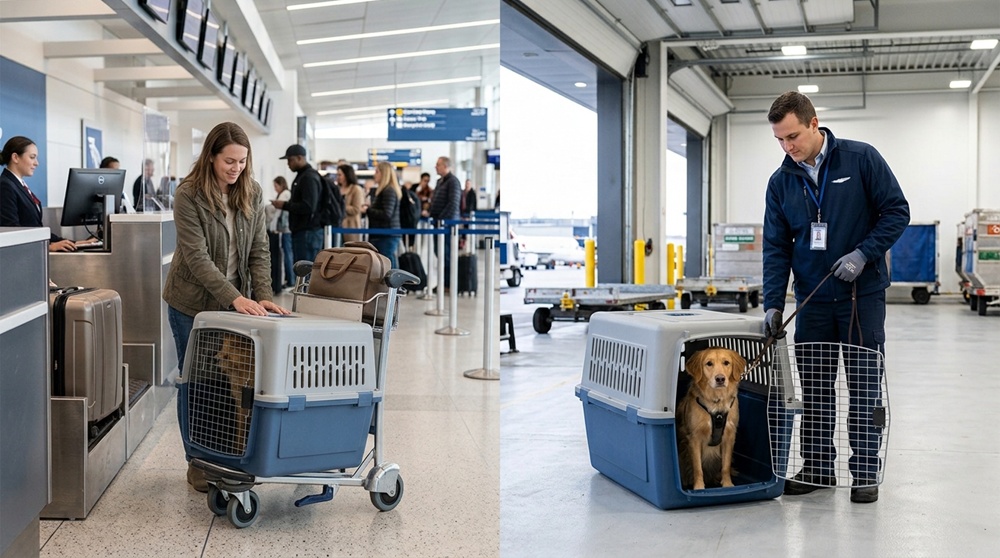
Under the standard import pathway, pets from Canada travel through the airline's live-animal cargo system and are transferred directly into MPI arrival and quarantine arrangements. A passenger airline's general pet policy does not confirm that it will accept a pet on the exact long-haul route. Acceptance can depend on aircraft type, crate size, temperature, station capability, breed restrictions and whether all sectors can be booked under one protected cargo itinerary.
Some carriers require international pet-cargo bookings to be made by an IPATA member or professional pet shipper.
New Zealand's special assistance-dog process is different. An MPI-verified and fully compliant assistance dog may be cleared without quarantine, subject to documentation and inspection requirements.
Cats and dogs entering New Zealand by air can arrive only through Auckland or Christchurch under the standard import framework. The best route depends on the departure city, quarantine facility, pet and crate size, aircraft type, transfer arrangements and current airline acceptance.
From Canada, Vancouver often provides the simplest Pacific routing, while pets departing Toronto, Calgary or Montreal may need a domestic positioning sector or an international connection. Fewer sectors are generally preferable.
New Zealand permits pets travelling to New Zealand to transit or tranship through Category 1, 2 or 3 countries, but the exact transfer must comply with MPI and airline conditions. Avoid separate tickets, unprotected transfers and long layovers where possible.
Paws en route recommends the most direct, least complicated suitable route for the pet and confirms acceptance on the exact flight before locking the veterinary and travel dates.
The pet must travel in a secure crate that meets current IATA Live Animals Regulations and the airline's requirements. The animal must be able to stand naturally without touching the roof, turn around and lie down comfortably. The crate must have suitable ventilation, secure fasteners, fixed food and water containers, absorbent bedding and the required exterior labelling.
Some large dogs, strong breeds and brachycephalic pets may need reinforced or custom crates. External crate measurements affect the aircraft and route that can be used, so measure before requesting a cargo quote.
MPI removed the requirement for crate seals for Category 3 cats and dogs arriving from March 1, 2026. Airline security and construction requirements still apply.
Related Paws resource: Preparing Your Pet for Air Travel: 5 Tips for a Smoother Journey
After landing in Auckland or Christchurch, the pet is handled through MPI biosecurity clearance and transferred to the reserved approved quarantine facility. Pets from Canada complete a minimum 10-day quarantine stay. The actual stay can be longer if the pet arrives outside the facility's intake arrangements, documentation is incomplete, testing is required, parasites or illness are found, veterinary treatment is needed or MPI release conditions are not met.
Quarantine fees are paid to the private facility, with MPI inspection and biosecurity charges potentially billed separately. Owners should confirm what is included before booking.
After release, the owner can arrange collection, ground transportation or onward domestic travel within New Zealand.
New Zealand prohibits certain dog breeds or types and their crosses. These include:
Dog hybrids and non-domestic cat hybrids may also be ineligible. Breed descriptions on veterinary and ownership records should be reviewed before starting the import process.
Medical history can also affect eligibility. Under the 2021 pathway, dogs diagnosed with Babesia gibsoni or Brucella canis are ineligible regardless of treatment. Pregnancy, age and residency restrictions must be checked against the chosen standard.
Avoid these common mistakes:
New Zealand is currently one of the easiest destinations for owners to misunderstand because two regulatory frameworks are temporarily operating at the same time. Paws en route helps determine which MPI pathway applies, then coordinates the documentation, veterinary calendar, quarantine reservation and flight plan around that one framework.
The goal is to prevent requirements from being mixed, missed or completed in the wrong order while choosing the most direct, least complicated suitable route for the pet.
Plan at least six months under the 2026 process because the official identification check must occur at least six months before export. Seven to nine months is safer for permit, quarantine and flight coordination.
During the transition, some pets may use either the 2021 or 2026 pathway. The 2021 permit application must be submitted by December 31, 2026 and the import completed by March 31, 2027. From April 1, 2027, only the 2026 process is accepted.
Yes. Cats and dogs arriving from Canada require an MPI import permit.
Yes. Ordinary pets from Canada complete a minimum 10-day stay in an MPI-approved quarantine facility. A fully compliant MPI-verified assistance dog may qualify for clearance without quarantine.
Under the standard air-import process, cats and dogs can arrive through Auckland or Christchurch.
Ordinary pets from Canada follow the cargo and quarantine process. Assistance dogs use a separate pathway and also need MPI verification and compliant documentation.
Under the 2026 standard, an official veterinarian verifies the pet's microchip identity at least six months before export. For Canadian departures, this should be coordinated with CFIA.
Yes. Category 3 pets require an approved RNATT result of at least 0.5 IU/mL, together with compliant rabies vaccination and documentation.
No. MPI removed the crate-seal requirement for Category 3 cats and dogs arriving from March 1, 2026. Airline and IATA crate requirements still apply.
Usually. Depending on the standard and the dog's history, requirements may include heartworm, Leptospira, Babesia and Brucella testing or treatment.
Often yes. Pets travelling to New Zealand may transit or tranship through Category 1, 2 or 3 countries, but airline, transfer and MPI conditions must be checked for the exact itinerary.
Possibly, but airline acceptance may be limited by breed, health, temperature, aircraft type and route. These factors should be assessed before booking.
MPI recommends considering a professional pet transporter. This is especially valuable during the 2026 transition because the standard, permit, veterinary work, quarantine and cargo itinerary must remain aligned.
Moving a pet from Canada to New Zealand is possible, but it requires a clear regulatory pathway, an early start and careful coordination between the veterinarian, CFIA, MPI, quarantine facility and airline.
Paws en route can support one part of the process or coordinate the complete journey, including documentation, import permits, veterinary timelines, crate planning, cargo booking, ground transportation, quarantine arrangements and arrival support.
Planning a move to New Zealand? Request a custom pet travel quote and let us build the compliance and travel plan around your pet, route and timeline.
Ready to travel?
Our IPATA-certified pet travel specialists help manage the details, from airline booking to health certificates and import permits, for a smoother travel experience.
Get a custom quotePaws en route provides trusted support for every step of pet travel, from complex international relocations to domestic travel within Canada.