
Travelling with a pet is never entirely one-size-fits-all. Your pet's breed, body shape, size, health, temperament and tolerance for temperature can all affect how they should travel and which airlines or routes may be available.
This is particularly important for international pet air travel and relocation, large dogs and flat-faced breeds. Airline policies can differ significantly, while some destinations restrict particular dog types or require additional veterinary assessments.
The following guide explains some of the most important breed-related considerations to discuss with your veterinarian, airline and pet travel specialist before booking.
Breed alone does not determine whether a pet can travel safely. However, certain physical characteristics are associated with greater travel risks or practical limitations. These may include:
A pet's travel plan should therefore be based on the individual animal as well as its breed. It should also account for the pet's route, method of travel and destination requirements. Our guide to the three types of international pet air travel explains how in-cabin, checked-baggage and manifest-cargo travel differ.
Brachycephalic pets have shortened skulls and flatter faces. Examples include Pugs, English and French Bulldogs, Boston Terriers, Persian cats and Himalayan cats.

These animals can be more vulnerable to breathing difficulties, overheating and stress, particularly during warm weather or lengthy journeys. Some airlines will not accept certain brachycephalic dogs in the checked-baggage compartment. Others may impose special kennel, temperature, route or documentation requirements.
A brachycephalic pet may still have travel options, but the route and method of travel require careful assessment. Important steps may include:
An airline ticket sold by one carrier may be operated by another airline with different animal policies, so always confirm the rules of the operating carrier.
For international journeys, breed-related airline requirements must also fit within the larger documentation and compliance process. Learn more about the four essential stages of international pet air travel.
Large dogs such as Great Danes, Mastiffs, Newfoundlands and Saint Bernards frequently require oversized travel kennels. They generally cannot travel in the passenger cabin because an in-cabin pet must remain in a carrier that fits securely under the seat.

For larger pets, the main considerations include:
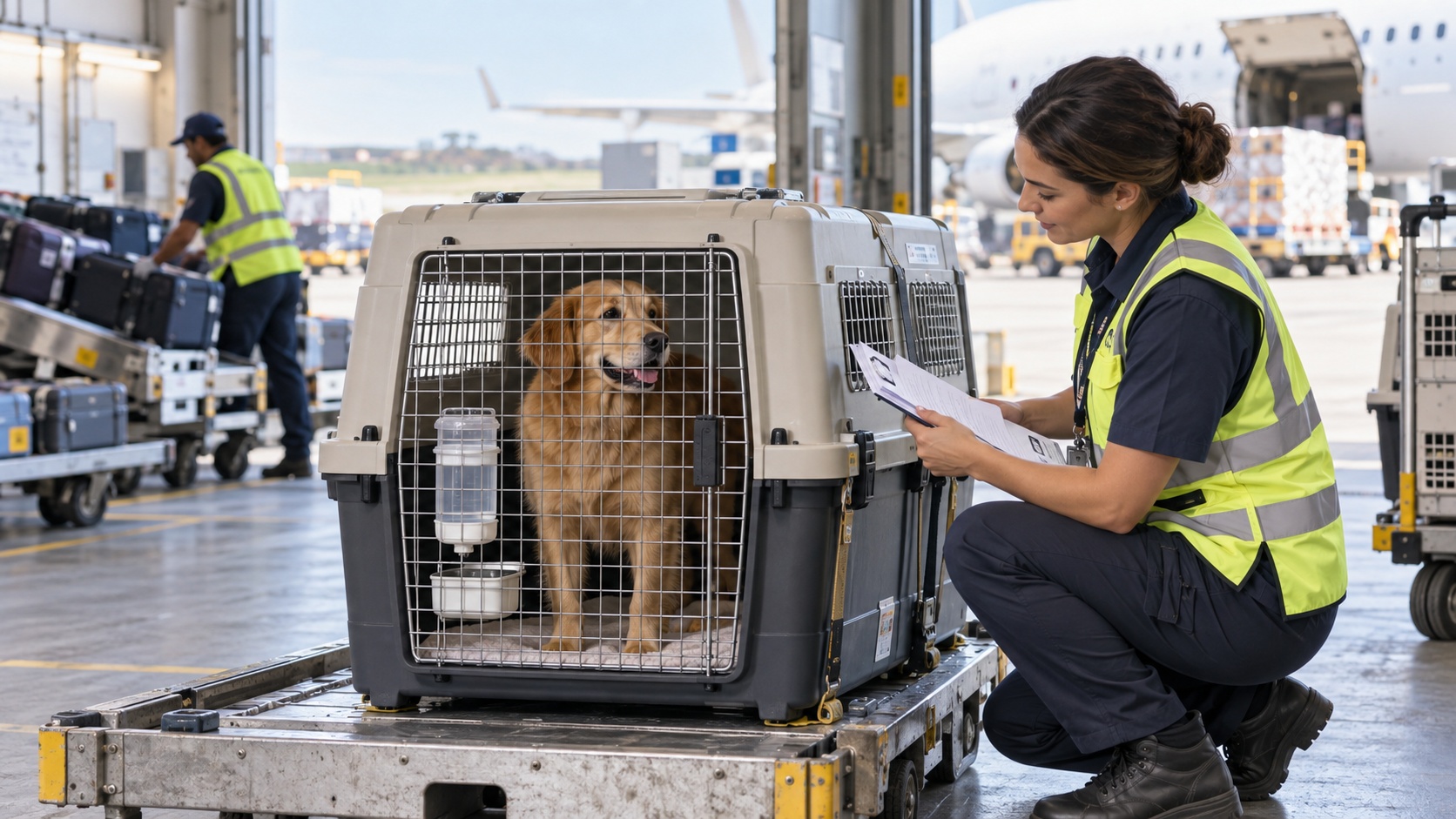
The kennel must allow the pet to stand naturally without touching the roof, turn around and lie down comfortably. Choosing a kennel based only on the pet's weight or breed is not enough. Accurate body measurements are essential. Our guide to pet travel crate measurements and selecting the right kennel size explains how pets are measured and why breed-based estimates can lead to problems at the airport.
Very large kennels may also limit route options because not every aircraft can accommodate them. Even when a crate is compliant, it must fit the aircraft and be accepted by the airline operating each segment of the journey.
Some airlines classify particular breeds as strong or potentially aggressive and require a reinforced travel container rather than a standard plastic kennel.
These requirements may apply even when the individual dog is friendly and has no history of aggressive behaviour. Airlines may also refuse any animal that displays aggression, extreme distress or repeated attempts to damage its crate. Owners of strong breeds should confirm:
A kennel accepted by one airline may not be accepted by another. This is one reason pet travel planning needs to consider the animal, crate, route and airline together rather than treating the flight as a standard passenger booking.
Breed stereotypes should not be used to assume that every Border Collie, Australian Shepherd or Siamese cat will react the same way. Temperament varies greatly between individual animals.

Nevertheless, pets with high energy levels, separation distress or limited crate experience may need more preparation. Helpful steps include:
Our article on preparing your pet for air travel offers additional practical guidance on crate acclimation, feeding, hydration and flight-day preparation.
Do not introduce an unfamiliar medication or calming product on travel day. Any medication should be discussed with the pet's veterinarian and the airline, as sedation can affect an animal's balance, breathing and ability to regulate its body temperature. Exercise before travel may help some dogs settle, but it should be moderate rather than exhausting, particularly in hot weather or for brachycephalic pets.
A pet's coat, age, health and facial structure can affect its ability to tolerate temperature changes. For example:

A route that is available in spring may therefore be unavailable in summer or winter. Pet owners planning either international travel or pet travel within Canada should assess the conditions across the entire itinerary, not simply the weather at the final destination.
Some countries and regions restrict or prohibit particular dog types. These rules can apply even when the dog is legally owned in Canada.

The UK government currently lists the following prohibited dog types:
The UK assesses prohibited types partly by appearance and physical characteristics, not only by the breed stated on registration or veterinary documents. Pet owners should obtain destination-specific guidance before planning travel with any dog that could resemble a prohibited type.
Australia has a detailed biosecurity process for imported cats and dogs. Depending on the country of export, the process may involve:
Planning may need to begin several months before travel. Breed restrictions can also apply, so owners should confirm that their animal is eligible before beginning the veterinary and documentation process.
Destination rules are only one part of the process. Our article explaining why international pet travel involves more than booking a flight covers the interaction between government regulations, airline policies, crate compliance and arrival logistics.
There is no single airline policy covering every breed or route. An airline may accept a pet:
The same airline can also apply different rules based on the destination, aircraft and operating carrier.
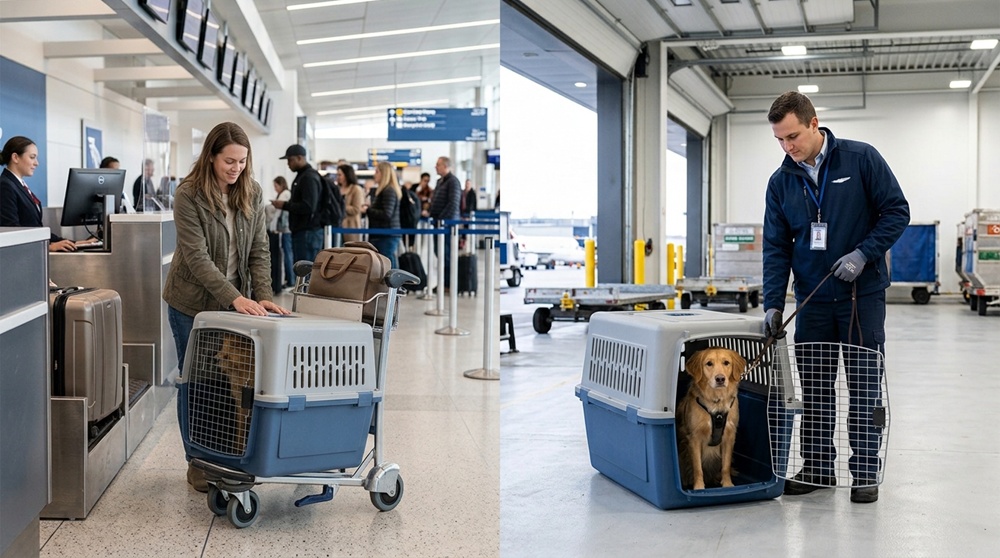
Pet owners should check the airline's official pet page for the exact route rather than relying on general summaries or older blog posts. Airline approval at the booking stage also does not guarantee that an unsuitable or non-compliant crate will be accepted at check-in.
Read more about why pets may be denied boarding because of crate size and the steps that can help prevent last-minute problems.
Complex pet travel may involve airline reservations, crate selection, veterinary documentation, import permits, government endorsements, airport handling and destination clearance. When evaluating a provider, consider:
IPATA describes its member companies as independently operated pet shipping specialists. Membership provides access to an international professional network, but services and experience vary between companies. Pet owners should still ask detailed questions about the provider's experience with their specific pet and itinerary.
For brachycephalic pets, it may also be worth asking whether the company has completed specialized BOAS or snub-nosed pet travel training.
Paws en route provides both international pet travel and relocation services and coordinated air and ground pet travel within Canada.
Before booking, pet owners should:
A pet should not be booked simply because a flight appears online. The route must also be suitable for the animal, the kennel and the destination requirements.
Breed-specific guidance is a useful starting point, but the safest travel plan considers the whole animal: its health, breathing, size, temperament, age, crate experience and tolerance for climate and stress.
Paws en route helps pet owners evaluate travel options for domestic and international journeys, including route planning, airline booking, crate guidance and documentation support. For pets with more complex needs, early planning can make the difference between a workable itinerary and a last-minute travel problem.
Request a custom pet air travel quote to discuss your pet, proposed route and travel requirements.
Ready to travel?
Our IPATA-certified pet travel specialists help manage the details, from airline booking to health certificates and import permits, for a smoother travel experience.
Get a custom quotePaws en route provides trusted support for every step of pet travel, from complex international relocations to domestic travel within Canada.