

Table of Contents
Moving from Canada to Ireland with your dog or cat? Whether your destination is Dublin, Cork, Galway, Limerick, Kilkenny, Waterford, Kerry, or another part of the country, the journey requires coordination between EU entry rules, Canadian export documentation, airline pet policies, Ireland's arrival procedures, and onward transportation.
This guide focuses on the Republic of Ireland. If your pet is travelling to Belfast or another destination in Northern Ireland, the journey follows a separate UK-related process. See our pet travel from Canada to the United Kingdom guide for more on Great Britain and Northern Ireland routing.
Ireland is a member of the European Union and follows the EU framework for non-commercial movement of dogs, cats, and ferrets from Canada. However, Ireland has several requirements that make it different from destinations such as France, Germany, Italy, Spain, Portugal, and the Netherlands.
Most notably, dogs travelling directly to Ireland generally require veterinary treatment against Echinococcus multilocularis tapeworm before arrival. Pets arriving from a non-EU country must also enter through an appropriate traveller point of entry and complete the required compliance process.
Ireland allows airlines to transport eligible pets in the passenger cabin or as excess baggage in principle, but the final decision belongs to the operating airline. This means the Great Britain cargo-only air-arrival rule does not apply to the Republic of Ireland. The actual travel method still depends on the airline, aircraft, route, pet size, carrier or kennel, breed, and season.
Ireland shares many entry requirements with other EU destinations, but four points deserve particular attention:
Ireland's official entry points for pets arriving from non-EU countries include Dublin Airport, Cork Airport, Shannon Airport, Dublin Port, Rosslare Europort, and Ringaskiddy Port in Cork. Not every entry point is equally practical for travel from Canada, and Dublin Airport is generally the main transatlantic gateway.
For most non-commercial travel from Canada to the Republic of Ireland, a dog, cat, or ferret will generally need:
A rabies antibody titre test is not normally required for a pet travelling directly from Canada under the listed-country process. However, recent travel through another country can change the requirements.
For a broader explanation of the shared European requirements, read our guide to moving to Europe with your pet.
The pet must be identified with a readable microchip. The microchip must be implanted or read and verified before the rabies vaccination used for travel is administered. The same number must appear on the vaccination record, EU animal health certificate, and supporting documents.
After a primary rabies vaccination, the pet must wait until the vaccine has developed the required immunity before travelling. This period must be at least 21 days, although the vaccine's authorized product information may specify a longer immunity-development period.
Ask your veterinarian to scan the microchip early in the process. A transposed digit or mismatch between the microchip and vaccination records can disrupt the move.
A Canadian pet travelling to Ireland for the first time generally needs an EU animal health certificate rather than an EU pet passport. The certificate records information including:
The certificate must be completed correctly and endorsed by the Canadian Food Inspection Agency before the pet leaves Canada. Allow time for:
The original documents must travel with the pet. Ireland's government guidance states that the pet must arrive with the owner, or within five days before or after the owner when accompanied by an authorized person, and must be accompanied by the original paperwork.
Not for the initial journey from Canada. An EU pet passport is normally issued for an eligible pet associated with an owner whose main residence is within the EU. After settling in Ireland, an Irish veterinarian may be able to issue one for future eligible travel, provided the pet meets the identification and vaccination requirements.
For the original Canada-to-Ireland journey, focus on the correct EU animal health certificate and CFIA endorsement.
To qualify as non-commercial movement, the pet's travel must be linked to the owner's movement. The pet can travel:
When another person accompanies the pet, written authorization from the owner is required and should be attached to the health certificate. A different commercial process may apply when:
Ireland specifically states that an unaccompanied pet, a purchased or rehomed animal, or an animal involved in a change of ownership may not qualify under the ordinary pet-travel process.
Dogs travelling directly from Canada to Ireland generally require veterinary treatment against Echinococcus multilocularis. The treatment must:
The record should include the product, date, exact time, and veterinarian's endorsement.
Cats and ferrets do not require this dog tapeworm treatment.
The timing is based on scheduled arrival in Ireland, not simply departure from Canada. The veterinarian and travel planner should account for the complete itinerary, time-zone changes, connections, and possible delays. Ireland and Northern Ireland are among the destinations that apply this timed dog tapeworm requirement.
Pets arriving from Canada must complete Ireland's required arrival process. Before travel, the owner or representative should:
Ireland provides an online advance-notice portal for pets entering from non-EU countries. The exact submission and inspection instructions should be confirmed for the chosen airport before departure. The compliance check may include:
Do not place the only original documents inside checked luggage or the pet's kennel.
Dublin is the main destination for nonstop passenger service from Canada. Depending on the Canadian departure city, airline, and season, nonstop Dublin service may be available through carriers such as:
Toronto generally provides the broadest selection of nonstop options. Seasonal service may also be offered from other Canadian gateways. Flight schedules can change, so the airline, departure city, operating period, and aircraft should be checked for the actual travel date.
Paws en route generally recommends the most direct and least complicated suitable route for the pet. A nonstop flight can reduce:
However, the existence of a nonstop passenger flight does not guarantee that it can accommodate a particular pet.
The Republic of Ireland does not have the same general cargo-only air-arrival rule as Great Britain.
Ireland's Department of Agriculture states that it has no objection to accompanied cats or dogs travelling in the cabin or as excess baggage, but the operating airline decides whether and how it will transport the animal. Depending on the airline and pet, the available method may be In-cabin travel, Checked baggage or aircraft-hold travel or Manifest cargo. The most suitable airline depends on:
Airline policies should be checked for the exact flight, not only the general route.
Aer Lingus operates nonstop service between Toronto and Dublin and can be a relevant passenger option for Ireland-bound travellers. However, the airline's passenger network and its live-animal acceptance rules are separate questions. Pet acceptance can depend on:
Do not assume that a pet can travel in the passenger cabin simply because Ireland permits airlines to offer that option. The airline's actual policy for the transatlantic flight is what determines acceptance.
Air Canada, Air Transat, and WestJet may offer direct or seasonal Canada-to-Dublin service, depending on the departure city and travel period. Each carrier has different rules for:
An airline may operate a nonstop passenger flight but not accept the pet's size, breed, or kennel on that service.
Paws en route compares the available carriers and flight details rather than automatically recommending one airline.
A small dog or cat may be eligible for cabin travel when the airline permits it and the pet fits comfortably in an approved carrier beneath the seat. A larger pet may need to travel:
Cargo may be required when:
Read our guide to the 3 types of international pet air travel.
Some Canada-to-Ireland itineraries connect through London, Amsterdam, Paris, Frankfurt, or another hub.
Paws en route generally recommends the most direct and least complicated suitable route for the pet. A direct flight to Dublin is often preferable when the airline accepts the pet and the route meets the animal's needs. Connections can add:
A connection through Great Britain can be particularly complicated because the rules for pets entering Great Britain by air differ from Ireland's rules. Do not assume that a cabin or checked-baggage pet can connect normally through a London airport.
When a direct flight is not workable, a carefully planned single connection is usually preferable to a multi-airline itinerary.
Dublin Airport is the primary arrival point for pets flying directly from Canada. Before departure, confirm:
The location and timing of the arrival process can vary depending on how the pet travelled.
A cabin pet, baggage pet, and cargo pet may be processed through different areas. Confirm where the owner or receiving person must report.
Cork Airport and Shannon Airport are also listed traveller points of entry for pets arriving from non-EU countries. They may be worth considering when:
Direct Canada service to Cork or Shannon is much more limited than service to Dublin, and schedules may be seasonal or unavailable. In many cases, flying directly to Dublin and continuing by ground will be simpler than adding a connection.
For pets travelling to Cork, Galway, Limerick, Kilkenny, Waterford, Kerry, or a rural destination, the journey usually continues by road. A private pet-friendly transfer can be helpful when travelling with:
Although Ireland has rail and coach connections, public transportation may not be the simplest option immediately after a long transatlantic flight.
The travel crate also needs to fit the vehicle being used after arrival.
This guide covers the Republic of Ireland, including Dublin, Cork, Galway, Limerick, Waterford, Kilkenny, and Kerry.
Belfast, Derry/Londonderry, and other Northern Ireland destinations are part of the United Kingdom and use a separate administrative process.
Northern Ireland remains connected to the EU pet-travel framework. A pet arriving there from Canada generally needs EU-aligned documentation, dog tapeworm treatment, and entry through a Northern Ireland traveller point of entry. For air arrivals, DAERA currently requires advance contact at least 10 days before the intended travel date.
Travellers should therefore confirm whether the final address is in:
The names may sound similar, but the arrival authorities, advance-notification process, and points of entry are not interchangeable.
For pets travelling to England, Scotland, Wales, or Northern Ireland, see our pet travel from Canada to the United Kingdom guide.
A cabin carrier must comply with the airline's current size and construction requirements.
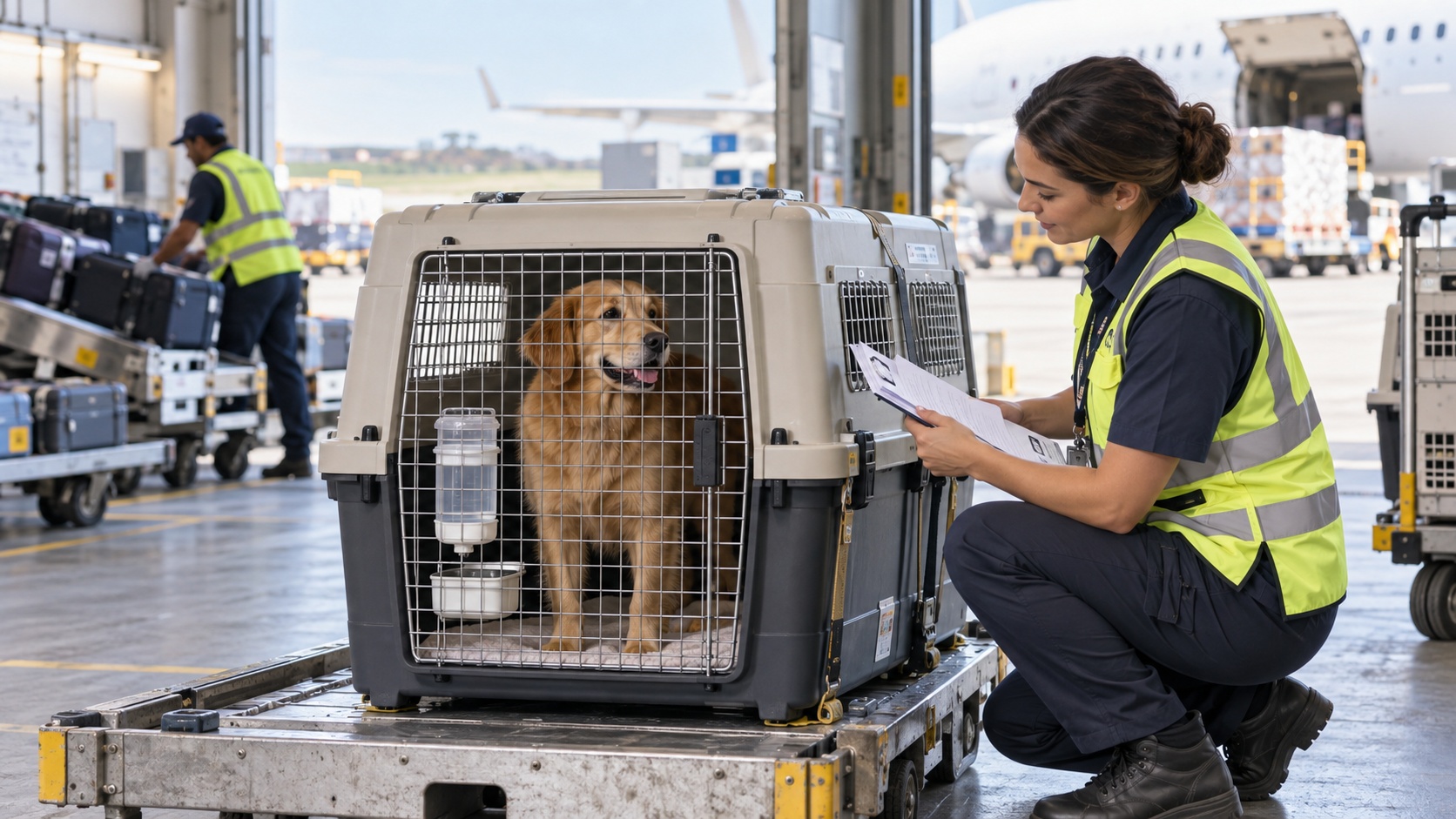
A pet travelling in the hold or as cargo needs an appropriately sized rigid kennel. The pet should be able to:
Kennel size can determine which aircraft and airline options are possible.
Read our guide to pet travel crate measurements.
Begin carrier or crate familiarization several weeks before departure. Leave the crate open at home, use treats or meals to build positive associations, and gradually increase the amount of time the pet spends inside. Speak with your veterinarian about:
Read Preparing Your Pet for Air Travel: 5 Tips for a Smoother Journey.
Avoid these common mistakes:
Paws en route helps Canadian families plan safe and compliant pet travel to Ireland. Our team can help with:
Paws en route generally recommends the most direct and least complicated suitable route for the pet, based on airline acceptance, aircraft, kennel size, season, arrival requirements, and final destination.
Whether your destination is Dublin, Cork, Galway, Limerick, Kilkenny, Waterford, Kerry, or another Irish community, early planning can help prevent documentation and airline problems.
Tell us where your pet is travelling from, their final destination, breed, size, and preferred timeline. Paws en route can help identify the next steps and provide a customized quote.
Ready to travel?
Our IPATA-certified pet travel specialists help manage the details, from airline booking to health certificates and import permits, for a smoother travel experience.
Get a custom quotePaws en route provides trusted support for every step of pet travel, from complex international relocations to domestic travel within Canada.