Planning to bring your dog or cat from Canada to Spain? Whether you are relocating to Madrid, Barcelona, Valencia, Málaga, Alicante, Seville, Mallorca, or another Spanish destination, your pet’s journey needs to be planned around more than your own flight.
Spain follows European Union rules for dogs, cats, and ferrets entering from non-EU countries. Canadian pets usually need a microchip, valid rabies vaccination, EU animal health certificate, CFIA endorsement, and airline-approved travel arrangements. Spain also has practical arrival details that matter for pet owners, including designated traveller entry points and the need to declare your pet when entering the country.
Because Spain can also involve warm-weather travel, seasonal flight planning is especially important for larger dogs, snub-nosed breeds, senior pets, and pets travelling in the hold or as cargo.
This guide explains what Canadian pet owners should know before travelling to Spain with a dog or cat.
For most non-commercial pet moves from Canada to Spain, your pet will generally need:
Most Paws en route clients travelling to Spain are moving dogs or cats. Ferrets are included in the EU pet travel category, but they are less common. Other animals may be able to travel, but they may require a separate review.
Spain’s official guidance says pets entering from a non-EU country must enter through one of Spain’s designated traveller points of entry and be declared to the Guardia Civil’s Tax Office with the pet’s documentation.
This is an important planning detail. If Spain is your pet’s first EU entry point, you need to make sure the arrival airport is authorized for pet entry and that your paperwork is prepared for Spain. If your pet connects through another EU country before continuing to Spain, that first EU country may become the point where document and identity checks happen.
This is one reason route planning matters. A flight that looks convenient for a person may not be the simplest or safest route for a pet.

Your pet must be identified with a microchip before entering Spain. The microchip number must match the rabies vaccination record, veterinary paperwork, and EU animal health certificate. Ask your veterinarian to scan the microchip early in the planning process.
Your pet must also have a valid rabies vaccination. The rabies vaccination must be given after the microchip is implanted or after the microchip has been read and recorded.
For a primary rabies vaccination, the EU generally requires a waiting period before travel. This means the vaccination is not considered valid for entry until at least 21 days have passed after the primary rabies vaccination protocol is completed.
Spain’s guidance also notes that dogs, cats, and ferrets under 15 weeks of age are not authorized to enter because the minimum age for rabies vaccination is 12 weeks and at least 21 days must pass before the vaccination becomes valid.
Your rabies record should clearly show:
A rabies antibody titre test is not usually required for pets travelling directly from Canada to Spain under standard EU rules. It may be required if your pet has recently been in, or will transit through, a country with different rabies-risk status.
For travel from Canada to Spain, your pet usually needs the correct EU animal health certificate, not an EU pet passport.
The certificate must be completed in Canada and endorsed by the Canadian Food Inspection Agency before your pet leaves Canada. CFIA cannot endorse or issue an export certificate after the animal has already left the country.
Build in time for:
Because Spain is a Spanish-speaking country, confirm that the correct certificate language version is being used if Spain is the first point of entry into the EU.
Usually, not for first-time entry from Canada. An EU pet passport is generally issued by an authorized veterinarian within the European Union. It may be useful after your pet is already living in Spain for future travel within the EU.
For the Canada-to-Spain trip, the key document is usually the EU animal health certificate endorsed by CFIA before departure.
To qualify as non-commercial movement, your pet’s travel must be connected to your own travel.
Your pet must travel with you or with an authorized person within five days before or after your movement. You may also need to declare that the pet is not being sold or transferred to another owner.
Your pet may need to follow commercial requirements if:
If any of these apply, confirm the correct process before booking flights.
For Canada-to-Spain pet travel, Madrid and Barcelona are usually the main arrival cities to review first because they offer strong international connectivity.
Madrid can be practical for pets travelling to central Spain, northern Spain, Andalusia, and many inland destinations. Barcelona can be useful for Catalonia, northeastern Spain, Valencia, and some Mediterranean destinations. Málaga or Alicante may be useful for families relocating to the Costa del Sol or Costa Blanca, but route availability and pet acceptance can be more seasonal.
If your final destination is Valencia, Seville, Granada, Murcia, Bilbao, Mallorca, or the Canary Islands, it may still be better for your pet to arrive in Madrid or Barcelona and continue by ground transportation, depending on airline acceptance, temperatures, and route complexity.
When choosing the arrival city, consider:

Spain’s warmer climate makes temperature planning important.
Warm weather can affect whether airlines accept pets in the hold or as cargo, especially during summer or on routes with long ground handling times. Even when a flight is available for passengers, it may not be appropriate for every pet.
Consider:
For some pets, an early morning arrival, a different airport, or a route with fewer handoffs may be safer than the cheapest available itinerary.
Airline rules change often, and pet acceptance can vary by aircraft, season, route, and operating carrier. Always confirm the exact flight before booking.
Air Canada may be relevant for some Canada-to-Spain itineraries depending on route and season. Small cats and dogs may be accepted in cabin if they meet the airline’s carrier and size requirements. Larger pets may need to travel in the baggage compartment or through cargo, depending on the animal, aircraft, route, and timing.
Iberia may also be relevant for Spain-bound travel, but its policies should be checked carefully before booking. Pet acceptance can depend on weight, breed, route, aircraft, and whether the pet is travelling in cabin or hold. Larger pets may require extra planning, and some airline restrictions may vary by route.
Some Canada-to-Spain moves may use a European connection through Paris, Frankfurt, Munich, Amsterdam, or another hub. These can work in some cases, but each connection adds another handoff. If your pet enters the EU through another country before continuing to Spain, the first EU point of entry may affect the certificate language version and inspection process.
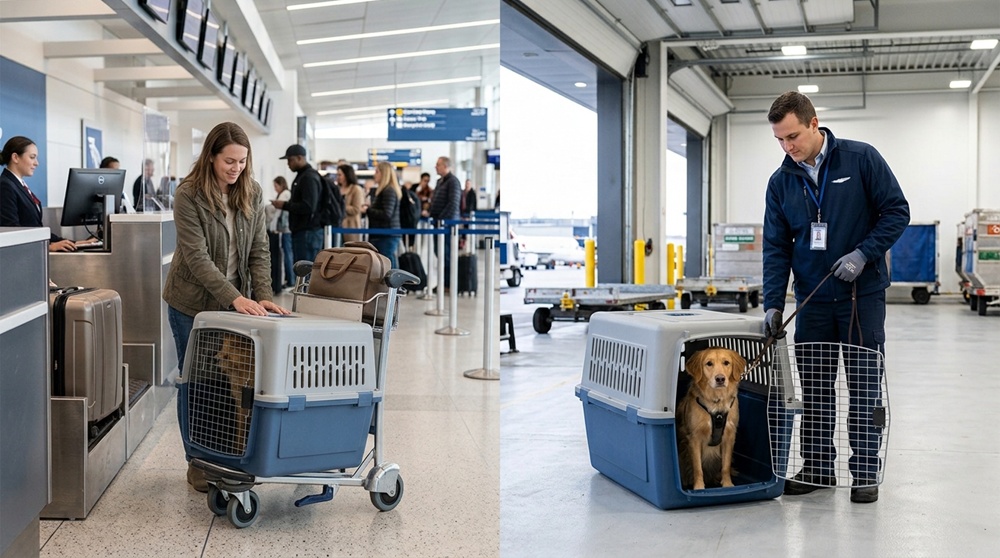
Small dogs and cats may be able to travel in cabin if the airline allows it and the pet fits comfortably in an approved carrier under the seat. Larger pets usually need to travel as checked baggage or cargo.
Before choosing the travel method, read our guide to the 3 types of international pet air travel.
For Spain, cabin travel can be attractive for small pets because of warm-weather considerations. However, cabin availability is limited and must be confirmed with the airline.
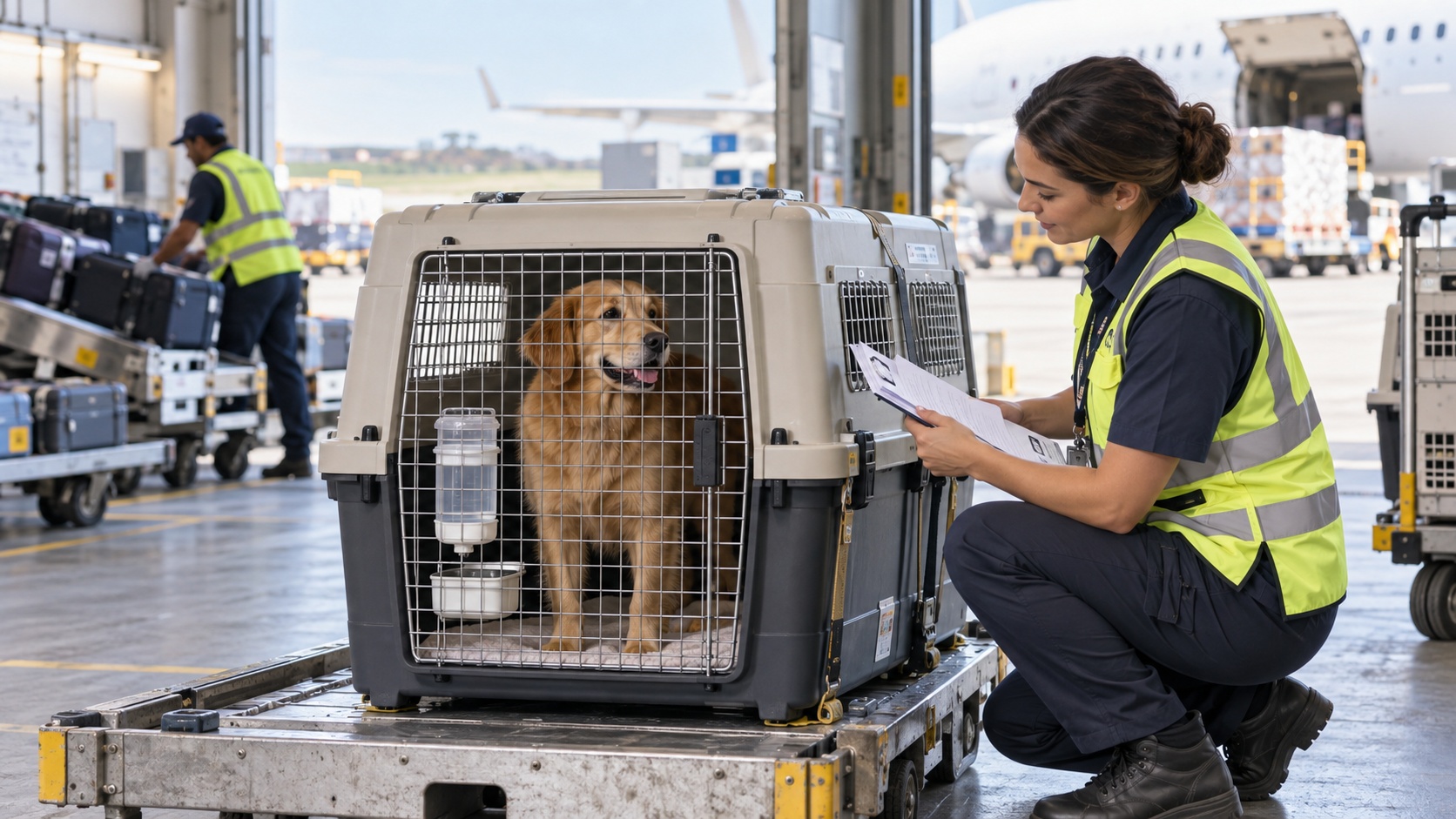
Your pet’s carrier or crate must match the airline’s rules and your pet’s size.
Small pets travelling in cabin usually need a soft-sided carrier that fits under the seat. Pets travelling in the hold or as cargo usually need a rigid airline-approved crate. Your pet should be able to:
For large dogs, crate sizing should be completed early. A crate that is too small can lead to denied travel. Read our guide to pet travel crate measurements.
Good pet travel planning includes both compliance and comfort.
Start crate or carrier familiarization before the travel date. Let your pet explore the crate at home, reward calm behaviour, and slowly increase crate time. This can help reduce stress on travel day. Speak with your veterinarian about:
For more practical advice, read Preparing Your Pet for Air Travel: 5 Tips for a Smoother Journey.
Avoid these common pet travel mistakes:
Paws en route helps Canadian families plan safe, compliant international pet travel to Spain and other destinations.
For Canada-to-Spain pet travel, our team can help with:
International pet travel is more than just booking a flight. Read Why International Pet Travel Is More Than Just Booking a Flight.
Whether your pet is travelling to Madrid, Barcelona, Valencia, Málaga, Alicante, Seville, Mallorca, or another destination in Spain, planning early can help avoid delays and reduce stress.
Tell us your pet’s origin, destination, breed, size, and ideal timeline. Paws en route can help you understand the next steps and provide a customized quote for your pet’s move to Spain.
Ready to travel?
Our IPATA-certified pet travel specialists help manage the details, from airline booking to health certificates and import permits, for a smoother travel experience.
Get a custom quotePaws en route provides trusted support for every step of pet travel, from complex international relocations to domestic travel within Canada.