Travelling or relocating a dog or cat from Canada to the Dominican Republic is generally less document-heavy than moving a pet to the European Union, Australia or the United Arab Emirates. However, the journey still requires a correctly completed veterinary health certificate, current rabies documentation, parasite treatment, airline approval and an animal-health review after arrival.
The most important planning issue is timing. Dominican government and consular sources do not always describe the health-certificate window in exactly the same way. For a safer travel plan, arrange the final veterinary examination and certificate within 15 days of arrival, while also confirming the current requirement with the Dominican consulate, the airline and CFIA before the certificate is issued.
This guide focuses on personal travel with dogs and cats from Canada. Birds, rabbits, reptiles, exotic animals and other species can require advance authorization, import permits or separate animal-health conditions.
Table of Contents
A dog or cat entering the Dominican Republic from Canada should travel with an original veterinary health certificate confirming that the animal was recently examined, is free from signs of infectious disease, has been treated for internal and external parasites and has a valid rabies vaccination.
For pets old enough to receive a rabies vaccine, plan for the vaccination to be administered at least 30 days before travel. The rabies record should identify the vaccine, date of administration, period of validity and product or serial information.
A personal dog or cat does not normally require an import permit arranged in advance. After arrival, the owner presents the veterinary documents to the animal-control or agricultural-quarantine official and completes the required entry form.

Each dog or cat should be accompanied by a health certificate issued and signed by a veterinarian licensed to practise in Canada. The certificate should clearly identify the animal and state that the pet was examined, found healthy and free from evidence of infectious or contagious disease.
It should also confirm the pet's rabies vaccination and document treatment against internal and external parasites. Include the owner's information, the pet's species, breed, sex, age, colour or markings and any permanent identification number.
Official Dominican sources differ on whether the examination may occur within 15 or 30 days of travel. To reduce the risk of a document being considered too old at arrival, Paws en route recommends completing the final examination and certificate within 15 days of arrival unless the authority handling the specific journey confirms another window.
Dogs and cats that are at least 12 weeks old should be vaccinated against rabies, and at least 30 days should pass before travel when the vaccination is the animal's first rabies dose or is being used to establish eligibility for entry.
The rabies certificate should show the date of vaccination, the period of immunity or expiry date, the vaccine name and the product serial or batch number. The vaccine must remain valid when the pet arrives in the Dominican Republic.
Very young puppies and kittens that are not yet old enough for rabies vaccination may be treated differently by the authorities. Their eligibility should be confirmed directly before a flight is booked, because airlines can impose a higher minimum age even when the destination allows an exception.
The Dominican Consulate in Montreal states that the veterinary certificate should confirm treatment against internal and external parasites. The veterinarian should record the treatment date and the products used so the certificate provides a clear travel history.
Because the published consular guidance does not provide a precise treatment window, the treatment should be coordinated with the final examination and documented close enough to travel to remain current. The airline or destination official may request additional detail about the product or active ingredient.
A microchip is not listed as a standard entry requirement for a personal dog or cat in the current guidance published by the Dominican Consulate in Montreal. It should therefore be treated as recommended identification rather than a universal government entry requirement for this route.
Microchipping is still strongly recommended. It provides permanent identification, helps reunite a lost pet with its family and allows the health and vaccination records to be tied to a unique number. An airline, transit country or later destination may also require one.
A personal dog or cat travelling with its owner does not normally need an import permit obtained before departure. On arrival, the owner asks for the animal-control or agricultural-quarantine official, presents the veterinary records and completes the official pet-entry form.
This personal-pet process should not be assumed to cover commercial shipments, animals changing ownership, large groups of animals, breeding or resale movements, or species other than dogs and cats. Those movements may require advance authorization through the Dominican Republic's Dirección General de Ganadería and its animal-quarantine department.
CFIA does not currently publish a negotiated Dominican Republic certificate for pet dogs and cats on its country-specific pet-export list. For destinations without a country-specific Canadian certificate, CFIA directs travellers to obtain the current import requirements from the destination authority and determine whether the Canadian International Health Certificate is appropriate.
When that certificate is used, it is completed by a Canadian licensed veterinarian and can be presented to an official CFIA veterinarian for endorsement. Because the destination's published information and airline documentation practices can change, confirm the expected certificate format and whether CFIA endorsement is required for the specific trip before the private veterinary appointment.
CFIA endorsement cannot be completed after the animal has left Canada. An appointment should therefore be booked in advance when endorsement will be part of the travel plan.
Canada has extensive nonstop passenger service to the Dominican Republic, particularly to Punta Cana. Air Canada currently markets routes from Canadian cities including Toronto, Montréal, Ottawa, Halifax and Québec, with additional service to destinations such as Puerto Plata and Samaná depending on the season.
WestJet and Air Transat also operate Dominican Republic routes from Canada. Schedules are highly seasonal, and a route shown in a passenger booking system does not automatically mean a pet can travel on that flight.
Before purchasing the passenger ticket, confirm the operating airline, aircraft, pet space, travel method, destination airport and return policy. Codeshare or vacation-package flights may have different animal restrictions from flights operated directly by the airline.
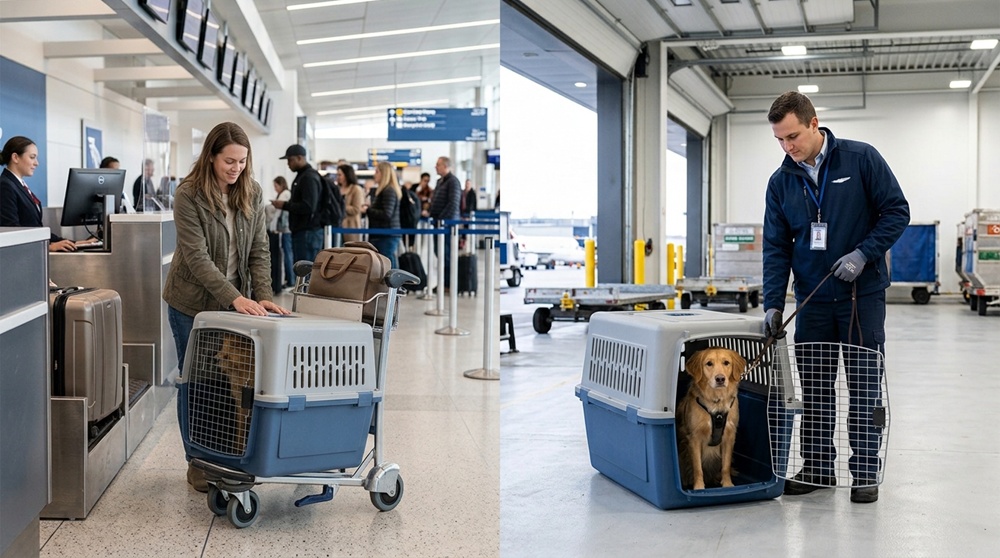
As outlined in our article on the 3 types of pet air travel, depending on the airline, route and size of the animal, a pet may travel in the passenger cabin, as accompanied baggage in the aircraft hold or as manifest cargo.
Small dogs and cats may qualify for cabin travel when they can remain comfortably in an airline-approved carrier under the seat. Larger pets may need to travel in the temperature-controlled aircraft hold on the owner's flight, where that service is offered.
Manifest cargo is booked separately from the passenger ticket and may be necessary for a large crate, an unaccompanied pet or an itinerary that cannot be handled through the passenger pet program. Cargo acceptance, ground handling and destination pickup must be coordinated separately.
Air Canada operates direct service from several Canadian cities to the Dominican Republic. Eligible small cats and dogs may travel in the cabin, while eligible larger pets may be accepted in the baggage compartment on selected routes and aircraft.
Pet acceptance is limited and must be reserved in advance. Seasonal heat restrictions, aircraft limitations, crate dimensions and the specific operating carrier can affect availability. A pet reservation should be confirmed before relying on a particular flight.
WestJet accepts eligible pets under its cabin and checked-kennel programs, subject to route, aircraft and seasonal restrictions. The airline specifically notes that birds may not be imported into the Dominican Republic.
Pets are not accepted on itineraries that include certain codeshare or interline partners, so the complete itinerary should be reviewed rather than only the flight number shown on the passenger ticket.
Air Transat accepts domestic cats and dogs in the cabin or checked baggage hold on eligible direct flights. It requires advance booking, a health certificate showing the pet's breed, proof of rabies vaccination and all destination documents.
Air Transat applies an important return limitation: cats and dogs are not generally accepted one way from the Dominican Republic. An exception may be available for a round-trip booking reserved in advance through its contact centre. This policy should be checked before selecting Air Transat for a relocation or one-way move.
Airline acceptance can be more restrictive than the Dominican Republic's government entry rules. Brachycephalic dogs and cats may face limits because of their increased vulnerability to breathing difficulty and heat stress. Learn more on breed-specific tips for pet travel here.
Airlines can also refuse particular strong or powerful breeds, require a reinforced crate or suspend hold and cargo transport during hot weather. The Dominican Republic's tropical climate makes arrival temperature and ground-handling time especially important.
Breed acceptance should be confirmed in writing before the passenger flight, veterinary appointment and crate purchase are finalized.
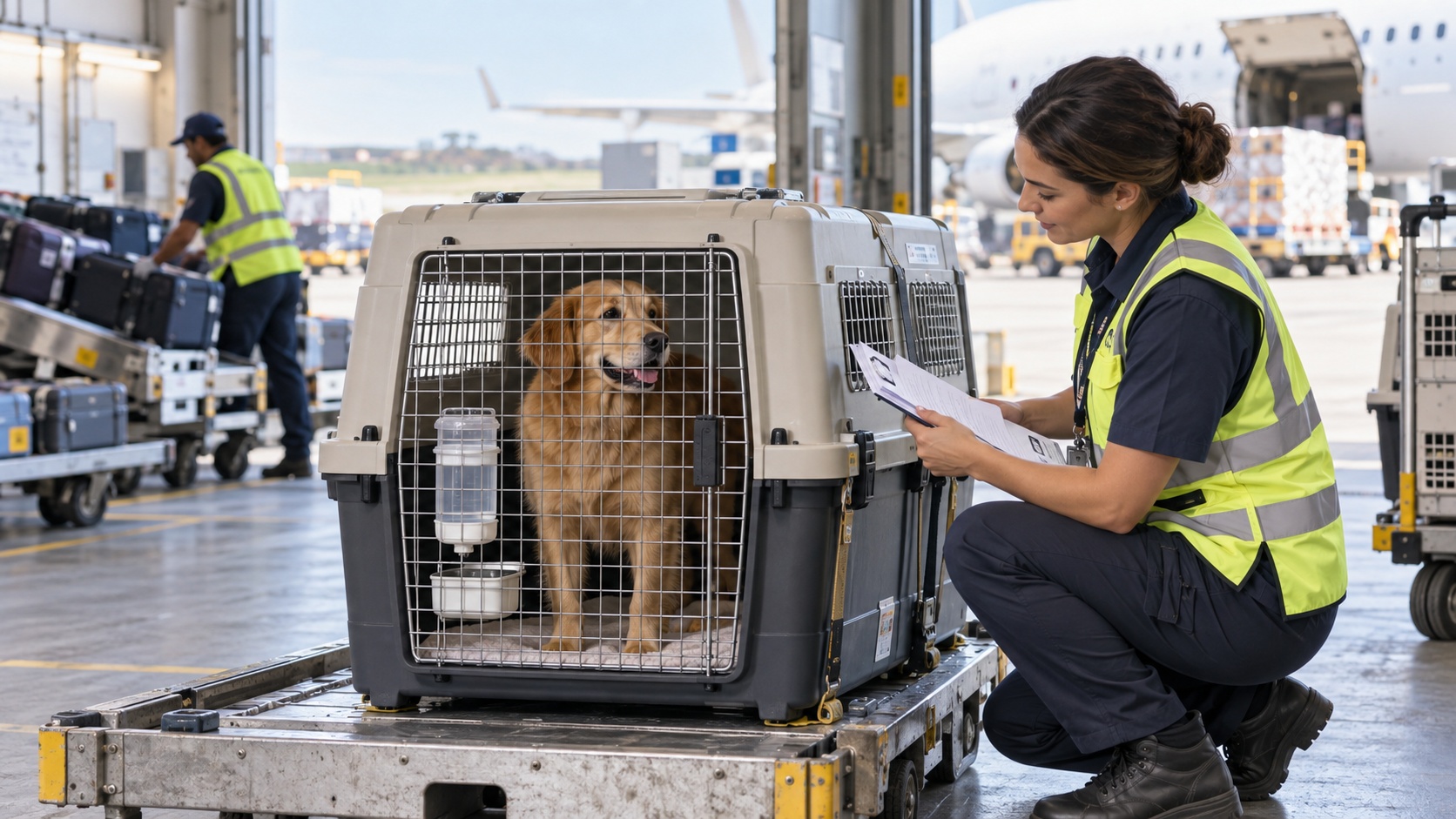
A pet travelling in the aircraft hold or as cargo must use a crate that meets the airline's requirements and the current IATA Live Animals Regulations.
The animal must be able to stand naturally, turn around and lie down comfortably. The crate also needs appropriate ventilation, a secure door, suitable fasteners, absorbent material and water containers that can be accessed from outside.
For detailed sizing and construction guidance, check our guide on pet travel crate measurements. The exact crate should be confirmed with the operating airline before travel is booked.

After landing, ask for the animal-control, agricultural-quarantine or livestock official responsible for pet entry. The officer will review the health certificate and rabies documentation and may visually examine the pet. The owner completes the official pet-entry or release form. A modest inspection or entry charge may apply, but fees can change and should not be quoted as a guaranteed amount in the article.
A healthy pet with complete documents is not normally placed in routine quarantine. Missing, expired or inconsistent documentation can lead to delay, veterinary review, quarantine, re-export or other action at the owner's expense.
The return journey should be planned before leaving Canada. Canada treats the pet as an animal entering the country, even when the dog or cat originally came from Canada.
Dogs and cats returning from the Dominican Republic generally need valid rabies documentation because the Dominican Republic is not treated as a rabies-free country by Canada. The certificate must clearly identify the animal and show that the rabies vaccination is current.
Requirements can vary with the pet's age, whether the owner accompanies the animal, the purpose of import and whether ownership is changing. Use the CFIA import-requirements system and confirm the airline's one-way return policy before departure.
Six to eight weeks before travel: Review the pet's age, rabies history, breed, health and proposed airline. Confirm whether the pet can travel in the cabin, hold or as cargo.
At least 30 days before travel: Complete a first or renewed rabies vaccination when needed. Confirm that it will remain valid through arrival and the return journey.
Several weeks before travel: Reserve the pet with the airline, confirm the operating carrier and crate requirements, and determine whether CFIA endorsement will be used.
Within 15 days of arrival: Complete the final veterinary examination, parasite treatment and health certificate. Use the stricter 15-day planning window unless the responsible authority confirms otherwise.
Before departure: Complete any CFIA endorsement, provide documents requested by the airline and carry the original health and rabies records in an accessible folder.
Before returning to Canada: Confirm CFIA re-entry requirements and the airline's policy for transporting pets from the Dominican Republic.
The personal-pet process in this guide applies to dogs and cats. Birds require advance permission, and WestJet states that birds may not be imported into the Dominican Republic on its services.
Rabbits, reptiles, rodents, exotic mammals and wildlife species may require an import permit, risk assessment, quarantine reservation, CITES documentation or authorization from the Dirección General de Ganadería and environmental authorities.
The species, scientific name, number of animals, ownership purpose and intended port of entry should be reviewed before transportation is booked.
Although the Dominican Republic's dog-and-cat entry process is relatively straightforward, airline restrictions, certificate timing and return arrangements can still create complications.
Paws en route can help confirm the current destination requirements, review the rabies and veterinary timeline, coordinate the appropriate certificate and CFIA steps, reserve the pet with a suitable airline and help select the correct travel crate.
Support can also include Canadian ground transportation, airport handling, manifest-cargo booking when required, destination coordination and planning for the pet's return to Canada.
For birds, rabbits, reptiles and other animals, Paws en route can research the species-specific permit and transportation process.
A personal dog or cat travelling with its owner does not normally need an import permit obtained in advance. The owner completes the required pet-entry form with the animal-control or quarantine official after arrival.
Official Dominican sources describe both 15-day and 30-day windows. For a safer plan, arrange the examination and certificate within 15 days of arrival and confirm the current requirement before issuance.
The Dominican Consulate in Montreal describes a certificate signed by an authorized veterinarian but does not clearly state on its FAQ that CFIA endorsement is mandatory. CFIA provides a Canadian International Health Certificate that can be endorsed where appropriate. Confirm the required format and endorsement with CFIA and the destination authority for the specific journey.
A dog or cat old enough to be vaccinated should have a current rabies vaccination. For a first or newly qualifying vaccination, plan for at least 30 days between vaccination and travel.
A microchip is not listed as a standard requirement in the Dominican Consulate in Montreal's current dog-and-cat guidance. It is still strongly recommended and may be required by an airline, transit country or later destination.
A rabies antibody titre test is not listed as a standard requirement for a personal dog or cat entering the Dominican Republic from Canada.
Routine quarantine is not normally required for a healthy pet with complete documents. Authorities may delay, quarantine or refuse an animal when the entry conditions are not met.
Yes. Air Canada, WestJet and Air Transat operate direct Dominican Republic routes from Canadian cities, although schedules and pet acceptance vary by season, aircraft and airport.
That depends on the airline. Air Transat, for example, generally does not accept cats and dogs one way from the Dominican Republic, although a pre-arranged round-trip exception may be available. Confirm the return policy before booking.
No. Other species can require advance permits, quarantine arrangements or separate veterinary conditions.
Pet travel from Canada to the Dominican Republic is manageable when the veterinary paperwork, rabies timing, airline booking and return plan are coordinated around one confirmed itinerary.
Paws en route can provide support for one part of the journey or coordinate a more fully managed relocation based on your pet, departure city, destination, timing and travel method.
Ready to travel?
Our IPATA-certified pet travel specialists help manage the details, from airline booking to health certificates and import permits, for a smoother travel experience.
Get a custom quotePaws en route provides trusted support for every step of pet travel, from complex international relocations to domestic travel within Canada.