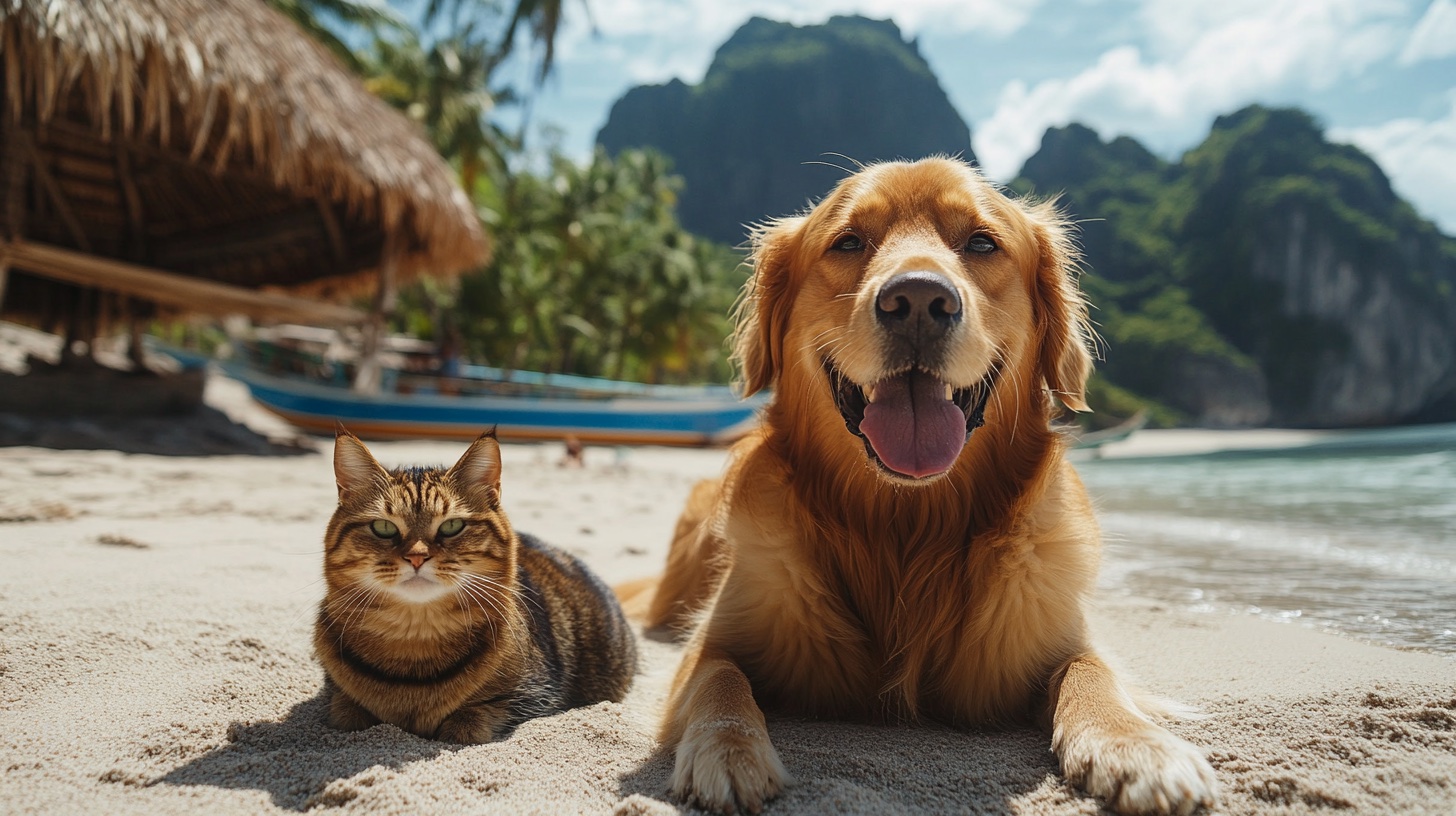


Travelling or relocating from Canada to the Philippines with a dog or cat requires careful coordination between Philippine import requirements, Canadian export documentation and the airline carrying your pet.
The process usually includes obtaining a Philippine import clearance, confirming vaccinations and parasite treatments, preparing a government-endorsed veterinary health certificate and selecting a flight that can safely accommodate your pet.
Airline acceptance is not guaranteed simply because a route is available to passengers. Each carrier has its own restrictions concerning pet size, breed, age, crate dimensions, aircraft type, weather and how the pet may travel.
Paws en route helps pet owners understand these requirements, coordinate the documentation process and identify the most direct and least complicated suitable route for the individual pet.
Table of Contents
Dogs and cats entering the Philippines must have an approved Sanitary and Phytosanitary Import Clearance, commonly called an SPSIC, from the Philippine Department of Agriculture's Bureau of Animal Industry.
The application is completed online through the Philippine government's import-clearance system. Supporting documents generally include:
The SPSIC is valid for 60 days, so the application and travel dates must be coordinated carefully. A maximum of three dogs or cats may generally be included in a one-time pet importation under the standard process.
Dogs and cats must generally be at least 120 days old when the SPSIC application is submitted. Pregnant pets are not eligible for import under the standard process. A pet that has recently given birth may be considered only when at least 12 weeks have passed since delivery and a veterinarian certifies that the mother and puppies or kittens are healthy and fit to travel.
Every dog or cat must have an ISO-compatible microchip that can be read by an ISO-compatible scanner. The microchip number should appear consistently on the pet's:
When a non-ISO microchip is used, the importer may be required to provide a compatible scanner at arrival. Because inconsistencies between records can delay clearance, Paws en route reviews documentation for items such as microchip numbers, owner information, vaccine details and travel dates before the final certificate is completed.
Dogs must have a valid rabies vaccination administered by a licensed veterinarian. For an initial rabies vaccination:
When a valid annual rabies booster is administered before the previous vaccination expires, the Philippine BAI indicates that the animal may be shipped without the same initial-vaccination waiting period. All vaccinations must remain valid through the date the dog arrives in the Philippines.
Dogs must also have at least one dose of the following vaccinations administered at least 14 days before the SPSIC application:
Cats must also have a valid rabies vaccination. For an initial rabies vaccination:
Cats must also be vaccinated against:
These vaccinations must generally be administered at least 14 days before the SPSIC application and remain valid through arrival.
Preventive treatment against both internal and external parasites must be administered by a licensed veterinarian.
Under the current BAI instructions, treatment must be given:
The health certificate should identify the treatment date, product or treatment type and brand information.
This timing is easy to overlook because it is linked to the permit application date, rather than simply the flight date. Paws en route can help build a documentation timeline around the planned travel date so that vaccinations, treatments, the SPSIC and the final health examination occur in the correct order.
The pet must travel with an export permit or international veterinary health certificate issued by the veterinary authority in the country of origin. For pets leaving Canada, a licensed veterinarian normally examines the pet and completes the required certificate. The certificate must then be endorsed by an official veterinarian with the Canadian Food Inspection Agency before the pet leaves Canada.
The Philippines requires the certificate to be issued within 10 calendar days before the pet's export or departure from Canada. CFIA endorsement cannot be completed after the pet has left the country.
Where a destination does not have a separately negotiated Canadian export certificate, CFIA advises travellers to obtain the current import requirements from the destination authority. The Canadian International Health Certificate may be used when the destination requirements can be addressed using that document, but pet owners should confirm the appropriate certificate with their CFIA Animal Health Office before proceeding.
The certificate for the Philippines must contain detailed information, including:
Information on the health certificate must match the SPSIC and vaccination records. In particular, the consignor and consignee names should be consistent across the documentation.
Paws en route can help coordinate the documentation process, provide guidance for the veterinarian and review the completed documents before the CFIA endorsement appointment.
A pet may potentially travel:
Not every option is available on every route. A passenger ticket and a pet reservation are separate arrangements, and a pet should never be assumed to be confirmed until the operating airline has approved the animal and crate.
For international travel, the itinerary should also be checked for:
Read our guide to the 3 types of international pet air travel to understand the difference between cabin, checked-baggage, and cargo travel. Paws en route generally recommends the most direct and least complicated suitable route for the pet, rather than selecting a flight based only on passenger price or schedule.
A direct route or a route with one carefully planned connection can reduce the number of handoffs, airline policy changes and transit requirements involved. However, the shortest passenger itinerary is not always the safest pet itinerary. Aircraft type, airline acceptance, weather, crate size and the pet's health must also be considered.

Airline schedules and animal-acceptance policies change, so the exact route must be checked for the intended travel date.
Philippine Airlines operates service between Canada and the Philippines, including routes marketed between Vancouver or Toronto and Manila.
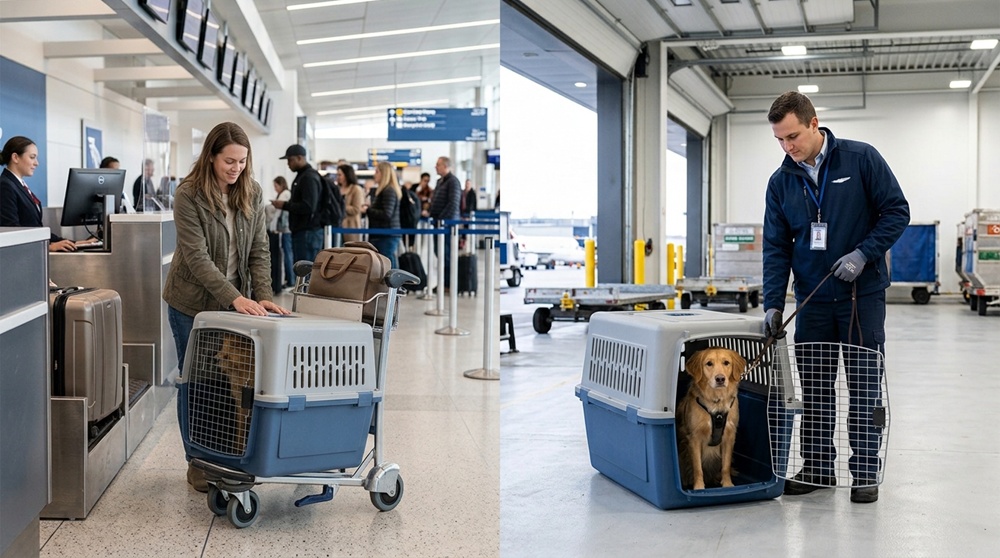
PAL states that dogs and cats may be accepted as checked baggage on eligible domestic and international flights, subject to advance approval, documentation, container requirements, aircraft limitations and other restrictions. Pets are not part of the passenger's free baggage allowance and additional charges apply.
Depending on the itinerary and pet, Philippine Airlines may offer a relatively straightforward option because the journey can remain with one airline through to Manila. Acceptance must still be confirmed before booking, particularly for larger crates, restricted breeds or onward Philippine connections.
PAL also transports live animals through its cargo operation. Cargo travel may be required when the pet cannot be accepted as checked baggage, is travelling separately from the owner or exceeds passenger-baggage limits.
Air Canada accepts eligible small cats and dogs in the cabin and eligible pets in the baggage compartment on certain Air Canada-operated flights. Larger pets and crates may need to travel through Air Canada Cargo's AC Animals service.
For cabin travel, Air Canada requires a flexible, soft-sided carrier that fits beneath the seat. The animal must be able to stand, turn around and lie down inside it. Air Canada does not allow pets on itineraries that include a flight marketed by Air Canada but operated by a codeshare partner under the same pet booking.
This codeshare restriction is particularly important on a trip to the Philippines because Air Canada does not operate every sector that may appear on an Air Canada booking. The onward carrier's policies and the transfer arrangements would need to be evaluated separately.
Air Canada's baggage-compartment limits currently include a maximum combined pet-and-kennel weight of 45 kilograms and maximum linear kennel dimensions of 292 centimetres. Larger shipments must be discussed with Air Canada Cargo. Seasonal and destination restrictions can also apply.
Some itineraries may connect through an Asian hub. These options require extra scrutiny because the airline may accept pets only as checked baggage or cargo, and transit rules may apply even when the owner does not formally enter the connecting country.
For example:
A connection that looks convenient for a passenger may therefore be unsuitable for a particular pet. Paws en route can compare the available airline options based on the pet's breed, size, crate, departure city and final destination.
Snub-nosed or brachycephalic breeds face elevated respiratory risks during air travel. Airlines may refuse them completely, limit them to certain seasons or require specialized arrangements.
Restrictions vary considerably. For example, EVA Air prohibits listed brachycephalic dogs and cats on itineraries involving the Philippines throughout the year. Other carriers may have different breed lists or cargo restrictions.
Pet owners should disclose the complete breed, including possible mixed ancestry, before any passenger ticket or pet shipment is booked.
Paws en route can assess possible routes and airline restrictions, but airline acceptance and veterinary fitness-to-fly decisions always remain subject to the carrier and attending veterinarian.
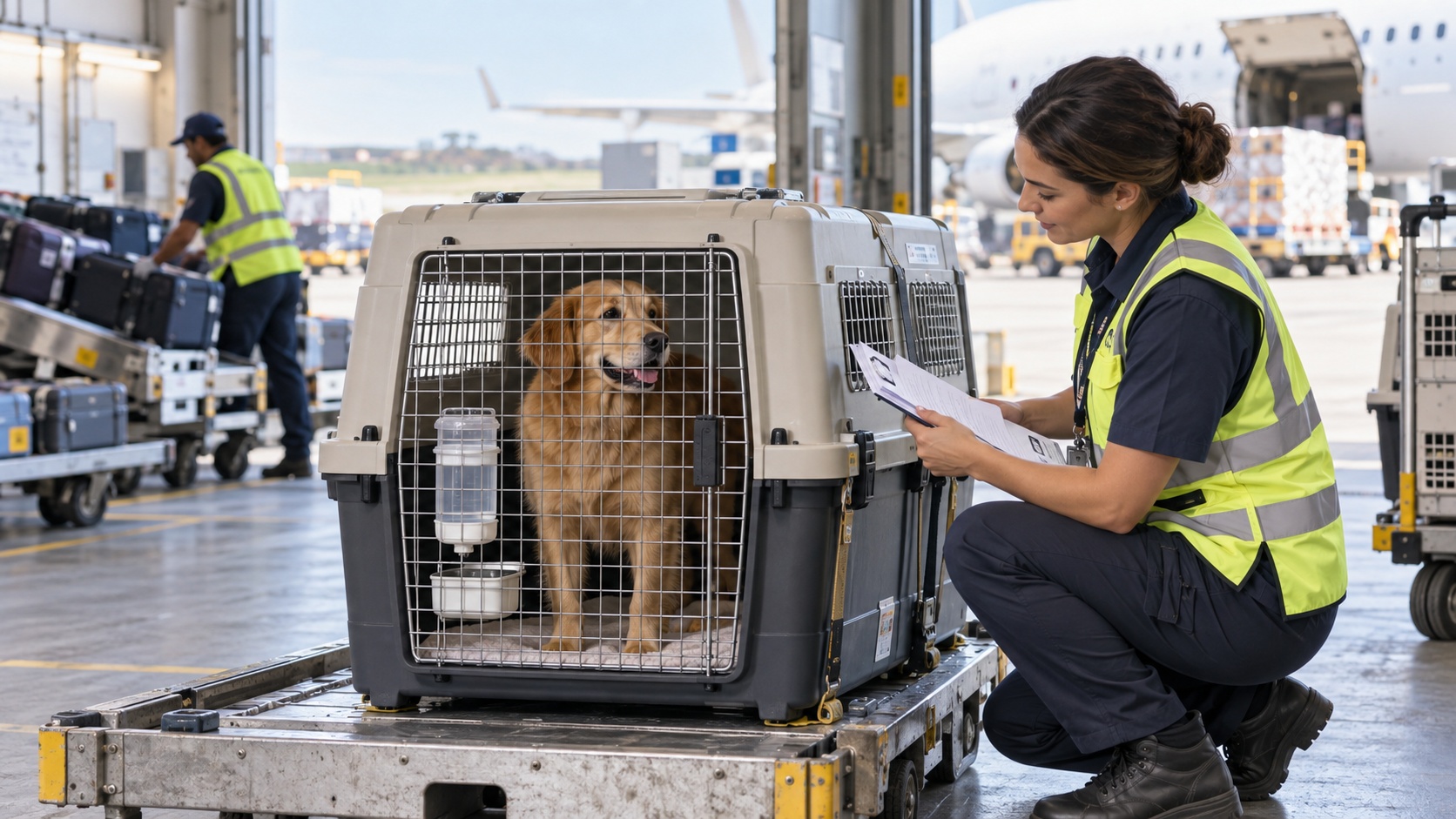
Pets travelling in the aircraft hold or as cargo need a secure crate that meets the operating airline's requirements and applicable IATA Live Animals Regulations. Read our guide to pet travel crate measurements.
The crate must generally allow the pet to:
It must also have suitable ventilation, secure fasteners, an attached water container and absorbent bedding.
Crate requirements can vary by airline, aircraft and breed. A crate marketed as "airline approved" is not automatically the correct size or construction for every pet.
An undersized crate can result in the pet being refused at check-in. Paws en route can help determine the appropriate crate size and review the setup before travel.
When a pet travels through another country, that country may impose transit permits, health documentation, airport-handling or quarantine requirements.
CFIA specifically advises pet owners to check the requirements of every transit country as well as the final destination. Additional certification may be needed even when the passenger remains inside the airport.
This is one reason Paws en route generally favours routes with fewer connections and fewer changes of airline, provided the route is suitable for the pet.

At the international port of entry, the owner, consignee or representative must report to the Philippine BAI Veterinary Quarantine Officer.
For pets arriving as cabin or checked baggage, the required documents generally include:
For pets released through a cargo terminal, the following are generally required:
BAI states that when the documents are complete, the animal may generally be released on the same day. Government permit, lodgement and inspection fees are payable during the clearance process.
This should not be interpreted as an unconditional guarantee that there will be no delay or quarantine. Missing documents, incorrect information, expired vaccinations, permit discrepancies or concerns about the pet's health can affect clearance.
For cargo arrivals, destination handling may also involve an airline cargo terminal, customs procedures, a broker or an authorized local representative. These arrangements should be confirmed before departure.
The international import clearance covers entry into the Philippines, but a pet continuing from Manila to another island or city may be subject to separate domestic airline and local transport requirements.
Owners should confirm:
It may not be possible to through-check a pet between an international and domestic flight, even when the passenger itinerary appears to be connected.
Paws en route can help plan the journey through to the pet's final destination, including airport transfers and coordination with destination partners where available.
Exact timing should be based on the travel date, vaccination history, permit approval and CFIA appointment availability.
Read Preparing Your Pet for Air Travel: 5 Tips for a Smoother Journey.
Crate familiarization should begin well before departure. The crate should become a normal resting space rather than something introduced on travel day.
Before the flight:
Sedation is generally discouraged for air travel unless specifically directed by a veterinarian who understands the risks and airline rules. Air Canada, for example, advises that tranquilizers and other medications are not recommended and that owners should consult their veterinarian.
International pet travel involves several separate organizations, each with its own requirements and deadlines. Paws en route can provide support with one part of the journey or coordinate a more complete relocation plan. Depending on the pet and itinerary, support may include:
Because airline and government requirements can change, every journey is reviewed based on the pet, route and intended travel date.
Yes. Dogs and cats generally require an approved SPS Import Clearance, or SPSIC, issued by the Philippine Bureau of Animal Industry before travelling.
The SPSIC is valid for 60 days. The travel date must fall within the permit's validity period.
Yes. Pets leaving Canada generally require an export health certificate completed by a licensed veterinarian and endorsed by an official CFIA veterinarian. The endorsement must occur before the pet leaves Canada.
The Philippine BAI requires the export permit or international veterinary health certificate to be issued within 10 calendar days before the pet's export or departure from Canada.
Possibly, but only when the pet fits the operating airline's cabin requirements and every flight in the itinerary permits cabin pets. Many airlines serving Asia accept ordinary pets only as checked baggage or cargo.
Cabin acceptance should be confirmed directly with the operating airline before purchasing a non-refundable ticket.
Routine quarantine is not generally expected when the pet meets the import conditions and all documents are complete. BAI states that compliant animals can generally be released on the day of arrival. However, incomplete paperwork, health concerns or failure to meet the import requirements may result in delays or further action.
The best route depends on the Canadian departure city, the pet's size and breed, how the pet will travel and the final destination in the Philippines.
Paws en route generally recommends the most direct and least complicated suitable routing for the pet, with as few airline changes, transfers and transit-country requirements as reasonably possible.
Options may be very limited. Some airlines prohibit brachycephalic breeds completely or impose seasonal and route-specific restrictions. EVA Air, for example, prohibits listed brachycephalic breeds on itineraries involving the Philippines throughout the year.
The breed and possible route should be evaluated before making passenger travel arrangements.
Moving a pet from Canada to the Philippines requires more than booking a passenger flight. Government permits, vaccination timing, veterinary documentation, CFIA endorsement, airline acceptance, crate preparation and arrival arrangements must all work together.
Paws en route helps coordinate these details around your pet and intended journey. Whether you need documentation support, air-travel coordination, airport transportation or a more fully managed relocation, our team can help develop a suitable travel plan.
Ready to begin planning? Request a custom pet-travel quote from Paws en route.
Pet import and airline requirements can change. Always verify the current rules for your specific pet, airline, route and travel date before departure.
Ready to travel?
Our IPATA-certified pet travel specialists help manage the details, from airline booking to health certificates and import permits, for a smoother travel experience.
Get a custom quotePaws en route provides trusted support for every step of pet travel, from complex international relocations to domestic travel within Canada.