Planning a move to Portugal with your dog or cat? Whether you are relocating to Lisbon, Porto, the Algarve, Madeira, or another part of Portugal, your pet’s travel plans need to be organized well before departure.
Portugal is part of the European Union, which means pets travelling from Canada must meet EU entry requirements. The process is very manageable, but the timing matters. Your pet’s microchip, rabies vaccination, EU health certificate, CFIA endorsement, airline booking, and arrival point all need to line up correctly.
This guide walks through the main steps for bringing a dog or cat from Canada to Portugal and explains where professional pet travel support can make the process easier.
Dogs, cats, and ferrets can usually travel from Canada to Portugal without quarantine when they meet EU pet travel rules.
For most non-commercial moves, your pet will need:
These are the general requirements for dogs, cats, and ferrets. Other animals, commercial shipments, pets travelling for sale or transfer of ownership, or pets travelling separately from the owner may fall under different rules.
One of the most common mistakes pet owners make is booking their own flight first and figuring out the pet requirements later.
For Portugal, it is better to start with the pet travel timeline.
Before choosing your flight, confirm:
Once those pieces are clear, it becomes much easier to choose the right route and travel date.

Your pet must be identified with a microchip before entering Portugal.
The microchip should be readable by standard scanners and should match the number listed on your pet’s veterinary records and travel documents. Your veterinarian should scan the chip before starting the paperwork to make sure the number is correct.
The timing is important. Your pet’s rabies vaccination should be given after the microchip is implanted or read. If the rabies vaccine was given before the microchip was recorded, it may not count for EU entry.
Dogs, cats, and ferrets travelling from Canada to Portugal must have a valid rabies vaccination.
For a first rabies vaccination, the vaccine is generally considered valid only after the required waiting period has passed. This is why it is important to check your pet’s vaccination history early, especially if your pet is young, recently adopted, or overdue for a booster.
Your pet’s rabies record should clearly show:
A rabies antibody titre test is not usually required for pets travelling directly from Canada to Portugal under standard EU rules, but this should still be checked before travel if your pet has recently lived in another country or will transit through another destination.
For travel from Canada to Portugal, your pet will generally need the correct EU animal health certificate for dogs, cats, and ferrets.
This certificate must be completed by a veterinarian and endorsed by the Canadian Food Inspection Agency before your pet leaves Canada.
This is one of the most important parts of the process. The certificate is not just a general vet letter. It must match the destination requirements, include accurate microchip and rabies details, and be endorsed within the correct timeline.
Build in enough time for:
Small errors, such as a wrong microchip digit or missing vaccine detail, can create delays.
Portugal follows EU rules for non-commercial pet movement. In most cases, your pet must travel with you, or with an authorized person, within five days before or after your own travel. You may also need to sign a declaration confirming that your pet is not being sold or transferred to a new owner.
This matters because the rules can change if:
If any of those apply, get advice before making travel plans.
Portugal does not generally require tapeworm treatment for dogs under the standard EU pet travel rules.
This is different from some other European destinations. Tapeworm treatment is required for dogs entering certain countries, including Finland, Ireland, Malta, Northern Ireland, and Norway, but Portugal is not typically one of them.
That said, travel routes matter. If your dog is transiting through another country or your itinerary changes, confirm whether any additional requirements apply.
Portugal has several designated points of entry for pets arriving from outside the EU. These include major airports such as Lisbon, Porto, Faro, Beja, and Cascais, as well as designated ports and island entry points in Madeira and the Azores.
For many families, the arrival city is chosen based on where they are moving. But for pet travel, it is also worth considering:
For example, a family moving to the Algarve may want to compare arrival through Lisbon, Porto, or Faro depending on flight availability and pet handling options.
Sometimes, yes.
Unlike pet travel to the United Kingdom, Portugal does not generally require most pets arriving by air to travel only as manifest cargo. Some airlines may allow small dogs or cats to travel in the cabin if they fit in an approved carrier and meet the airline’s size and weight rules.
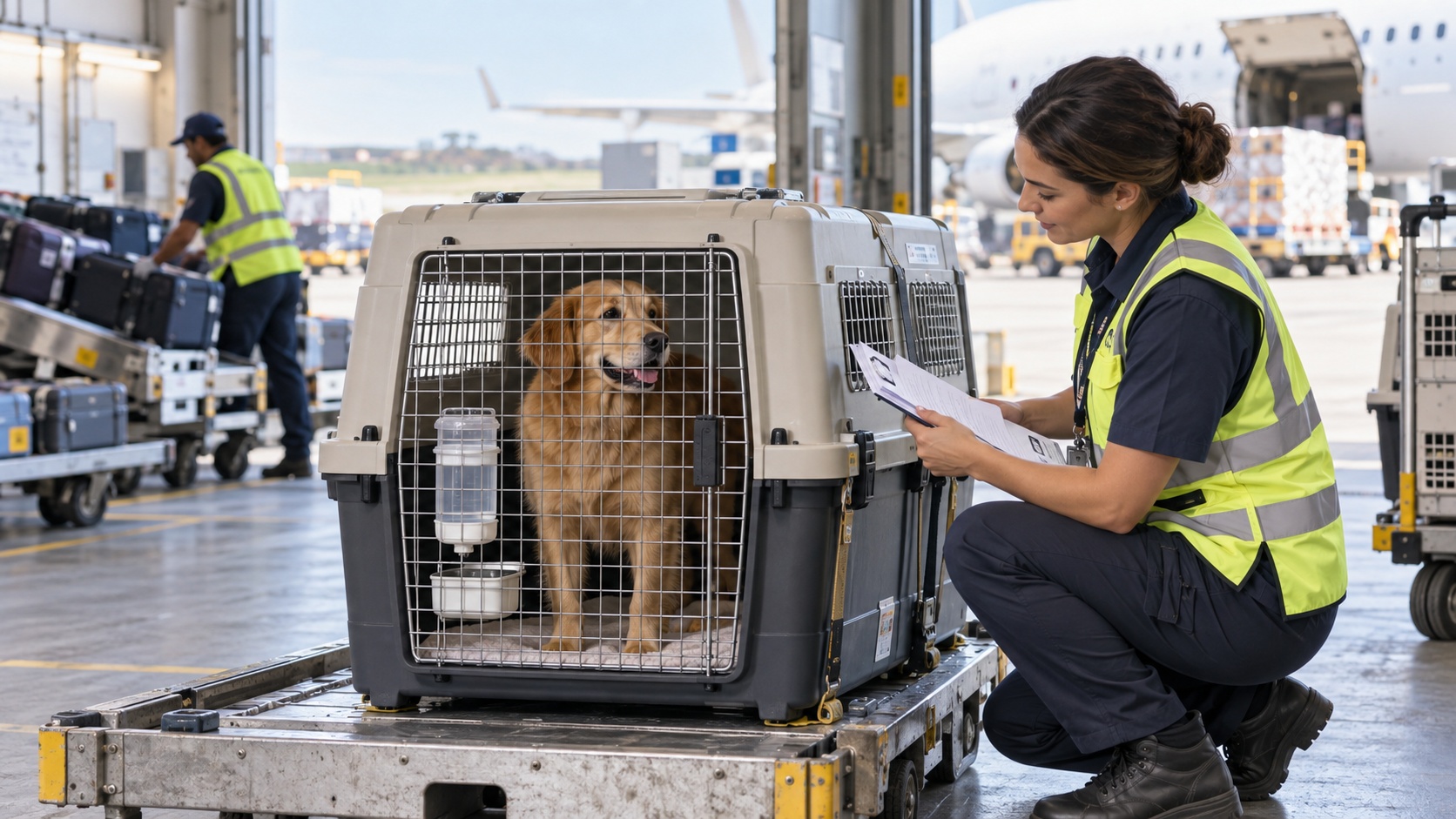
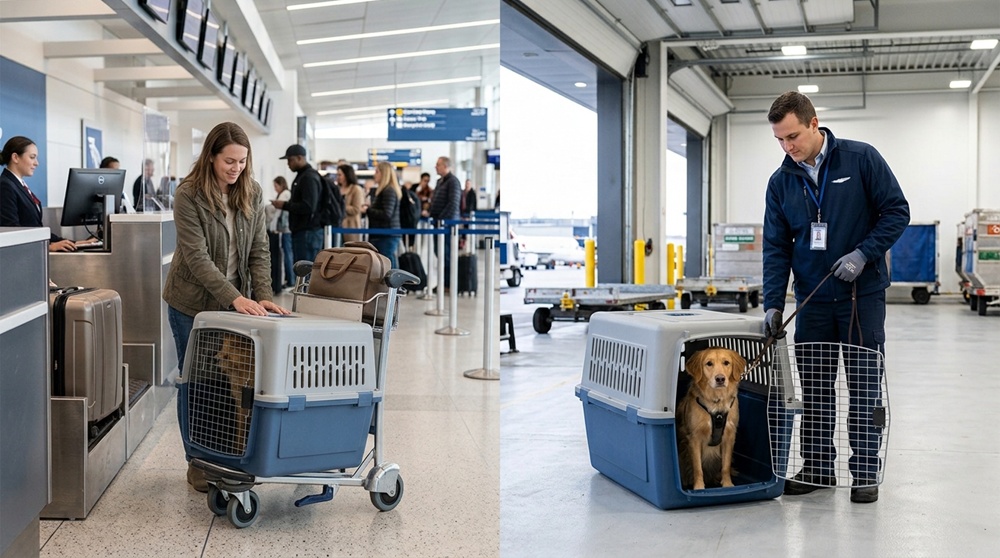
Larger pets may need to travel as checked baggage or cargo, depending on the airline, aircraft, season, and route.
This is why airline research matters. Government entry rules tell you whether your pet can enter Portugal. Airline rules determine how your pet can actually get there.
When comparing airlines for Canada to Portugal pet travel, look beyond ticket price.
Important questions include:
Pet travel availability can vary even within the same airline. A route that works one month may not work another month because of aircraft changes, weather restrictions, or pet-space availability.
Your pet’s carrier or crate must meet airline requirements and be comfortable for the journey.
Small pets travelling in cabin usually need a soft-sided carrier that fits under the seat. Pets travelling as checked baggage or cargo usually need a rigid, airline-approved travel crate.
A properly sized crate should allow your pet to:
The crate should also have secure fasteners, ventilation, absorbent bedding if permitted, water containers, identification, and emergency contact information.
Do not wait until the last minute to buy a crate. Some pets need time to adjust, and larger dogs may require a custom crate. Our guide to pet travel crate measurements and choosing the right kennel size walks through how to measure correctly and avoid the most common sizing mistakes.

The paperwork matters, but so does your pet’s comfort.
In the weeks before travel, help your pet get used to their carrier or crate. Let them spend time in it at home, place familiar bedding inside if allowed, and build positive associations with treats or meals.
Before departure, speak with your veterinarian about feeding, hydration, anxiety, and any health concerns. Avoid assuming sedation is the answer. Many airlines and veterinarians discourage sedating pets for air travel because it can create safety concerns.
A calm, familiar crate and a well-planned route can make a meaningful difference. Check out this post for more tips on preparing your pet for air travel.
When your pet arrives in Portugal, officials may check your pet’s identity and travel documents at the travellers’ point of entry.
They may review:
If everything is in order, your pet can usually continue with you or be released for pickup or onward transportation.
Processing times can vary by airport, arrival time, staffing, paperwork, and whether your pet travelled in cabin, checked baggage, or cargo.
The cost depends on your pet, route, airline, crate, documents, and the level of support needed.
Common cost factors include:
For simple in-cabin travel, costs may be lower. For larger pets, cargo travel, multiple pets, or complex routing, costs can increase significantly.
Pet travel from Canada to Portugal is very doable, but these mistakes can cause problems:
Start as early as possible, especially if your travel dates are not flexible.
Several weeks of planning is recommended for most straightforward moves. More time may be needed if your pet needs a rabies vaccine, a new microchip, a custom crate, cargo booking, or special airline arrangements.
Early planning gives you more choice, more time to correct paperwork, and a better chance of finding a route that works for your pet.

At Paws en route, we help families plan safe, compliant pet travel from Canada to destinations around the world, including Portugal.
For Canada to Portugal pet travel, our team can help with:
Paws en route is an IPATA member, giving our team access to a global network of professional pet shippers and trusted partners who understand live animal transportation.
Whether you are moving to Lisbon, Porto, Faro, the Algarve, Madeira, or another part of Portugal, it is best to plan your pet’s journey before booking your own flight.
Tell us where your pet is travelling from, where they are going, their breed, size, and ideal timeline. We can help you understand the next steps and provide a customized quote for your pet’s move to Portugal.
Request a Portugal pet travel quote and let Paws en route help make the journey safer, smoother, and less stressful.
Ready to travel?
Our IPATA-certified pet travel specialists help manage the details, from airline booking to health certificates and import permits, for a smoother travel experience.
Get a custom quotePaws en route provides trusted support for every step of pet travel, from complex international relocations to domestic travel within Canada.