Travelling from Canada to France with a dog or cat can be straightforward when the paperwork, airline booking, and arrival process are planned in the right order. But it is not something to leave until the final days before departure.
France follows European Union pet entry rules for dogs, cats, and ferrets. Pets arriving from Canada must meet EU requirements, have the correct documentation endorsed in Canada, and be declared for identity and document checks when entering France.
For many Canadian families, France is also a common gateway to Europe. Paris Charles de Gaulle is one of the most connected airports in Europe, which can be useful, but it also means pet owners need to think carefully about flight routing, connection time, customs checks, and onward ground transportation.
This guide explains what Canadian pet owners need to know before travelling to France with a pet.
The core EU requirements for France are similar to many other European destinations, but France has one important practical detail: pets arriving from non-EU countries must be declared and presented for document and identity checks when entering the EU.
That means pet travel to France should not be treated as “land and leave.” Plan time for arrival checks, document review, and microchip verification, especially if your pet is travelling as checked baggage or cargo.
The strongest Canada-to-France pet travel plans usually answer four questions early:
For most non-commercial pet moves from Canada to France, your pet will generally need:
For most pet owners, the travelling pet will be a dog or cat. Ferrets are included in the EU pet travel framework, but they are less common. Other pets may be able to travel, but they may follow different procedures.
Your pet must be identified by a microchip before entering France.
The microchip number must match your pet’s rabies vaccination record, veterinary records, and travel documents. Ask your veterinarian to scan the microchip early in the planning process so any issues can be corrected before the paperwork is prepared.
Your pet also needs a valid rabies vaccination. The rabies vaccine must be administered after the microchip is implanted or after the microchip has been read and recorded.
If your pet is receiving a primary rabies vaccination, the EU generally requires the vaccination to be valid only after at least 21 days have passed from completion of the primary vaccination protocol.
Your rabies record should clearly show:
A rabies antibody titre test is not usually required for pets travelling directly from Canada to France under standard EU rules. It may be required if your pet has recently been in, or will transit through, a country with different rabies-risk status.
For first-time travel from Canada to France, your pet usually needs an EU animal health certificate, not an EU pet passport.
The certificate must be completed by a veterinarian in Canada and endorsed by the Canadian Food Inspection Agency before your pet leaves Canada. CFIA endorsement cannot be completed after the animal has already departed Canada.
Because France is a French-speaking country, confirm that the correct certificate language version is used if France is your pet’s first point of entry into the EU.
Build in time for:
Small paperwork mistakes can create significant problems at arrival. A wrong microchip number, missing vaccination detail, or incorrect certificate version can delay entry.
Usually, not when travelling from Canada to France for the first time.
An EU pet passport is generally issued by an authorized veterinarian within the European Union. It can be useful once your pet is living in France and may travel within the EU in the future.
For the Canada-to-France journey, start with the EU animal health certificate and CFIA endorsement process.
Most family relocations and personal moves fall under non-commercial movement rules.
For your pet’s move to qualify as non-commercial, the pet must travel with you or with an authorized person within five days before or after your travel. You may also need to provide a written declaration confirming that the pet is not being sold or transferred to another owner.
The move may fall under commercial requirements if:
If any of these apply, confirm the correct process before booking flights.
French customs guidance says pets imported from non-EU countries must be declared and presented to customs officers for document and identity checks before they are allowed into EU territory.
Officials may review:
Processing can vary depending on airport, arrival time, staffing, paperwork, airline handling, and whether your pet travelled in cabin, checked baggage, or cargo.
If France is not your first EU entry point, your pet’s first EU arrival country may be where these checks take place. That can affect which certificate language version is appropriate and how the journey should be planned.
For many Canada-to-France pet moves, Paris Charles de Gaulle is the most practical arrival point because of flight connectivity and onward travel options.
Paris may be a good fit for pets travelling to:
However, Paris is not always the only option. Depending on airline acceptance and seasonal routes, some pet owners may also consider flights into cities such as Nice, Lyon, Marseille, Toulouse, or Bordeaux. These can be useful if the final destination is in the south of France and the route is simple enough for the pet.
When choosing the arrival city, consider:
For pets, the shortest owner itinerary is not always the best pet itinerary.
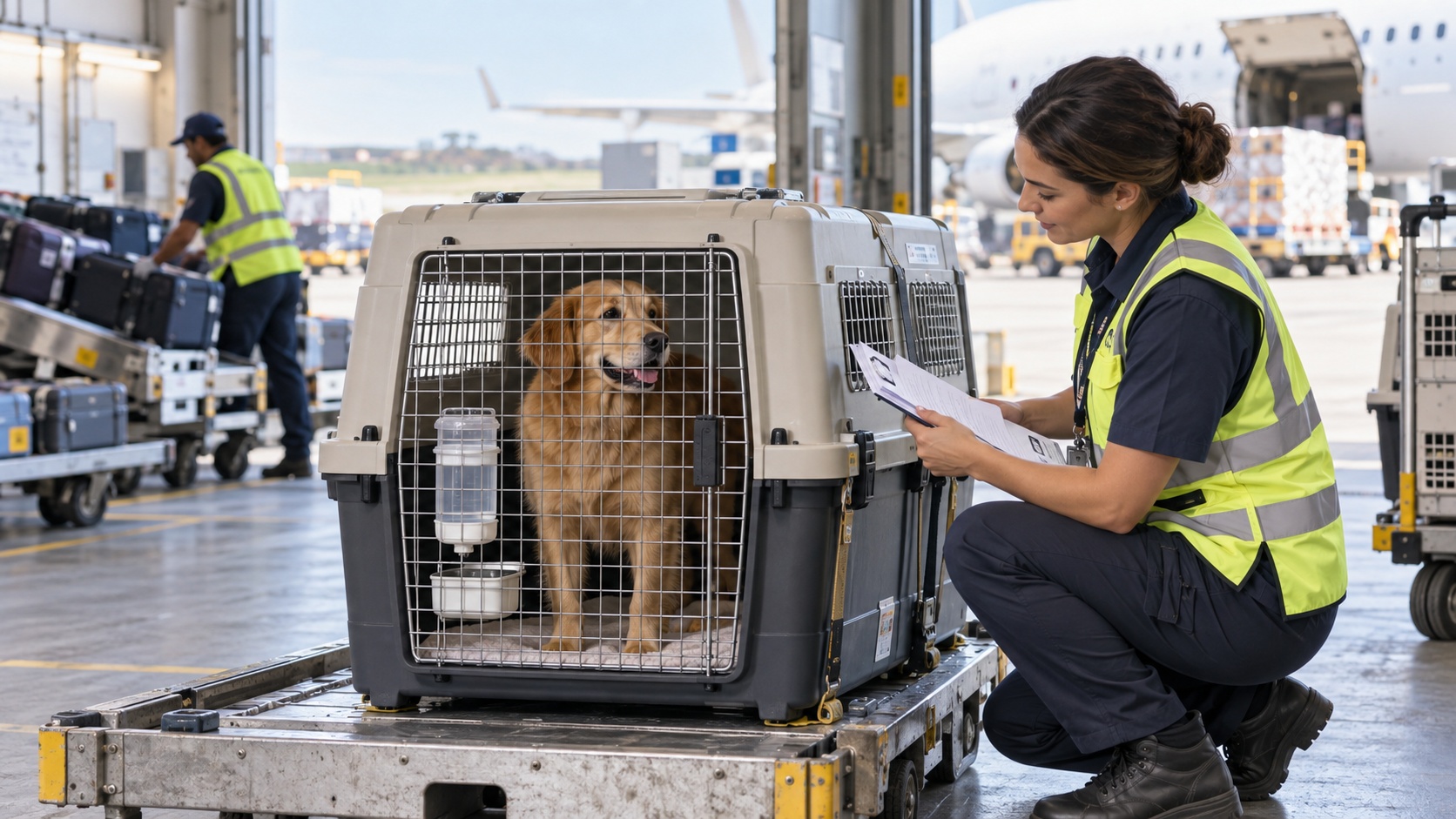
Small dogs and cats may be able to travel in cabin if the airline allows it and the pet fits comfortably in an approved carrier under the seat. Larger pets usually need to travel in the hold or as cargo.
Air France is often relevant for Canada-to-France pet travel. Air Canada may also be relevant depending on route and season. Some France-bound moves may involve European connections through Amsterdam, Frankfurt, Munich, Zurich, or another hub.
Airline rules change and pet acceptance can vary by route, aircraft, season, and operating carrier. Always confirm the exact flight before booking.
Not sure which air travel option applies to your pet? Read our guide to the 3 types of international pet air travel.
A helpful way to think about France pet travel is in stages:
For a deeper overview, read The 4 Essential Stages of International Pet Air Travel.
Your pet’s carrier or crate should be chosen based on the airline, pet size, route, and travel method.
Small pets travelling in cabin usually need a soft-sided carrier that fits under the seat. Pets travelling in the hold or as cargo usually need a rigid airline-approved crate.
Your pet should be able to:
For large dogs, crate sizing should be done early. A crate that is too small can result in denied travel. Read our guide to pet travel crate measurements before buying a kennel.
The best travel plans include both compliance and comfort.
Start crate or carrier familiarization several weeks before departure. Let your pet explore the carrier at home, feed meals nearby or inside it, and gradually increase the time your pet spends in the space.
Speak with your veterinarian about:
For more practical advice, read Preparing Your Pet for Air Travel: 5 Tips for a Smoother Journey.
Avoid these common pet travel mistakes:
Paws en route helps Canadian families plan safe and compliant pet travel to France and other international destinations.
For Canada-to-France pet travel, our team can help with:
International pet travel is more than booking a flight. Learn more about why international pet travel requires careful planning.
Whether your pet is travelling to Paris, Lyon, Nice, Marseille, Toulouse, Bordeaux, or a smaller town in France, early planning can help avoid delays and reduce stress.
Tell us your origin, destination, pet details, and ideal timeline. Paws en route can help you understand the next steps and provide a customized quote for your pet’s move to France.
Ready to travel?
Our IPATA-certified pet travel specialists help manage the details, from airline booking to health certificates and import permits, for a smoother travel experience.
Get a custom quotePaws en route provides trusted support for every step of pet travel, from complex international relocations to domestic travel within Canada.